

I’ve always been amazed by how soundscapes and ambiance can change the way we listen. They can pull listeners into the story, making it feel real and exciting.
Using soundscapes and ambiance lets creators bring their world to life. This makes the story feel more real and leaves a lasting impression.
Key Takeaways
- Soundscapes and ambiance are crucial for an immersive listening experience.
- They help in transporting listeners into the narrative.
- Effective use of these elements enhances emotional impact.
- Soundscapes and ambiance make the story more memorable.
- They are essential tools for creators in crafting engaging stories.
The Power of Sound in Podcast Storytelling
Sound can take us to different worlds, making it key in podcast storytelling. Podcasters use immersive audio and create a narrative environment. This makes the listening experience more engaging.
Our brains react to sound in special ways. This knowledge helps podcasters tell better stories. Let’s look at how our brains handle audio environments and the feelings soundscapes bring.
How Our Brains Process Audio Environments
When we listen to a podcast, our brains work hard to picture the scene. This includes not just the dialogue but also background sounds and music. By carefully choosing these elements, podcasters can make the experience more immersive.
The Emotional Impact of Soundscapes
Soundscapes can stir strong emotions and connect listeners deeply with the story. By setting a scene with sound, podcasters can take listeners to new places. This is especially true in narrative podcasts, where the goal is to touch listeners’ hearts.
Using sound, podcasters can add depth and emotion to their stories. This makes the experience more engaging and memorable for their audience.
Understanding Soundscapes vs. Ambiance
Knowing the difference between soundscapes and ambiance can make your podcast better. Both are key in audio storytelling but do different things. They help make your podcast feel real and engaging.
Soundscapes are the sounds that surround you, taking you to a new place. They mix natural sounds, man-made noises, and music.
Defining Soundscapes in Audio Production
In making audio, soundscapes aim to stir feelings and set the scene. A good soundscape can take you to a busy street or a quiet forest. It makes you feel closer to the story.Key elements of soundscapes include:
- Background noises that set the scene
- Foreground sounds that draw attention to specific actions or events
- Musical elements that enhance the mood or atmosphere
The Role of Ambient Sound
Ambient sound is the background noise in any place. It’s the quiet sounds like a fridge humming or birds chirping. These sounds are important for making your audio feel real.
Ambient sound helps to:
- Create a sense of space and presence
- Establish the location and atmosphere of a scene
- Enhance the overall listening experience
How They Work Together in Narrative Audio
Soundscapes and ambiance together make your audio rich and engaging. By mixing these, you can tell a story that grabs listeners’ attention.
For example, in a podcast about a coffee shop, the soundscape might be the busy atmosphere. The ambiance could be the quiet hum of machines and soft talk. This way, listeners feel like they’re in the coffee shop.
Essential Equipment for Capturing Environmental Audio
To bring your listeners into your world, you need the right gear for environmental audio. The quality of your soundscapes is key to a great immersive experience. As a podcaster, getting the right equipment is vital for top-notch environmental audio.
Field Recording Gear Recommendations
For real environmental audio, you need reliable field recording gear. I suggest using a portable recorder like the Zoom H5 or Tascam DR-40. They record high-quality sounds and are flexible for different situations. Also, consider external microphones like the Rode NTG4+ for clearer recordings. Pick your gear based on the environments you’ll record in and the sound quality you aim for.
Studio Tools for Creating Artificial Environments
At times, you can’t record the environment you need or want a specific ambiance. Studio tools are your solution. Software like Soundtoys Devil-Loc or Valhalla Room can create convincing artificial environments. These tools let you fine-tune the sound to match your story perfectly, giving you control over the final product.
Budget-Friendly Options for Beginners
Starting out, you don’t have to spend a lot to get good equipment. For beginners, options like the Zoom H4n or Blue Yeti USB microphone are great. They’re affordable and can record high-quality sounds. As you grow, you can always upgrade to better gear.
| Equipment | Use Case | Price Range |
|---|---|---|
| Zoom H5 | Field Recording | $200-$300 |
| Rode NTG4+ | External Microphone | $200-$300 |
| Soundtoys Devil-Loc | Studio Processing | $100-$200 |
Field Recording Techniques for Authentic Soundscapes
Creating rich, immersive soundscapes is key for your podcast. You need to plan well, capture clean audio, and organize your sounds. This makes your podcast’s story come alive.
Planning Your Recording Expedition
Before you start recording, plan your trip. Research the location, check the weather, and know what sounds you want. Make a list of your equipment and the sounds you’re after. This helps you get all the audio you need and be ready for anything.
Capturing Clean Environmental Audio
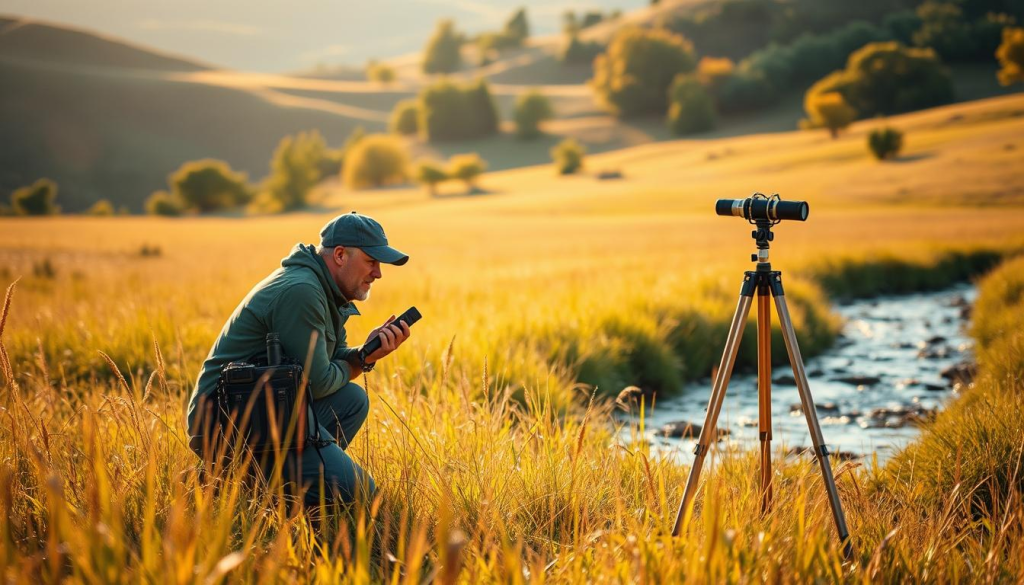
Getting high-quality environmental audio takes focus and the right gear. Use a top-notch recorder and microphones that fit your needs. Always listen to your audio as you record to catch any problems. Using windshields or shock mounts can also boost your recording quality.
Organizing and Cataloging Your Sound Library
After recording, organizing your sounds is vital. I name my files and folders based on location, date, and sound type. This makes editing easier. Using metadata tags helps you search and sort your sounds even better.
| Recording Technique | Description | Benefit |
|---|---|---|
| Using windshields | Reduces wind noise | Cleaner audio recordings |
| Monitoring in real-time | Allows for immediate detection of issues | Higher quality recordings |
| Systematic file naming | Eases the process of finding specific recordings | Efficient editing process |
Creating Custom Soundscapes for Different Podcast Formats
The key to an immersive podcast is its soundscape, made just for its format. Podcasters know that the right atmosphere makes listening better and more memorable.
Creating these soundscapes depends on the podcast type. Each genre needs its own sound design approach. Let’s look at how to make soundscapes for different types of podcasts.
Narrative and Fiction Podcasts
Narrative and fiction podcasts need immersive audio to pull listeners into the story. Sound designers mix field recordings, Foley effects, and music for a rich narrative environment. For example, a futuristic city podcast might include alien tech sounds, city streets, and distant spacecraft.
Interview and Conversational Shows
Interview and conversational podcasts aim for a cozy atmosphere. They use ambient sounds like a coffee shop or quiet office. This makes listeners feel they’re part of the chat, boosting connection and authenticity.
Documentary and Journalistic Podcasts
Documentary and journalistic podcasts need a detailed sound design. They use real audio, like interviews and location sounds, to tell the story. For instance, an environmental podcast might include nature sounds, protests, and activist interviews.
| Podcast Format | Sound Design Approach | Example Elements |
|---|---|---|
| Narrative and Fiction | Immersive, rich narrative environment | Foley effects, field recordings, music |
| Interview and Conversational | Comfortable, intimate atmosphere | Subtle ambient sounds, coffee shop ambiance |
| Documentary and Journalistic | Nuanced, real-world audio | Actual interviews, location ambiance, subtle sound effects |
By making soundscapes fit each podcast’s needs, creators can improve the listening experience. Whether it’s immersive audio for stories or real sounds for documentaries, the right soundscape matters a lot.
Advanced Podcast Storytelling Through Immersive Audio
We podcasters are always looking for ways to grab our listeners’ attention. Immersive audio is a great tool for this. It lets us use sound design to make our podcasts more engaging and interactive.
Using Sound to Establish Setting and Time
Immersive audio is all about setting the scene and time with sound. By picking the right soundscapes and ambiance, we can take our listeners anywhere. For example, city sounds can make you feel like you’re in the city, while wooden floor creaks can make you think of an old house.
Sound effects are key to pulling listeners into the story. I mix field recordings with studio sounds to get the perfect atmosphere.
Creating Character and Emotion Through Audio Environments
Soundscapes and ambiance help bring characters to life and evoke emotions. By linking sounds to characters or feelings, we can make our podcasts more immersive. For instance, a character’s theme music can become a part of their identity.
Using audio environments to show emotions is especially powerful in narrative podcasts. It helps listeners connect with the story and characters.
Transitioning Between Scenes With Sound
Smooth scene transitions are crucial for a good podcast flow. Sound can help signal these changes, keeping listeners on track. Techniques like fading out one sound while introducing another work well.
By mastering immersive audio, podcasters can take their storytelling to the next level. This engages listeners more deeply and sets their podcast apart.
Mixing Techniques for Seamless Integration
The secret to pulling your listeners into the story is blending soundscapes and voice well. This blend turns a simple tale into an immersive audio journey. To get this right, several mixing tricks are used to mix voice and environmental sounds smoothly.
Balancing Voice and Environmental Sounds
It’s key to balance voice and environmental sounds levels. The voice should be clear and in the front, while the background sounds add to the story without drowning it out. Keep the voice level steady and adjust the background sounds as needed.
For example, when your character walks through a forest, sounds like leaves crunching and birds chirping can set the scene. But, the voice should stay the main focus, with the background sounds supporting it.
EQ and Processing for Clarity
Equalization (EQ) and processing are crucial for clear audio. EQ removes unwanted sounds, and techniques like compression and reverb improve audio quality.
- Use EQ to make the voice clearer by focusing on mid-range frequencies.
- Apply compression to keep the voice and background sounds at a steady level.
- Use reverb carefully to add space without making the audio sound far away or unclear.
Spatial Audio Considerations for Immersion
Spatial audio is a powerful tool for immersive experiences. It places sounds in a three-dimensional space, making listeners feel part of the story.
| Technique | Description | Effect |
|---|---|---|
| Binaural Recording | Recording audio using a binaural setup to capture spatial information. | Creates a 3D audio effect when listened to with headphones. |
| Panning | Placing sounds in the stereo field to create a sense of space. | Enhances the sense of immersion by simulating the way sound behaves in real life. |
| Depth Perception | Using volume and reverb to create the illusion of distance. | Makes the audio environment feel more realistic and engaging. |
By mastering these mixing techniques, you can craft a rich, immersive audio world. This world will draw your listeners into the story, making your podcast a captivating experience.
Common Mistakes to Avoid When Using Soundscapes
When you add soundscapes to your podcast, watch out for common mistakes. Soundscapes are great for taking listeners on new adventures and adding depth to your story. But, using them well means knowing how to mix them in smoothly.
Overwhelming Your Listeners
One big mistake is using too many sounds or complex soundscapes. This can cause cognitive overload, making it hard for listeners to follow. Keep your soundscapes simple and balanced, so they enhance the story without overpowering it.
Inconsistent Audio Environments
Keeping the audio environment consistent is key for getting listeners into the story. If it’s not, they might get pulled out of the tale. Make sure your soundscapes match the story’s setting and mood.
Technical Issues That Break Immersion
Technical problems like bad sound quality or wrong volume can ruin the experience. Always check your gear and editing tools to avoid these issues. Paying attention to these details keeps your story flowing smoothly.
By avoiding these common mistakes, you can make the most of soundscapes in your podcast. This will give your listeners a more engaging and immersive experience.
Conclusion: Elevating Your Podcast Through Sensory Storytelling
Incorporating soundscapes and ambiance can greatly improve podcast storytelling. Immersive audio lets creators take listeners to new places, stir emotions, and make stories more engaging.
To elevate your podcast, try out different field recording and studio tools. Mix your voice with environmental sounds. Don’t hesitate to explore new sounds in your stories.
This approach will grab your audience’s attention and create a memorable experience. As you grow in podcast storytelling, remember that soundscapes and immersive audio are key to making your show stand out.