

As a podcaster, I’ve learned how crucial dynamic range is for a great listen. It’s not just about what you say; it’s how you say it. Using silence wisely can be as powerful as the words themselves.
The craft of Podcast Sound Design is all about mixing these elements right. A well-done audio mix can make your story pop, stir feelings, and keep listeners hooked. We’ll dive into why silence and dynamic range matter in podcast audio and share tips for a more engaging listen.
Key Takeaways
- Understanding the role of silence in podcast audio
- The impact of dynamic range on listener engagement
- Techniques for balancing narrative and audio elements
- Best practices for creating an immersive podcast experience
- The importance of audio quality in podcast production
The Sonic Landscape of Modern Podcasting
Modern podcasting is more than just content. It’s about creating an immersive audio experience. The way a story is told or information is shared can be greatly improved by sound and silence.
The Unique Audio Challenges of Podcast Creation
Creating a podcast comes with its own audio challenges. Unlike traditional radio or TV, podcasting lets creators play with sound in a personal way. But, the quality of the audio is key to the listener’s experience. Effective sound design is essential to keep the audience’s attention.
Why Sound Design Determines Listener Retention
The use of audio contrast and silence can boost listener retention. By changing the intensity and pace of the story, creators can keep listeners hooked. Thoughtful silence can also build anticipation and highlight important points, making the content more powerful.
The sound of a podcast is crucial to its success. By understanding and using the unique audio challenges and opportunities, creators can make content that connects with their audience.
Understanding Dynamic Range in Podcast Audio
Dynamic range is key to making podcast audio that grabs listeners. It’s the difference between the loudest and quietest parts of an audio signal. This aspect greatly affects how engaging and comfortable the audio is for listeners.
Defining Audio Contrast and Sound Intensity Levels
Audio contrast is about balancing loud and soft sounds. This balance keeps listeners interested. Sound intensity levels, measured in decibels (dB), show the power of a sound wave. A wider dynamic range means more detailed storytelling and sound design.
Measuring dynamic range involves looking at peak and average levels. Peak levels show the loudest parts, while average levels show the overall loudness. For spoken word podcasts, a good dynamic range is 10-15 dB. This range allows for both quiet whispers and loud statements.
How Dynamic Range Affects Listener Attention and Fatigue
Dynamic range greatly influences how listeners experience podcast content. A well-managed range keeps listeners engaged with contrast between different parts. But a bad range can cause listener fatigue, as it can be jarring or hard to follow.
For example, a podcast might use soft music to start a quiet story, then switch to a louder interview. This contrast keeps the audio interesting and prevents it from getting dull. On the other hand, a podcast with a narrow dynamic range might sound too loud all the time. This can make listeners tired over time.
| Dynamic Range | Listener Impact | Audio Characteristics |
|---|---|---|
| Wide (10-15 dB) | Engaging, less fatigue | Contrasting loud and soft moments |
| Narrow (3-6 dB) | Fatiguing, less engaging | Consistently loud, compressed |
The Psychological Impact of Silence in Audio Storytelling
In audio storytelling, silence is more than just quiet. It’s a choice that grabs listeners’ attention. Silence can make us feel, build suspense, and guide our focus.
Creating Tension and Anticipation Through Pauses
Pauses in stories can make us feel tense and eager to know more. By using silence, creators can build suspense. This keeps us hooked and curious about what’s next.
In true crime podcasts, a pause before a big reveal can make us feel more. It uses our anticipation to make the story more engaging.
Using Strategic Silence to Emphasize Key Points
Silence can highlight important moments in a story. A pause lets us take in the information, making it stick in our minds.
This method works well in educational podcasts. It helps us understand complex ideas better by giving us time to think.
Timing Your Silences for Maximum Impact
When using silence, timing is everything. A pause that’s too short might not be noticed. One that’s too long can break the story’s flow. The goal is to find the right balance.
Distinguishing Between Dead Air and Intentional Silence
It’s important to know the difference between unintentional and intentional silence. Dead air can ruin the experience. But intentional silence is a storytelling choice that makes the story better.
| Technique | Purpose | Example |
|---|---|---|
| Pauses for Tension | Create suspense and anticipation | True crime podcasts |
| Silence for Emphasis | Highlight key points and enhance memorability | Educational podcasts |
Common Mistakes in Podcast Sound Design
Creating great sound for podcasts is key to keeping listeners hooked. But, many creators make mistakes that can turn off their audience. A good soundscape can draw listeners in and make the story better. On the other hand, mistakes can make people tired of listening and lose interest.
The Dangers of Overcompression and the Loudness War
Overcompression is a big problem in podcast sound design. It happens when producers make audio too loud to compete in a busy market. But, this can make listeners tired because it lacks the natural ups and downs of sound.
Also, overcompression can add unwanted sounds like breathing or pumping. To fix this, finding the right balance between loudness and natural sound is crucial.
Recognizing Compression Artifacts in Your Audio
To spot compression artifacts, listen for sudden changes in volume. You can also use tools to check your audio’s dynamic range. This helps find and fix any issues.
Why Constant Background Noise Diminishes Impact
Background noise can really hurt a podcast’s impact. It makes it hard to hear what’s being said and sounds unprofessional. This noise can come from bad recording spots or not using noise reduction well enough.
To solve this, using good recording gear and noise reduction in editing is key. Tools like noise gates or spectral editing can help get rid of unwanted sounds.
How to Identify and Eliminate Unnecessary Noise
To find unnecessary noise, listen to your recording in a quiet place and note any constant sounds. Then, use editing software to remove these noises. Tools like spectral editing can target specific sounds to get rid of them.
| Common Mistakes | Impact on Listeners | Solutions |
|---|---|---|
| Overcompression | Listener fatigue, artifacts | Balance loudness and dynamic range |
| Constant Background Noise | Distraction, unprofessional atmosphere | Quality recording equipment, noise reduction techniques |
Essential Tools for Managing Dynamic Range in Podcasts
Managing dynamic range is key for a great podcast sound. Podcasters use tools and software to control it. This makes their audio sound professional and engaging.
Mastering Compressors, Limiters, and Expanders
Compressors, limiters, and expanders are essential for dynamic range management. A compressor lowers loud sounds. A limiter stops the signal from getting too loud to avoid distortion. An expander makes quiet sounds even quieter. Knowing how to use these tools is vital for a balanced sound.
For example, a compressor can even out a narrator’s voice. A limiter prevents loud noises from distorting the audio. Expanders help create a natural ambiance by keeping quiet parts quiet.
Software Solutions for Dynamic Range Control
Many software solutions help manage dynamic range in podcasts. Adobe Audition and Pro Tools are popular DAWs with advanced tools. Plugins like FabFilter Pro-C2 and Waves C4 offer precise control over compression and limiting.
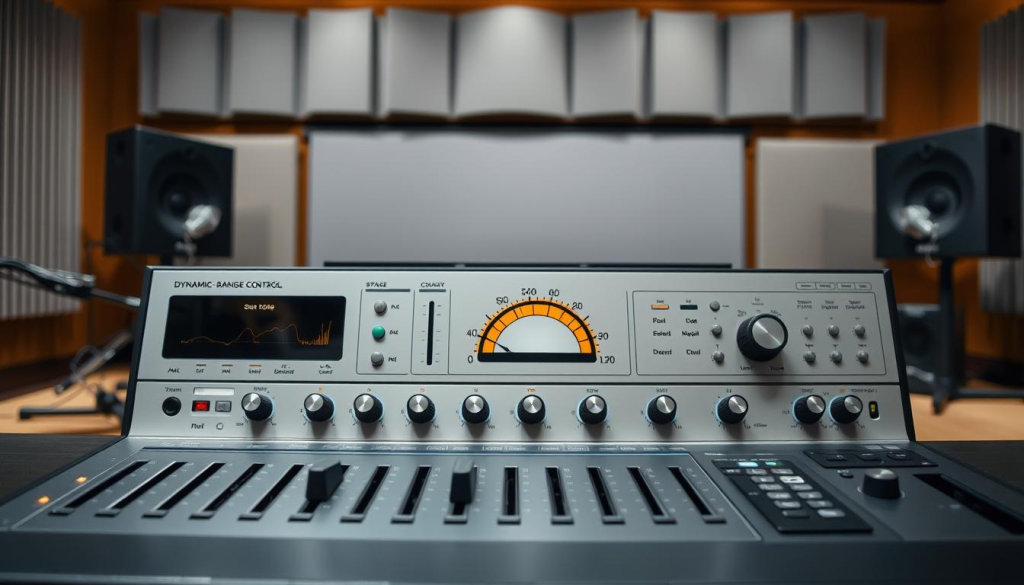
When using compressors and limiters, setting the right threshold and ratio is key. The threshold is when the compressor or limiter starts to work. The ratio is how much it reduces the signal. A lower threshold and higher ratio mean more compression.
Attack and Release Times: Finding the Sweet Spot
The attack time is how fast the compressor responds. The release time is how fast it stops compressing. Finding the right balance is crucial for a natural sound. Too fast an attack can sound unnatural, while too slow a release can cause volume issues.
| Tool | Function | Common Use |
|---|---|---|
| Compressor | Reduces volume of loud sounds | Evening out narrator’s voice |
| Limiter | Prevents signal from exceeding a threshold | Preventing distortion from sudden loud noises |
| Expander | Increases dynamic range | Creating natural ambiance |
By mastering these tools and techniques, podcasters can greatly improve their audio quality. This creates a more engaging and professional listening experience.
“The art of mixing is not just about making things sound good, it’s about creating a balance that draws the listener in.”
Step-by-Step Techniques for Incorporating Effective Silence
Silence is more than just quiet; it’s a key element in audio stories. It can make your podcast more engaging and immersive. Here, we’ll look at how to use silence in your podcast editing.
Editing Interview Pauses for Natural Conversation Flow
Editing interviews right is about finding the right balance. You want to remove unnecessary words but keep natural pauses. Effective editing makes conversations sound real and interesting.
Listen closely to the interview. Remove pauses that mess up the flow. A short pause after a question can build anticipation. A longer pause might signal a change or a moment to think.
Creating Breathing Room Between Podcast Segments
Transitions between segments are key in a podcast. Using silence here can give listeners a break to think. This is great for podcasts that tell stories or cover complex topics.
Using Silence as a Transition Technique
Silence is a great way to signal a change in your podcast. A short silence can clearly mark the start of a new segment. This makes it easier for listeners to follow your podcast.
Maintaining Consistent Silence Duration Throughout Episodes
Keeping silence consistent is important. It makes your podcast feel structured and familiar. This consistency helps set expectations and keeps listeners engaged.
Mastering Podcast Sound Design Through Dynamic Contrast
Dynamic contrast is key to making your podcast sound great. It helps create an immersive experience for listeners. By balancing loud and quiet parts, you guide them through the story, highlighting important points and emotions.
Balancing Loud and Quiet Moments for Emotional Impact
To make an emotional impact, balancing loud and quiet parts is crucial. Loud parts grab attention or show strong emotions. Quiet parts add intimacy or suspense, keeping listeners hooked.
In a true crime podcast, a loud segment about a key event is followed by a quiet moment. This lets listeners absorb the information. This balance makes the listening experience dynamic and engaging.
Creating Signature Sound Patterns with Dynamic Range
Creating a unique sound for your podcast is possible with dynamic range. Use specific sound effects, music, or voice changes to make your podcast recognizable. This helps listeners know it’s your show.
Use episode templates with dynamic markers for consistency. Identify key moments for dynamic range to ensure balanced sound in every episode.
Adapting Dynamic Range for Different Content Types
Dynamic range varies by content type. For example, interviews might use subtle range for a conversational feel. Narrative podcasts might use dramatic contrasts to tell the story better.
| Content Type | Dynamic Range Approach | Effect on Listener |
|---|---|---|
| Interview | Subtle dynamic range | Maintains conversational tone |
| Narrative | Dramatic contrasts | Enhances storytelling |
| Educational | Balanced dynamic range | Keeps listeners engaged |
Case Studies: Effective Use of Silence and Dynamics in Popular Podcasts
The best podcasts use silence and dynamic range to pull you in. By looking at successful ones, we learn how these elements make stories come alive and keep listeners hooked.
Analysis of This American Life’s Sound Design Approach
This American Life is known for its smart use of silence and dynamic range. The team balances quiet parts with loud ones, making the story flow smoothly. For example, in personal stories, silence lets listeners feel the emotions deeply.
Before and After Examples of Improved Dynamic Range
Seeing before and after examples shows how dynamic range makes a difference. A podcast with always loud volume can improve by adding soft moments. This makes the listening experience more varied.
Narrative Podcasts: Using Silence to Build Suspense
Narrative podcasts use silence to build suspense. They pause at key moments to increase tension. This keeps listeners eager to find out what happens next.
Interview Shows: Creating Space for Emotional Moments
In interview podcasts, silence lets emotional moments hit home. By not filling every pause, hosts let the emotions of the conversation sink in. This makes the experience more powerful.
By studying these examples, podcast makers can learn to use silence and dynamic range well. This improves the listening experience for everyone.
Implementing Dynamic Range Across Different Podcast Formats
Knowing how to use dynamic range in various podcast formats is crucial. Each format needs a special approach to dynamic range to make a big impact.
Tailoring Dynamic Range for Interview vs. Narrative Shows
Interview and narrative podcasts have different needs for dynamic range. Interview shows need a steady audio level. Narrative podcasts can use a wider range to make the story more exciting.
In interview shows, compressors help keep the audio levels even. This makes the conversation easy to follow. Narrative podcasts use a wider range to build tension and pull listeners into the story.
Adapting Techniques for Solo Shows and Panel Discussions
Solo shows and panel discussions face unique challenges with dynamic range. Solo shows need a controlled range to keep listeners interested. Panel discussions must balance the audio levels of everyone speaking.
For solo shows, strategic use of pauses can make the listening experience better. Panel discussions need more complex audio mixing techniques to make sure everyone’s voice is heard.
Technical Considerations for Multi-Voice Podcasts
Managing dynamic range in multi-voice podcasts is key. Using multiband compression helps control different sound levels. This prevents loud voices from drowning out softer ones.
Single-Voice Dynamic Range Strategies
Solo podcasts can use dynamic range to make the experience more personal. Changing the microphone distance can create different levels of closeness. Using pauses adds drama and emphasis.
Conclusion: Elevating Your Your Your Your Your Your Your Through Intentional Sound Design
Throughout this article, we’ve seen how using silence and dynamic range is key. It makes your podcast more engaging. Good Podcast Sound Design pulls listeners into the story and keeps them interested.
Knowing how silence affects us, avoiding sound design mistakes, and using the right tools are important. These steps help podcast creators connect with their audience more deeply.
Intentional sound design is more than just technical skills. It’s about creating an experience that enhances the story. As you improve your Podcast Sound Design skills, your podcast will stand out. It will offer a more engaging and emotionally touching experience for your listeners.