

As I explore podcasting, I see how key it is to draw listeners in. Podcast sound design is vital, and often, room tone and ambient sound get overlooked.
By adding these sounds, creators can make the audio atmosphere feel real. This makes the podcast more engaging and professional.
Key Takeaways
- Room tone and ambient sound are crucial for creating a realistic audio atmosphere.
- These elements enhance the overall listening experience.
- Proper use of room tone and ambient sound makes a podcast sound more professional.
- It’s essential to balance these elements to avoid overwhelming the listener.
- A well-designed audio atmosphere can increase listener engagement.
What Are Room Tone and Ambient Sound?
To make audio believable, knowing room tone and ambient sound is key. These elements are vital in audio production. They greatly enhance the listening experience.
Defining Room Tone in Audio Production
Room tone, also called ‘air tone’, is the sound of a recording space. It has no voices, movement, or other sounds. Experts say this captures the essence of room tone.
The Silent Signature of Spaces
Every space has a unique room tone that shows its acoustic properties. This tone is not just silence but a distinct sound. It makes recordings sound more real.
How Room Tone Differs from Complete Silence
Room tone is not complete silence. It’s the subtle sound in any environment. This difference is key for sound design realism. It makes experiences more immersive.
Understanding Ambient Sound and Its Sources
Ambient sound includes all background noises in a space. These can be natural or artificial.
Natural vs. Artificial Ambient Sounds
Natural ambient sounds happen naturally, like birds chirping or water flowing. Artificial sounds are made by humans, like machinery hum or traffic noise.
The Spectrum of Environmental Audio
The range of environmental audio is huge. It goes from the quietest air whisper to the loudest city noise. Knowing this range is crucial for using natural sound in your podcast.
| Type of Sound | Description | Example |
|---|---|---|
| Room Tone | Ambient sound of a recording environment | The hum of a studio |
| Natural Ambient Sound | Organically occurring background noise | Birds chirping in a forest |
| Artificial Ambient Sound | Man-made background noise | Traffic noise in a city |
Why Natural Sound Elements Matter in Podcasting
Ambient sound and room tone are key in setting a podcast’s atmosphere. They draw listeners in. By adding these natural sounds, podcasters make the experience more immersive for their audience.
Creating Immersive Listening Experiences
Keeping listeners engaged is crucial. Sound design realism is key to this. Authentic ambient sounds transport listeners to different places, making the experience more engaging.
The Psychology of Audio Immersion
The human brain loves environmental sounds. Audio immersion happens when listeners feel part of the scene. This is why immersive listening is so powerful.
Listener Retention Through Sound Design
Good sound design keeps listeners coming back. An engaging audio atmosphere keeps the audience interested in the story or content.
Establishing Setting and Context Without Words
Natural sound elements show setting and context without words. This is done through ambient sounds that suggest a particular environment or mood.
Location Signaling Through Audio Cues
Audio cues tell listeners where they are. Rain sounds like an outdoor setting, while a coffee shop hum suggests a busy city.
Emotional Tone Setting with Ambient Elements
Ambient elements set the emotional tone of a scene. A dark, stormy atmosphere feels ominous, while a gentle breeze is calming.
| Sound Element | Effect on Listener |
|---|---|
| Rain | Creates a cozy atmosphere |
| Coffee Shop Ambience | Suggests a busy urban setting |
| Stormy Weather | Evokes a sense of tension |
By using these natural sound elements, podcasters improve the listening experience. It becomes more engaging and immersive for their audience.
Essential Equipment for Capturing Quality Ambient Audio
Getting the right audio gear is key for top-notch ambient sound. It makes your podcast sound real and keeps your listeners hooked.
Microphone Selection for Environmental Recording
Picking the right mic is vital for great ambient audio. The mic you choose depends on where you’re recording and what sound you want.
Directional vs. Omnidirectional Microphones
Directional microphones are great for focusing on specific sounds, cutting out background noise. On the other hand, omnidirectional microphones catch sounds from all around. They’re perfect for capturing the vibe of a place.
Budget-Friendly Options for Beginners
For newbies, the Blue Yeti or Rode NT-USB are smart choices. They’re affordable, versatile, and work well for both voiceovers and ambient sounds.
Portable Recorders and Accessories
Portable recorders are a must for ambient audio on the move. They’re flexible and record high-quality sounds.
Windscreens and Shock Mounts
Windscreens and shock mounts are crucial for clear recordings. They block wind noise and shake, which can mess up your audio. Windscreens are a must for outdoor use.
Storage and Battery Considerations
Think about storage and battery life when picking a portable recorder. It should record for a long time and have enough space for your audio. Some even let you add more storage.
With the right gear and know-how, you can boost your podcast’s ambient sound. This makes your show more engaging and immersive for your listeners.
Techniques for Recording Effective Room Tone
To make your podcast sound more real, learning to record room tone is key. Room tone adds a lot to the listening experience, making it feel more real and interesting.
Finding the Perfect Recording Location
Finding the right spot to record room tone is the first step. You need a quiet place with little background noise. Choose a room that fits your podcast’s setting. For example, if your podcast is set in a busy café, record room tone there too.
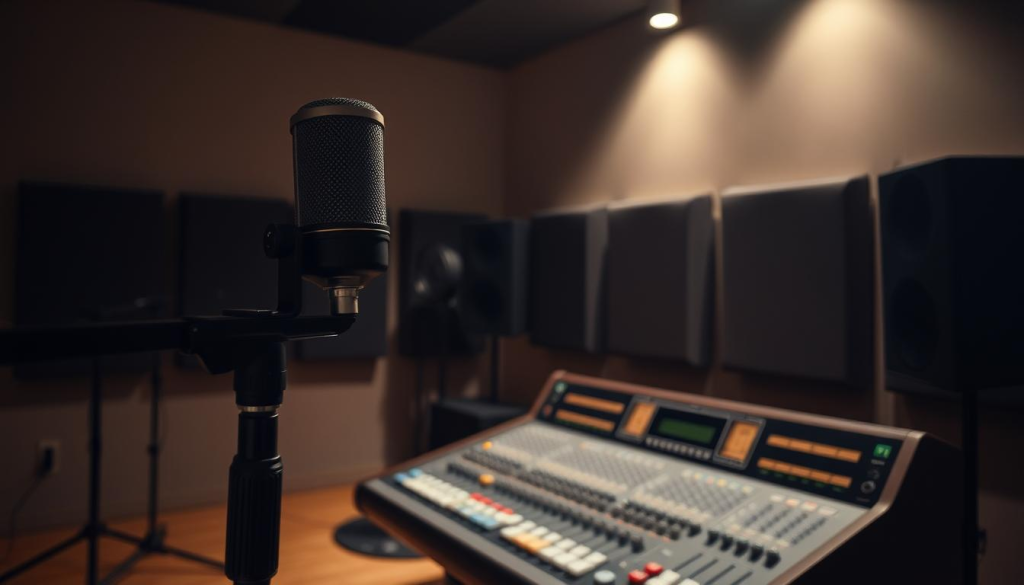
Proper Microphone Placement
Where you place your microphone is very important. Put it where it captures the room’s feel without too much direct sound. Try different spots to find the best one for your room.
Duration and Multiple Takes
Recording room tone for a good length is important. “Room tone must be recorded on its own, so there may be a request to ‘Hold for room tone’ while the tone is captured on its own for a 30-second or one-minute stretch.” This way, you get a clean and steady room tone.
How Long to Record Room Tone
It’s best to record room tone for at least 30 seconds to a minute. This ensures you get a good sample of the room’s sound.
Creating a Library of Environmental Sounds
Recording many takes and building a library of sounds is very helpful. This library can make future episodes better or create new soundscapes. Having different room tones and sounds adds depth and variety to your podcast.
By learning these techniques, you can make your podcast sound better and more real. This will make your listeners more engaged.
Advanced Podcast Sound Design Strategies
To make your podcast stand out, you need to use advanced sound design. This goes beyond just recording. Good sound design can pull listeners into your world, making your podcast more fun and memorable.
Layering Different Ambient Elements
Layering sounds is a key technique for depth in your podcast. Mixing different sounds creates a rich experience for your listeners.
Creating Depth Through Multiple Tracks
Using multiple tracks adds complexity to your sound. For example, you can mix background sounds with specific effects. This needs careful balancing to make sure everything works well together.
Transitioning Between Different Environments
Smoothly moving between environments is key to keeping listeners engaged. Sound effects can help guide the listener from one place to another. Like how footsteps can move you from inside to outside.
Creating Custom Atmospheric Soundscapes
Creating unique soundscapes can really make your podcast stand out. These soundscapes can evoke emotions and reactions from your listeners.
Using Sound Effects Libraries
Sound effects libraries are great for making custom soundscapes. They have a wide range of sounds to choose from. Think about how these sounds fit with your story or dialogue.
Synthesizing Environmental Sounds
Making sounds from scratch lets you customize even more. This is useful for creating unique environments, like futuristic ones. This can really help bring your podcast to life.
By using these advanced sound design strategies, podcasters can make their content more engaging. This gives listeners a richer and more immersive experience.
Implementing Ambient Sound in Your Podcast Workflow
Adding ambient sound to your podcast is key to making it immersive. It turns a simple recording into a rich story that pulls listeners in. Here, we’ll show you how to add ambient sound smoothly to your podcast.
Editing Techniques for Seamless Integration
To make ambient sound work well in your podcast, edit it carefully. You need to blend it with your voice recordings smoothly.
Crossfades and Transitions
Using crossfades and transitions is a good method. Crossfading fades one sound out while fading another in, making the transition smooth. This is great for moving between different scenes in your podcast.
For example, fading from a busy café to a quiet library makes the experience more real and engaging for listeners.
Automation for Dynamic Ambient Levels
Automation helps manage ambient sound levels. It lets you change the sound levels to keep listeners interested. You can make the sound louder during exciting moments or softer during quiet parts.
Experts say using plugins like Undertone2 makes editing ambient sound easier. This helps you get the right effect.
“Using plugins like Undertone2 to generate room tone and ambience makes it easier to edit and integrate ambient sound into the podcast workflow.” – Industry Expert
Balancing Levels Between Voice and Ambience
It’s important to balance your voice and ambient sound levels. If the ambient sound is too loud, it can drown out your voice. If it’s too quiet, it won’t have the right impact.
EQ Techniques for Clarity
Equalization (EQ) helps make your voice and ambient sound clear. By adjusting EQ, you can make your voice stand out while the ambient sound supports it.
| Frequency Range | Effect on Voice | Effect on Ambient Sound |
|---|---|---|
| Low Frequencies (20-200 Hz) | Adds warmth and depth | Can make ambient sound muddy |
| Mid Frequencies (200-2000 Hz) | Impacts clarity and presence | Can make ambient sound more pronounced |
| High Frequencies (2000-20000 Hz) | Adds brightness and clarity | Can make ambient sound more hissy or sharp |
Compression and Ducking Strategies
Compression and ducking help balance your voice and ambient sound. Compression keeps the ambient sound level even. Ducking lowers the ambient sound when you’re speaking, keeping your voice clear.
By using these techniques, you can make your podcast sound better and keep your listeners engaged.
Common Mistakes to Avoid When Using Environmental Audio
To make your podcast more engaging, it’s key to use environmental audio wisely. It can really bring your story to life. But, using it poorly can make your podcast less enjoyable.
Using environmental audio well takes some thought. Learning what not to do will help you add the right sounds to your podcast.
Overusing Ambient Elements
Many podcasters make the mistake of using too much background noise. They try to create a rich atmosphere but end up overwhelming the listener.
When Subtlety Works Better
It’s better to use ambient elements subtly. A soft coffee shop hum or the quiet rustle of leaves can be more effective. This way, the listener stays focused on the story.
Listener Fatigue from Excessive Background Noise
Too much background noise can make listeners tired. When the sounds are too loud, it’s hard to hear the dialogue. This can make listeners frustrated and less interested.
Inconsistent Sound Environments
Another mistake is having different sound environments in one episode or across episodes. This can pull listeners out of the story. It makes it hard to get fully into the narrative.
Maintaining Audio Continuity
Keeping the audio consistent is key for a smooth listening experience. This means the sounds in different scenes or episodes should match in tone and volume. For example, if you’re in a forest, the sounds should fit the setting.
Legal Considerations for Recorded Environments
When recording in different places, think about the legal side. You might need to get permissions and know about copyright or privacy issues.
Avoiding these mistakes will help you use environmental audio to make your podcast better. This will make your podcast more engaging and immersive for your listeners.
Real-World Examples of Effective Ambient Sound Usage
Ambient sound is more than just background noise. It’s a powerful tool that can change how we listen. By looking at real examples, we can see how it makes podcast stories better.
Case Study: Narrative Podcasts
Narrative podcasts use ambient sound to pull listeners into the story. Effective sound design takes us to new places, making the story more exciting.
Analysis of Storytelling Through Sound Design
Ambient sound in narrative podcasts paints vivid pictures with sound. For example, a podcast about history might use the sound of a crowd to bring the past to life.
Before and After Comparisons
Seeing how a podcast changes with ambient sound shows its power. A notable example is how listener engagement goes up when sound is used right.
Case Study: Interview-Based Shows
Interview-based podcasts also use ambient sound. It helps set the scene for the conversation.
Remote vs. In-Person Interview Ambience
The feel of remote versus in-person interviews changes how we hear them. Capturing the right ambiance makes remote interviews feel closer and more personal.
Techniques from Professional Productions
Professional shows use advanced sound techniques. They layer different sounds to create a deep soundscape.
Conclusion: Elevating Your Podcast Through Thoughtful Sound Design
Good podcast sound design is key to a great listening experience. Adding room tone and ambient sound can make your podcast better. It also helps you connect with your audience more.
We’ve talked about the role of natural sounds in podcasting. We’ve also covered the gear you need for quality ambient audio. And we’ve shared tips for recording effective room tone. Using these tips can make your podcast sound better and keep your listeners interested.
Improving your podcast’s sound is a journey. Focus on sound design to make your podcast more engaging. Good sound design can make your podcast memorable and special to your listeners.