

Turning my hobbies into a passion project podcast has changed my life. It lets me share my personal interests with others who care. This way, I’ve built a community of people who love the same things I do.
Meeting other podcasters in person is a big plus, says the Empowered Podcasting Community. It helps us connect and get inspired. By making content from my hobbies, I’ve found a creative outlet. Plus, I’ve met others who love what I love.
Key Takeaways
- Create content around your personal interests
- Share your passions with a wider audience
- Connect with like-minded individuals
- Build a community around your hobby
- Turn your hobby into a passion project
Why Passion Projects Make Perfect Podcasts
Podcasting about your passion project can make for a more real and fun listen. When you talk about something you love, your excitement is clear to your listeners.
The Power of Authentic Enthusiasm
Being true to your content is crucial for keeping listeners. When you’re into your topic, it shows in how you speak. This makes your podcast more fun and relatable. For example, the Empowered Podcasting Community’s meetup in Detroit showed how connecting with others who share your interests can be powerful.
Sustainable Content Creation Through Personal Interest
Creating content from your hobby makes podcasting easier to keep up with. Talking about things you’re passionate about keeps you motivated. Plus, you can use your own knowledge and experiences, making it less stressful to create content.
Examples of Successful Hobby-Based Podcasts
Many hit podcasts started as passion projects. For instance, shows about specific hobbies or interests have become hits by focusing on a niche audience. My Favorite Murder and How I Built This are great examples of how personal projects can become compelling stories.
By focusing on your passion, you can build a community around hobbies and interests. This not only makes your podcast more enjoyable but also boosts its chances of lasting success.
Identifying Your Podcast-Worthy Hobby
Finding a hobby for your podcast means balancing your love for it with what listeners will enjoy. This step is key to making your podcast both fun for you and interesting for others.
Evaluating Your Passions for Podcast Potential
First, look at your hobbies to see if they can be turned into regular, good content. Ask yourself:
- How much do I love this hobby?
- Can I keep making content about it?
- Is there a group of people who would listen to it?
BuzzSprout says picking a niche that you love and that people will listen to is important. This mix keeps you excited and makes sure your podcast hits the mark with your audience.
Finding the Intersection of Personal Interest and Audience Appeal
Look into how popular your hobby is and who might be interested. Use Google Trends or social media to see if people care. For example, if you love photography, check how much photography content is out there.
| Hobby | Personal Interest Level | Audience Appeal |
|---|---|---|
| Photography | High | Medium |
| Gardening | Medium | High |
Testing Your Topic’s Longevity
Try out your idea with a few test episodes or pieces before diving in. Share them with a few people to see what they think. This helps you figure out if your hobby can keep a podcast going.
In short, finding the right hobby for your podcast takes careful thought. You need to know your passions, understand who might listen, and test your idea. By doing these things, you can make a podcast that’s both rewarding for you and fun for your listeners.
Researching Your Podcast Niche Competition
Before starting your hobby podcast, it’s key to check out what’s already out there. Knowing what’s available helps you find your unique spot in the hobby community.
Analyzing Existing Hobby-Based Podcasts
Listen to top podcasts in your niche. Note their style, tone, and topics. See what works and what doesn’t. For example, you might find a gap for advanced hobbyists.
Dan Misener said,
“The key to a successful podcast is understanding your audience and creating content that resonates with them.”
Identifying Gaps and Opportunities in the Market
Look for missing topics or formats in existing podcasts. Finding these gaps can help you create something new. For instance, if most podcasts are solo, try an interview-style show.
Tools for Competitive Research
Several tools can help with your research:
- Apple Podcasts: Check out categories and top charts.
- Spotify: Explore their podcast directory.
- Podchaser: A place to find, review, and talk about podcasts.
- Chartable: Offers podcast rankings and analytics.
| Tool | Description | Usefulness for Hobby Podcasters |
|---|---|---|
| Apple Podcasts | Directory of podcasts | High |
| Podchaser | Podcast discovery and review platform | High |
| Chartable | Podcast analytics and rankings | Medium |
By studying your competition, you can make a hobby podcast that shines. It will attract a dedicated community of like-minded people.
Defining Your Unique Angle in a Crowded Space
To make your mark in podcasting, you must find your own unique angle. With more passion project podcasts, it’s tough to stand out. But, this also means you can share new views and voices.
Developing Your Personal Perspective
Your personal perspective is key to your podcast’s unique angle. It’s about sharing real experiences and authentic content that connects with your audience. Think about what drives your passion project and how your story can grab listeners.
Creating a Distinctive Voice and Approach
A unique voice and approach set your podcast apart. It’s not just what you say, but how you say it. Think about the tone, language, and style that will draw people in. Adding storytelling techniques and your personality can make your content more engaging.
Crafting Your Podcast’s Mission Statement
A clear mission statement defines your podcast’s purpose. It should capture what your podcast is about and its unique value. To craft this, understand your audience, their needs, and how your passion project podcast meets those needs.
By focusing on these areas, you can create a strong podcast identity. Remember, being unique is not just about being different. It’s about being true and offering value to your listeners.
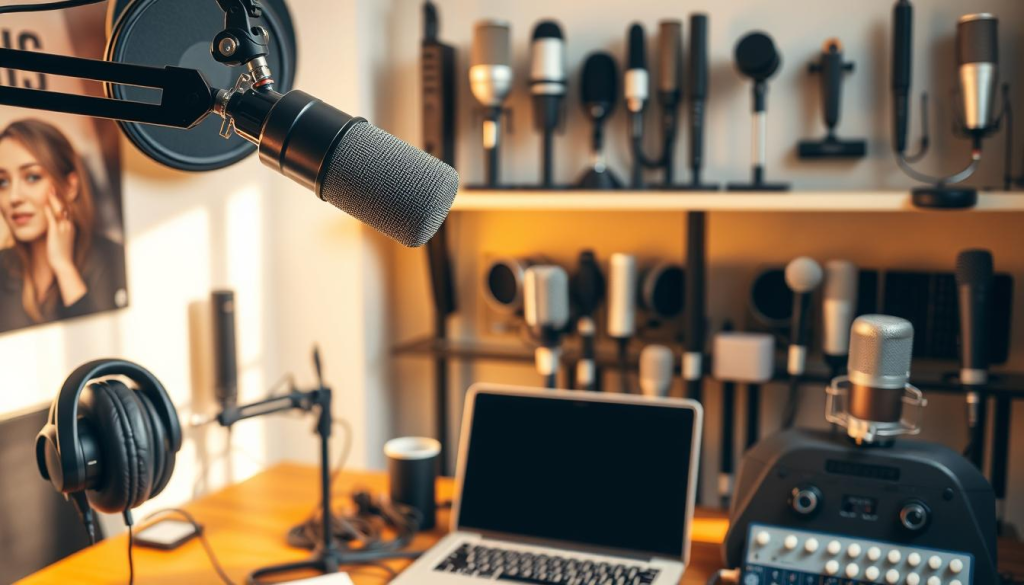
Essential Equipment for Your Passion Project Podcast
Starting a podcast from your passion project needs the right tools. You’ll want to invest in key equipment to sound professional.
Budget-Friendly Starter Setups
Starting a hobby podcast doesn’t have to cost a lot. Begin with a basic setup. This includes a quality microphone and headphones.
The Blue Yeti USB microphone is a favorite. It’s affordable and sounds good.
Software Solutions for Recording and Editing
You’ll need software for recording and editing. Audacity is a free, easy-to-use option. It’s perfect for beginners.
Upgrading Your Gear as You Grow
As your hobby podcast gets more popular, you might want better equipment. A better microphone or a portable recorder can improve your sound.
Talking to your listeners can also help. They can tell you what they like and how to make it better.
Start with the basics and be ready to improve. This way, you can make a podcast that your listeners will love.
Planning Your Podcast Format and Structure
Your podcast’s format and structure are key to its success. They help keep your audience interested and engaged.
Solo Shows vs. Interviews vs. Co-Hosted Formats
Choosing the right format is important. Solo shows offer a personal touch. Interviews bring in different views. Co-hosted formats make the show lively.
Episode Length and Release Schedule Considerations
Figuring out the best episode length and release schedule is crucial. Think about what your audience likes and what you can handle.
| Format | Episode Length | Release Schedule |
|---|---|---|
| Solo Show | 20-30 minutes | Weekly |
| Interview | 45-60 minutes | Bi-Weekly |
| Co-Hosted | 30-45 minutes | Weekly |
Creating Templates for Consistent Production
Use templates to make your production smoother. Include a standard intro, segment dividers, and a consistent outro.
Developing Your Show’s Segments
Segments make your podcast more interesting. Try storytelling, interviews, or educational content in your episodes.
With careful planning, you can make a podcast that your audience will love.
Creating Compelling Content From Your Hobby
The secret to a great hobby podcast is sharing your real experiences. When you talk about what you love, it connects with your listeners. This makes your content authentic and memorable.
Transforming Personal Experiences Into Episodes
Think about your journey with your hobby. Talk about the ups and downs, your wins, and what you’ve learned. For example, if you love photography, share tips, talk about your favorite gear, or tell stories of your best shoots.
Storytelling Techniques for Hobby-Based Content
Good storytelling makes your content fun to listen to. Here are some tips:
- Use vivid descriptions to paint a picture in your listeners’ minds.
- Incorporate dialogue or interviews with other enthusiasts.
- Share personal anecdotes that illustrate your points.
Balancing Education, Entertainment, and Inspiration
A top hobby podcast educates, entertains, and inspires. To do this, consider the following:
- Provide valuable insights or tips related to your hobby.
- Share engaging stories or examples.
- Encourage listeners to take action or explore their own creativity.
Planning Your Content Calendar
Plan your content in advance with a calendar. This helps you organize your ideas and keep your podcast balanced. By doing this, you’ll create a hobby podcast that always delivers authentic content to your audience.
Building a Community Around Your Podcast Niche
Creating a community around your podcast is key for its growth. Sharing your passion attracts like-minded people who want to connect and engage with your content.
Engaging With Fellow Enthusiasts
Engaging with fellow enthusiasts is a great way to build a community. Use social media groups, forums, or live events to interact with your audience. This builds a sense of belonging and loyalty.
For example, the Empowered Podcasting Community’s meetups show the power of in-person connections. Connecting with listeners makes the experience more personal and engaging.
Leveraging Social Media for Community Growth
Social media is a powerful tool for growing your community. Share behind-the-scenes content, sneak peeks, or exclusive updates to keep your audience engaged.
- Share user-generated content to encourage audience participation
- Utilize hashtags to increase visibility and attract new followers
- Host live Q&A sessions or webinars to interact with your audience
Creating Interactive Elements for Listener Participation
Creating interactive elements like contests, challenges, or Q&A sessions boosts listener engagement. It makes your audience feel valued and invested in your podcast.
Hosting Virtual and In-Person Events
Hosting events, whether online or in-person, is a great way to unite your community. Events like webinars, workshops, meetups, and conferences create lasting connections among listeners.
Building a community around your podcast niche ensures its long-term success. As I engage with my audience and foster a sense of community, I’m confident my podcast will thrive.
Overcoming Common Challenges in Hobby Podcasting
Hobby podcasters face unique obstacles like imposter syndrome and time management. I’ve learned to create authentic content that connects with listeners.
Dealing With Imposter Syndrome
Imposter syndrome is a big challenge for many. It makes you doubt your expertise, even when you’re passionate. Share your personal stories and unique views to overcome this.
Managing Time Between Your Hobby and Podcast Production
It’s hard to balance hobby time and podcasting. Try to blend your podcasting into your hobby. For example, talk about photography while you’re taking photos.
Handling Criticism and Feedback
Not everyone will like your podcast, and that’s fine. When you get criticism, think about who’s saying it and what they’re saying. Use helpful feedback to better your hobby podcast. Ignore comments that don’t help.
Preventing Burnout While Podcasting About Your Passion
To avoid burnout, set achievable goals and stick to a schedule. Take breaks and don’t overwork. Remember, your hobby podcast should be fun, not stressful.
Knowing these challenges and how to tackle them can make your hobby podcast a success. It will bring happiness to you and your listeners.
Growing Your Audience Beyond Your Immediate Hobby Circle
To make my passion project podcast a hit, I need to grow my audience. I do this by reaching out, optimizing my content, and making it appealing to more people.
Cross-Promotion Strategies With Related Content Creators
One great way to grow my audience is by teaming up with other creators in my niche. This lets me tap into their followers and introduce my podcast to new listeners who might be interested.
I can join podcasting communities, go to events, or chat online in forums about my hobby. This helps me make friends with other creators. It also opens doors for guest spots, joint episodes, or webinars together.
Optimizing Your Podcast for Discoverability
It’s key to make my podcast easy to find. I do this by using the right keywords in my title, description, and tags. I also make sure my cover art grabs attention in directories.
To get more eyes on my podcast, I submit it to Apple Podcasts, Spotify, and Google Podcasts. I also ask listeners to leave reviews and ratings.
| Platform | Benefits | Tips for Optimization |
|---|---|---|
| Apple Podcasts | Large user base, easy discovery | Use relevant keywords, high-quality cover art |
| Spotify | Personalized recommendations, large user base | Optimize title and description, use playlists |
| Google Podcasts | Integration with Google search, easy discovery | Use relevant keywords, accurate metadata |
Expanding Your Appeal to Adjacent Interests
To grow my audience, I explore interests related to my hobby. This means inviting guests from related fields or talking about topics that are close to my main theme.
Leveraging Guest Appearances to Reach New Listeners
Having guests on my podcast brings in their followers and expands my audience. It’s important to pick guests who fit my niche and have a big following.
To make the most of it, I promote the episode through my guest’s channels. I ask them to share it with their network. This teamwork benefits both of us, growing my audience and giving my listeners great content.
Monetizing Your Passion Project Podcast
Monetizing your hobby podcast needs creativity and knowing your audience well. You’ve attracted listeners who share your interests. This is because your podcast is about something you’re passionate about.
Sponsorship Opportunities for Niche Audiences
Sponsorship is a good way to make money, thanks to your niche audience. Brands want to reach your engaged listeners. To get sponsors, show them your podcast’s value with numbers and how listeners interact with it.
Creating Premium Content and Membership Models
Offering special content or membership can bring in regular money. This could be extra episodes, exclusive stuff, or early access for loyal fans who pay.
Merchandise and Product Development
Creating merchandise tied to your podcast or hobby can be profitable. Think about branded items like t-shirts, mugs, or products related to your hobby.
Turning Your Podcast Into Speaking and Consulting Opportunities
A successful podcast can open doors to speaking and consulting gigs. Your podcast shows off your expertise, which can be turned into more money.
By exploring different ways to make money, you can make your passion project a real business. Each strategy can be adjusted to fit your unique audience and content.
Conclusion: From Hobby to Thriving Podcast
Turning a hobby into a podcast takes hard work, regular effort, and a flexible mindset. Successful podcasters show us how rewarding it can be. It’s a chance to share your love with others and grow a community of like-minded people.
Start by finding a hobby that’s podcast-worthy. Then, research your niche and find your unique angle. Good equipment, a solid format, and interesting content are key to a successful podcast.
As your audience grows, you can look into making money. This could be through sponsorships or selling special content. Always keep your passion and audience in mind to keep your podcast real.
With determination and creativity, your podcast can become a lively community. It can inspire and connect people who share your interests. By using your hobby to make meaningful content, you can make a lasting impact.