
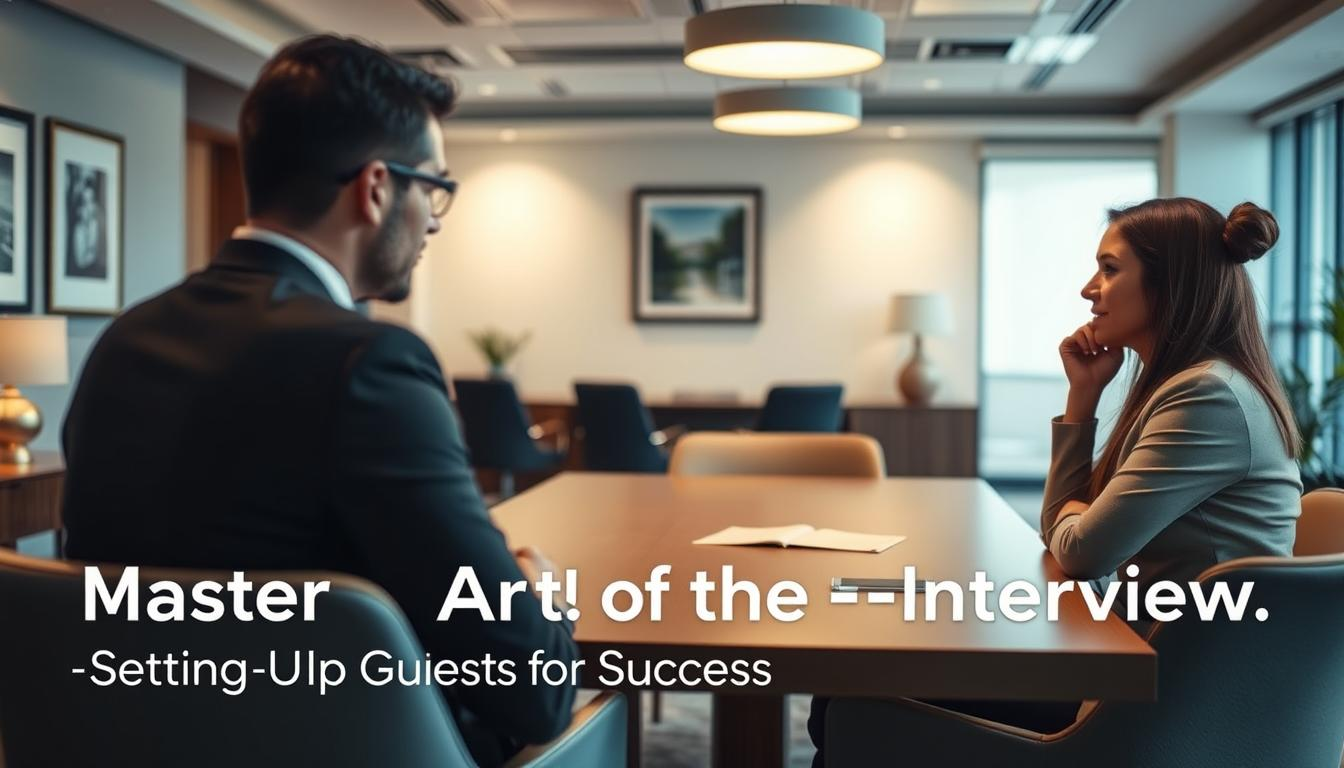
Exploring the creative process is exciting. It’s about interviewing creators and artists for a podcast. Garett Campbell-Wilson’s new podcast, the Creative Process Podcast, is a great example. It features guests from all sorts of creative fields.
Understanding the creative mindset helps us ask better questions. This way, we can get deep into their creative process. It shows us the details of their work.
Key Takeaways
- Understand the creative mindset to craft insightful questions.
- Use effective research techniques to build rapport with guests.
- Tapping into the creative process reveals intricate stories.
- Effective interviewing techniques lead to engaging podcast content.
- Building a connection with guests is crucial for a successful interview.
The Power of Creative Conversations
Exploring artistic creation can add a new dimension to your podcast. Creative talks can connect with listeners and make your podcast stand out. Through artist interviews, I’ve discovered inspiring content.
Why Creative Process Interviews Resonate with Audiences
Interviews about the creative process grab listeners’ attention. Here’s why:
- They give a peek into the creator’s mind, showing the hard work and challenges.
- They offer inspiration to those seeking motivation or a fresh view.
- They build a bond between the listener, host, and guest, creating a community.
Great interviews have a clear vision and a close connection between everyone. Focusing on the creative process makes your podcast more engaging and meaningful.
Setting Your Podcast Apart Through Artistic Exploration
To make your podcast unique, try these strategies:
- Uncover the stories behind your guests’ work for a deeper look at their journey.
- Use artist interviews to share new insights and perspectives, making your podcast a top choice for inspiration.
- Try different formats and styles to keep your content exciting and fresh.
By using these methods, you can improve your podcast and gain a dedicated audience. Stay curious and open to new ideas, guided by the creative process.
Understanding the Creative Mindset Before the Interview
For podcasters, getting into the creative mindset is key. It helps them dive deep into conversations with artists and creatives. To do this, you need to understand the traits that make creatives unique.
Common Traits of Creative Personalities
Creative folks often share certain qualities. They are dedicated to doing their best and see the world in their own way. For example, John Patrick Shanley, a writer/director with many awards, values excellence in his work.
He has worked with stars like Philip Seymour Hoffman. This shows his commitment to quality.
Recognizing Different Creative Processes
Every creative has their own way of working. Some plan everything out, while others go with the flow. It’s important to know these differences to understand their creative journey.
Key traits include:
- Adaptability
- Innovative thinking
- Resilience
Preparing Yourself to Think Like an Artist
To really connect with creatives, you have to see things from their point of view. This means being open to new ideas and ready to ask deep questions. By doing this, you create a space where they feel safe and inspired to share their stories.
Research Techniques for Meaningful Podcast Interviews
Research is crucial for great podcast interviews. It helps you create a welcoming space for your guests. Experts say good research does three things: it wins your guest over, finds topics to skip or shorten, and uncovers new ideas to explore.
Deep-Diving into Your Guest’s Body of Work
To have a meaningful interview, you must understand your guest’s journey. Look at their work to see patterns and changes over time.
Identifying Patterns and Evolution in Their Work
Looking at your guest’s past projects helps you spot important moments and changes. This lets you ask questions that are both interesting and thought-provoking.
Finding Talking Points from Lesser-Known Projects
Exploring lesser-known projects can uncover unique points to discuss. These hidden gems can lead to interesting and unexpected conversations.
Finding the Hidden Stories in Public Interviews
Public interviews and past talks with your guest are full of useful info. They can reveal hidden stories and give you a deeper look into their creative process.
Social Media as a Research Tool for Creative Insights
Social media is a great source for info on your guest’s current projects and interests. By watching their social media, you can learn about their creative thoughts and find topics to discuss.
| Research Technique | Description | Benefit |
|---|---|---|
| Deep-diving into guest’s body of work | Analyzing past projects and creative evolution | Identifies patterns and significant milestones |
| Analyzing public interviews | Examining previous conversations and interviews | Uncovers hidden stories and deeper insights |
| Social media monitoring | Tracking guest’s social media activity | Provides insights into current projects and interests |
Using these research methods can make your podcast interview engaging and memorable. Good research is not just about collecting facts. It’s about using that info to create a meaningful and memorable conversation.
Crafting Questions That Unlock Creative Revelations
To get to the heart of creativity, you need to ask the right questions. When interviewing creators, aim to explore their creative process. This means understanding what sparks their ideas and drives their innovation.
Open-Ended vs. Specific Questions for Artists
For artists, mixing open-ended and specific questions is key. Open-ended questions let guests share their thoughts fully. Specific questions give you a closer look at certain parts of their work.
- Open-ended questions encourage expansive narratives.
- Specific questions offer clarity on specific creative decisions.
Questions That Reveal Creative Turning Points
Discovering key moments in a creator’s journey can be enlightening. It helps you understand their creative process better. By looking into these turning points, you get a deeper look at their work.
Exploring Moments of Inspiration
Asking about moments of inspiration can show where your guests find their spark. This could be from personal experiences, outside influences, or major events.
Discussing Creative Blocks and Breakthroughs
Creative blocks and breakthroughs are crucial in an artist’s journey. Talking about these can show how they handle challenges and find new ways to create.
Avoiding Clichés and Finding Fresh Angles
To keep the conversation lively, it’s important to avoid clichés and look for new views. This means doing your homework on your guests and asking questions that are both fitting and surprising.
With well-thought-out questions, you can have a deep and engaging talk. This will show the full range of your guests’ inspiration and creative methods.
Building Rapport with Creative Guests
When you interview creators, it’s key to build rapport. This helps you understand their creative process better. Great hosts say being eager, enthusiastic, and curious makes guests feel safe and open up.
Creating a Safe Space for Vulnerability
I always try to be genuinely curious and excited about my guests’ work. This makes them feel at ease, sharing their stories and insights. It lets me dive deep into their storytelling from creatives, showing the details of their creative journey.
The Art of Active Listening with Creators
Listening actively is crucial to grasp a creator’s process. I fully engage with what they say, asking questions that prompt them to share more. This shows respect and uncovers important insights into their creative process.
Finding Common Ground with Different Creative Types
Connecting with guests from different backgrounds can be tough. But it’s vital for building rapport. I research their work, looking for shared interests or experiences. This helps create a bond and leads to deeper conversations.
| Rapport-Building Techniques | Description | Benefits |
|---|---|---|
| Creating a Safe Space | Being genuinely curious and enthusiastic | Fosters openness and vulnerability |
| Active Listening | Fully engaging with the guest’s responses | Uncovers valuable insights into the creative process |
| Finding Common Ground | Researching the guest’s work and identifying shared interests | Establishes a strong connection and leads to meaningful conversations |
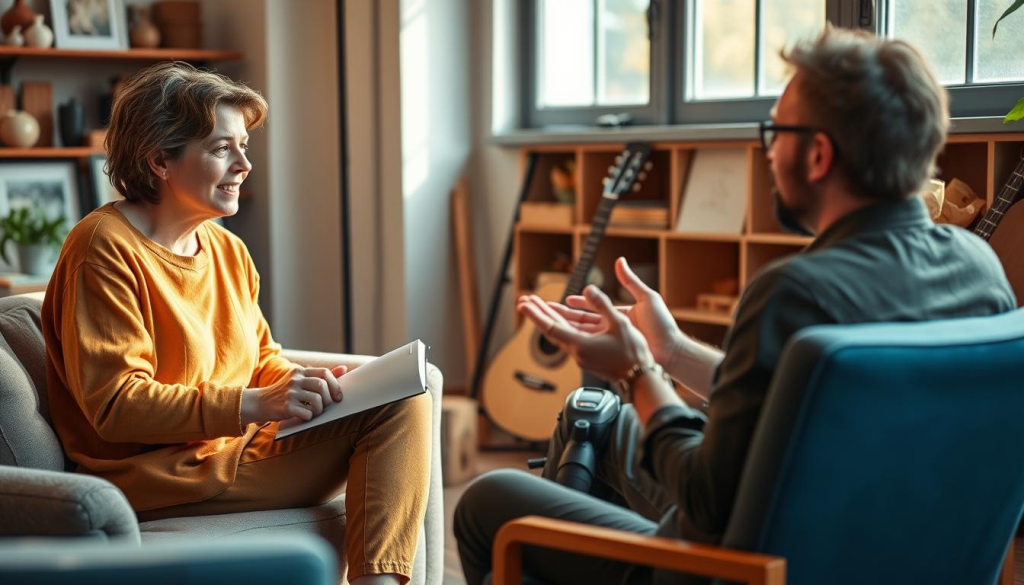
The Anatomy of Successful Podcast Interviews with Artists
Every great podcast interview with artists reveals the secrets of the creative mind. To make a conversation engaging, it’s key to know the structure and flow that makes an interview hit the mark.
Structure and Flow for Creative Conversations
A good interview follows a story-like structure, with a clear start, middle, and end. It starts by building a connection with your guest, exploring their background and creative path. Then, you dive deeper into their artistic process, covering both the best and worst moments.
The goal is to keep the listener hooked and curious about what’s next. This is done by creating a sense of tension and release.
- Start with broad, open-ended questions to set the tone.
- Gradually move into more specific inquiries about their creative process.
- Use the guest’s responses to guide the conversation, adapting your questions on the fly.
Balancing Personal Stories with Technical Process
Finding the right mix between personal stories and technical details is a challenge in interviewing creators. Personal stories can be captivating, but diving into the technical side offers valuable insights. The aim is to blend these elements smoothly, showing both the artist’s personality and their professional skills.
When to Push Deeper vs. When to Move On
Knowing when to dig deeper and when to change topics is crucial in podcast interviews. If a guest seems unsure, it’s best to switch topics. But if they’re passionate about something, exploring it further can lead to deep insights. It’s important to trust your instincts and pay attention to your guest’s signals.
By understanding the anatomy of successful podcast interviews and the creative process, you can craft engaging and insightful talks that connect with your listeners.
Navigating Different Types of Creative Personalities
When you interview creators from different fields, you need to get to know their unique creative ways. Garett Campbell-Wilson’s podcast, the Creative Process Podcast, shows this by talking to people from art, music, and writing. It’s all about finding out what makes each guest special.
Every artist, musician, or writer has their own voice and way of creating. To really connect with them, you have to be flexible. This means adjusting your questions to fit their style and comfort level.
Interviewing Visual Artists About Their Process
When you talk to visual artists, dive into what inspires them and how they create. Ask about their choices in color and composition. This can give you a peek into their creative world.
Questions about experimenting and balancing form and function are also great. They help you understand their artistic vision.
Drawing Out Musicians and Performers
Musicians and performers focus on sound and performance, unlike visual artists. To get their stories, ask about their musical influences and the emotions behind their performances. You can also explore the technical side of their craft.
Learning about the story behind their music or shows can help you connect with them on a deeper level.
Connecting with Writers and Storytellers
Writers and storytellers have their own way of creating, often crafting detailed stories. To connect with them, ask about their writing habits and how they develop characters. Exploring the themes they cover can also be enlightening.
| Creative Field | Key Interview Focus | Sample Questions |
|---|---|---|
| Visual Artists | Inspirations, Techniques, Emotional Journeys | What inspires your color choices? How do you balance form and function? |
| Musicians/Performers | Musical Influences, Performance Context, Technical Aspects | How do your musical influences shape your work? What’s the emotional context of your performances? |
| Writers/Storytellers | Writing Habits, Character Development, Themes | How do you develop your characters? What themes do you commonly explore? |
By understanding and adapting to these different creative personalities, podcasters can create engaging conversations. This enriches the audience’s understanding of the creative process.
Mastering the Technical Aspects of Podcast Interviews
For a great podcast interview, paying attention to the technical details is key. A good host knows that the quality of the recording and the interview setting are crucial. They make or break the listening experience.
Setting Up the Ideal Interview Environment
Creating the perfect environment for podcast interviews is essential. It’s not just about a quiet room. It’s about making your guest feel at home.
Creating Comfortable Spaces for Creative Discussions
A cozy and inviting space can greatly improve your conversation. Make sure the seats are comfy and the decor sparks creativity.
Managing Distractions and Interruptions
To keep your interview flowing smoothly, you must reduce distractions. This might mean turning off notifications or finding a quiet spot.
Recording Equipment Considerations for Creative Conversations
The right equipment can make your podcast sound better. Invest in a good microphone and headphones for clear audio.
| Equipment | Features to Consider | Benefits |
|---|---|---|
| Microphone | Directionality, Frequency Response | Clearer Audio, Less Background Noise |
| Headphones | Comfort, Noise Cancellation | Better Monitoring, Reduced Distractions |
| Recorder | Storage Capacity, Battery Life | Flexibility, Reliability |
Remote vs. In-Person Interviews with Artists
Choosing between remote and in-person interviews depends on your goals and your guests’ preferences. In-person interviews offer a personal touch, while remote ones are flexible and accessible.
Post-Interview Production Strategies
After the interview, it’s time to work on post-production. This is where you make the conversation into a podcast that listeners love. Good strategies here are key to making your podcast stand out.
Editing to Highlight Creative Insights
Editing is a big part of post-production. It’s about picking the best parts of the interview. This makes your podcast flow well and keeps people listening.
Using Music and Sound Design to Enhance Artistic Interviews
Music and sound design set the mood of your podcast. They add emotion and make the experience richer for your listeners.
Repurposing Creative Content Across Platforms
Great hosts share their content in many places. This makes their audience feel connected. You can turn podcast episodes into social media posts or blog articles. This way, more people can enjoy your work.
Some ways to share your content include:
- Creating short clips for social media
- Writing articles or blog posts based on the interview
- Designing visual content like infographics or quote graphics
- Developing video content for YouTube or other video platforms
By using these strategies, you can make your podcast even better. And your listeners will thank you for it.
Conclusion: Elevating Your Podcast Through Creative Exploration
Reflecting on interviewing creators for your podcast, it’s clear that diving into their creative process can lead to amazing talks. By getting into their creative mindset, using good research, and asking the right questions, you can make your podcast both engaging and insightful.
Garett Campbell-Wilson’s podcast, the Creative Process Podcast, is a perfect example. It’s a space where creatives can share and learn from each other. By exploring how artists and creators work, you can uncover their unique views and stories, offering a deep look into the creative journey.
Podcast interviews can help you understand the creative process better and share it with your listeners. By using the tips from this article, you can make your podcast stand out. It will offer a unique experience that connects with your audience.