

Exploring podcast hosting shows me how crucial it is to understand my show’s data. An analytics dashboard gives me insights into how listeners interact with my content. This helps me make better choices to enhance my show.
With the right data, I can tweak my marketing plans, boost engagement, and expand my audience. In this article, we’ll dive into podcast analytics. We’ll look at the main metrics and features of a typical analytics dashboard.
Key Takeaways
- Understand the importance of analytics in podcast hosting
- Learn how to interpret key metrics on your analytics dashboard
- Discover how to use data to inform your content strategy
- Explore the benefits of using an analytics dashboard to optimize your podcast’s performance
- Gain insights into listener behavior and preferences
The Power of Data-Driven Podcasting
Podcast analytics are changing the game. By using podcast data, creators can make their shows better and attract more listeners.
Why Analytics Matter for Podcast Growth
Analytics are key to success in podcasting. They help creators know their audience, see how people engage, and find ways to get better.
Identifying Content That Resonates
Looking at performance metrics shows which episodes hit the mark. This info helps in planning better content.
- Analyze listener feedback and comments.
- Track engagement metrics such as listens and downloads.
- Identify recurring themes or topics that attract listeners.
Measuring ROI on Your Podcasting Efforts
Knowing your podcast’s return on investment (ROI) is vital. By looking at hosting insights and other data, you can see how well your efforts are paying off. This helps in making smart choices.
The Connection Between Data and Content Strategy
Data shapes content strategy by revealing what listeners like. This connection lets podcasters create content that meets audience needs. It boosts engagement and growth.
Navigating Your Podcast Hosting Analytics Dashboard
To make the most of your podcast, get to know its analytics dashboard. This tool gives you deep insights into how your listeners behave. It helps you improve your content strategy.
Common Dashboard Layouts
Most podcast hosting sites have easy-to-use analytics dashboards. Even though they look different, they all show important metrics and charts. These help you understand how well your podcast is doing.
Finding Your Way Around Different Hosting Platforms
Each podcast hosting platform has its own analytics dashboard. It’s important to learn about the specific features and metrics your host offers.
Accessing Historical Data
Most dashboards let you see how your podcast has grown over time. This is useful for tracking your progress.
Exporting Reports for Further Analysis
Many platforms let you export reports for more detailed analysis. This is great for comparing data or spotting trends.
| Platform | Historical Data Access | Report Export Feature |
|---|---|---|
| Platform A | Yes | Yes |
| Platform B | Yes | No |
| Platform C | No | Yes |
By learning how to use your podcast hosting analytics dashboard, you can uncover valuable insights. This knowledge helps you make smart choices to grow your audience.
Essential Podcast Metrics You Should Track
Looking into your podcast’s data can give you insights into what listeners like. It’s key to know which metrics are most important.
Downloads vs. Listens: Understanding the Difference
“Downloads” and “listens” are often mixed up, but they’re not the same. Downloads count how many times your podcast files are accessed. Listens show how much people actually engage with your content.
“The difference between downloads and listens is key to knowing your podcast’s real reach and engagement.” – Podcast Analytics Expert
IAB Certification and What It Means
The Interactive Advertising Bureau (IAB) certification is a standard for podcast metrics. It makes sure the data is accurate and can be compared across platforms. An IAB-certified host gives you reliable metrics for better decisions.
Subscriber Growth Metrics
Tracking how many new subscribers you get is crucial. It shows how your podcast is growing and what listeners like.
Calculating Listener Acquisition Cost
Knowing how much it costs to get new listeners is important. It helps you see if your marketing is working. You can find this by dividing your marketing spend by the number of new subscribers.
“Knowing your listener acquisition cost is key to optimizing your marketing budget and maximizing ROI.” – Marketing Strategist
Audience Retention Data
Audience retention metrics show how well your podcast keeps listeners. This data is great for finding out what content works best and what needs work.
Identifying Your Sticky Content
By looking at audience retention, you can find the most engaging parts of your episodes. This is called “sticky content.” Knowing this helps you make future content that keeps listeners interested.
By focusing on these key metrics, you can understand your podcast better. This helps you make decisions based on data to improve your content and grow your audience.
Decoding Listener Behavior Patterns
Understanding how listeners interact with your podcast is key. It helps you make better choices to keep them engaged and attract more fans.
Identifying When Listeners Drop Off
Knowing when listeners stop tuning in is important. You can find this info in your podcast hosting analytics dashboard.
- Look for timestamp data to see where listeners tend to stop listening.
- Use this information to identify weak points in your content.
- Adjust your content structure to keep listeners engaged until the end.
Using Timestamp Data to Improve Content
Timestamp data offers valuable insights. By analyzing it, you can:
- Identify sections that may be too long or boring.
- Determine which topics resonate most with your audience.
- Adjust your content to better meet listener expectations.
Understanding Listening Habits
Day-of-Week and Time-of-Day Analysis
Looking at when listeners tune in helps you plan better. Think about:
- Releasing episodes on days when your audience is most active.
- Scheduling content at times when engagement is highest.
Engagement Metrics That Matter
Engagement metrics are more than just download numbers. Look at:
- Average listening duration.
- Completion rates.
- Listener retention over multiple episodes.
By focusing on these, you can understand your listeners better. This lets you improve your content and grow your audience.
Geographic and Demographic Insights
As a podcaster, knowing where and who your listeners are is key. This info helps you make your content better fit their needs.
Leveraging Location Data
Location data tells you where your listeners are. This info lets you target regional content and ads more precisely.
Tailoring Content to Regional Audiences
Geographic data shows you what regions like your content. If you see a big following in a city or country, make content for them.
Age and Gender Demographics
Knowing your listeners’ ages and genders helps you make content they’ll like. This info is also key for sponsors and advertisers.
| Demographic | Percentage |
|---|---|
| 18-24 years | 25% |
| 25-34 years | 35% |
| 35-44 years | 20% |
Device and Platform Preferences
It’s important to know how your audience listens to your podcast. This lets you make sure your podcast is easy to access.
Optimizing for Popular Listening Platforms
Find out which platforms your listeners prefer. Then, make your podcast work best on those platforms for a smooth listening experience.
Performance Metrics Across Episodes
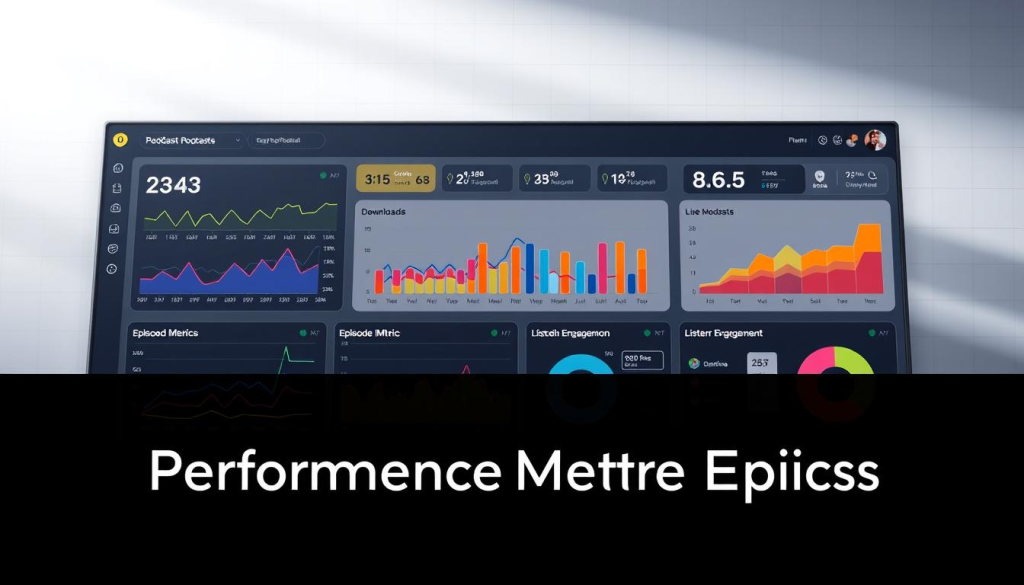
By looking at performance metrics across episodes, you can find trends and patterns. This helps you understand what works and what doesn’t. It’s key to improving your podcasting strategy.
Comparing Episode Performance
To compare episode performance, you need to track the same metrics. This includes download numbers, listener retention rates, and engagement metrics. Tracking these across episodes helps you spot patterns.
Creating Benchmarks for Success
Setting benchmarks is crucial to see if your podcast is getting better. Look at your best episodes and see what they have in common. This could be guest selection or content format. Use these insights to aim for success in future episodes.
Identifying Your Most Successful Content
Knowing what makes your best episodes great is key for planning future content. Look for common traits like topics, interview styles, or release timing. This helps you create more content that your audience will love.
Analyzing Common Elements in Top Episodes
When looking at your top episodes, think about guest popularity, episode length, and content depth. Finding these common elements helps you create a formula for success. You can use this for future episodes.
Spotting Trends Over Time
It’s important to analyze trends over time to adjust your content strategy. Use your analytics dashboard to see how listener behavior changes. This might show seasonal trends or shifts in what they like.
By regularly checking your performance metrics, you can make smart decisions about your podcast. This data-driven approach helps you grow your audience and keep them engaged.
How to Use Podcast Hosting Data to Grow Your Audience
To grow your podcast audience, you need more than just great content. You need a strategic plan backed by data from your hosting platform. Use hosting insights to improve your content, schedule, and marketing.
Content Planning Based on Analytics
Podcast hosting data lets you plan your content with a data-informed content calendar. Analyze your listener behavior and performance metrics to find what works best.
Creating a Data-Informed Content Calendar
Start by looking at your past episodes. Find patterns in your data, like:
- Episodes with high engagement
- Popular topics
- Best formats (e.g., interviews, solo episodes)
This helps you plan content that will likely engage your audience.
Optimizing Release Schedules
Your hosting data can also improve your release times. Analyze your listener behavior to find the best times to post.
Testing Different Publishing Times
Try different release times and see how it affects your listeners. Use your data to find:
- The best days to release
- The best time of day
- Seasonal listening patterns
| Publishing Time | Average Listens | Engagement Rate |
|---|---|---|
| Monday Morning | 5000 | 80% |
| Thursday Evening | 4500 | 75% |
| Sunday Afternoon | 5500 | 85% |
Targeting Marketing Efforts
Lastly, your hosting data can improve your marketing. Understand your audience’s demographics and habits for targeted ads.
Using Listener Data for Ad Campaigns
Use your listener data for ad campaigns. For example, if your audience is mostly young adults, make ads for them.
By using these strategies, you can grow your audience and make your podcast more engaging.
Advanced Analytics Techniques for Podcasters
To really understand your podcast’s performance, you need advanced analytics tools. As a podcaster, using these techniques can greatly improve your show’s reach and engagement.
Setting Up Custom Tracking
Custom tracking lets you watch specific parts of your podcast’s performance. You can do this by using special identifiers for your episodes.
Using UTM Parameters and Unique URLs
UTM parameters and unique URLs are key for tracking your marketing campaigns. Adding UTM parameters to your episode URLs helps you see how listeners find your content on different platforms.
Creating Performance Dashboards
A performance dashboard gives you a clear view of your podcast’s main metrics. It lets you quickly see how your show is doing and make smart choices.
Tools for Visualizing Your Podcast Data
There are many tools to help you see your podcast data, like Google Data Studio and Tableau. These tools let you make interactive and dynamic dashboards. You can share them with your team or stakeholders.
Implementing A/B Testing for Your Podcast
A/B testing compares two versions of your podcast to see which one does better. You can test things like episode titles, descriptions, or even the content itself.
By using these advanced analytics techniques, you can understand your podcast better. This helps you make data-driven choices to grow your audience.
Podcast Hosting Platforms and Their Analytics Capabilities
It’s important to know how different podcast hosting platforms track your show’s performance. As podcasters, we must understand each platform’s strengths and weaknesses. This helps us make better choices for our content.
Strengths and Limitations of Major Hosting Services
Big names like Anchor, Buzzsprout, and Libsyn have their own analytics tools. Anchor gives you basic stats for free. Buzzsprout’s paid plans offer more detailed insights. Libsyn, meanwhile, provides detailed analytics, including where your listeners are from.
Comparing Basic vs. Premium Analytics Features
Paid plans usually give you more detailed data than free ones. They often include listener demographics, how engaged they are, and more detailed download stats.
Unique Analytics Features by Platform
Some podcast hosting platforms have special features for tracking your show. For example, Spotify for Podcasters shows how listeners behave on their platform. Apple Podcasts Subscriptions gives you analytics too.
Which Hosts Offer the Most Comprehensive Data
Podbean and Spreaker are known for their detailed analytics. They give insights into listener behavior and what devices they use. When picking a podcast hosting platform, look at how much data they offer.
Consolidating Data from Multiple Sources
To really understand your podcast’s success, you need to combine data from all sources. Tools like Podtrac and Chartable help gather data from various platforms. This gives you a full picture of your hosting insights.
Monetization Insights from Your Analytics
To make the most of your podcast, you need to understand your analytics, especially for making money. By looking at your listener data, you can find important insights for earning more.
Connecting Listener Data to Revenue Opportunities
Knowing what your listeners like is key to making money. By checking how long they stay and how they interact, you can spot chances to attract sponsors.
Calculating Your Audience’s Monetary Value
To figure out how much your listeners are worth, think about listener engagement, demographics, and listening habits. This info shows advertisers how valuable your audience is.
Metrics That Matter to Potential Sponsors
Sponsors want to know about your podcast’s reach and how engaged your listeners are. Important metrics include:
- Unique listeners
- Average listening time
- Engagement rates
Creating a Media Kit Based on Your Analytics
A media kit is vital for getting sponsors. By showing key metrics and listener details, you prove your podcast’s worth.
Optimizing Ad Placement Based on Listening Patterns
Studying how people listen helps you place ads better. By knowing when and where listeners stop, you can make ads more effective.
Common Analytics Mistakes and How to Avoid Them
Understanding podcast analytics is key. We make choices based on data from hosting platforms. But, without clear insight, we might misread the signs.
Misinterpreting Data Points
One big mistake is mixing up downloads and listens. Downloads don’t always mean listens. A download could be from a bot or someone who doesn’t listen.
When Downloads Don’t Equal Listeners
It’s vital to tell downloads from listeners apart. For example, someone might download but not listen. Knowing this helps you see how engaged your audience really is.
Overlooking Critical Metrics
Another error is ignoring key metrics that show how your audience acts. Vanity numbers like total downloads can be misleading if not seen with other data.
Beyond the Vanity Numbers
Don’t just look at total downloads. Check out audience retention and engagement too. These give a clearer view of how your podcast is doing.
Making Decisions on Insufficient Data
Decisions based on too little data can lead to wrong moves. It’s important to have enough data to make smart choices.
How Much Data Is Enough?
The data needed varies, but a few months’ worth is usually best. It gives a solid view of your podcast’s trends.
| Metric | Description | Importance |
|---|---|---|
| Downloads | Total number of times an episode is downloaded | Medium |
| Listeners | Actual number of people who listened to an episode | High |
| Audience Retention | Percentage of listeners who stay engaged throughout an episode | High |
Conclusion: Turning Analytics into Action
Understanding podcast hosting is key in the world of podcasting. It helps us improve our content and reach more listeners. By using hosting insights and analyzing listener behavior, we can make our podcast better.
We’ve looked at how analytics dashboards help us make decisions. They guide us in planning our releases, marketing, and creating content that our audience loves. This way, we can connect with our listeners on a deeper level.
The secret to success is using analytics to guide our actions. By checking our hosting data often and making changes, we can grow our podcast. It’s important to keep an eye on the right metrics and adjust as the podcasting world changes.