
As a podcaster, I know how key it is to reach more people. With smart speakers and voice assistants on the rise, making your content easy to find by voice is essential.
How we listen to content is changing. More people are using voice-activated devices. Being found on these platforms can really grow your audience.
In this article, I’ll show you how to get your podcast found by smart speakers and voice assistants. We’ll dive into voice search and give you tips to boost your visibility.
Key Takeaways
- Understand how voice search works and its impact on content discovery.
- Learn how to optimize your podcast for smart speakers and voice assistants.
- Discover actionable tips to improve your podcast’s visibility.
- Explore the importance of voice-activated content consumption.
- Find out how to reach a wider audience through smart speaker optimization.
The Rise of Voice-Activated Content Consumption
How we use content is changing fast with voice-activated devices. Smart speakers are making it easier to listen to podcasts. Let’s dive into how this affects podcasters.
Current Smart Speaker Usage Statistics
Millions use smart speakers every day to listen to content. It’s not just about being easy; it’s a big change in how we find and enjoy content. Voice search is now the top choice for many, and podcasters must keep up.
How Listeners Discover Podcasts Through Voice
People use voice commands to find and listen to podcasts. This new way of finding podcasts is changing how we listen. By focusing on voice search, podcasters can reach more people.
The Voice Search Opportunity for Podcasters
Voice-activated content is a big chance for podcasters. By learning about voice search and making their content better for it, they can stay ahead. It’s not just about being found; it’s about being easy to find on voice devices.
As we go forward, voice search will be key in podcast listening. By embracing this trend and making our content easy to find by voice, we can keep our podcasts relevant and accessible.
Understanding How Voice Search Works for Podcasts
Voice-activated devices are getting more popular. This means it’s key for podcast creators to know how voice search works. Voice search changes how we find and listen to content, including podcasts.
Voice Search Algorithms vs. Traditional Search
Voice search algorithms understand natural language, unlike traditional text search. Users don’t type keywords; they ask questions. For example, “What’s the latest episode of my favorite podcast?” instead of “latest podcast episode.”
This change means podcasters must make their content more conversational. They need to match how people speak.
Key differences between voice search and traditional search include:
- Conversational tone: Voice search queries are often full sentences or questions.
- Long-tail keywords: Voice search tends to use more specific phrases.
- Contextual understanding: Voice search algorithms aim to understand the context of the query.
How Smart Speakers Process Audio Queries
Smart speakers first recognize the wake word (like “Alexa” or “Hey Google”). Then, they interpret the query. This involves complex NLP to grasp human language, including accents and dialects.
For podcasters, clear and specific metadata is crucial. It greatly affects how easily your podcast is found.
Natural Language Processing and Your Podcast
NLP is key for voice assistants to understand queries. By optimizing your podcast’s metadata, you can boost its visibility in voice search. Use natural, conversational language that matches how your audience might search for your content.
To use NLP for your podcast, make your metadata clear and concise. This helps voice assistants understand your podcast better. It also makes it easier for listeners to find what they’re looking for.
Essential Podcast Hosting Considerations for Voice Discovery
With voice assistants becoming common, picking the right podcast hosting is key. How your podcast is hosted affects its visibility on smart speakers. It’s important to think about several key factors.
Choosing Voice-Friendly Podcast Hosting Platforms
When picking a podcast hosting platform, choose one that works with voice assistants. Look for platforms that support RSS feeds. These are often used by voice assistants to find and play podcast content. Some hosting platforms are already set up for voice discovery, so consider these options.
RSS Feed Optimization for Voice Assistants
Optimizing your RSS feed is key for voice discovery. Make sure your RSS feed is current, accurate, and has all the needed metadata. This includes a clear title, a short description, and relevant keywords. An optimized RSS feed helps voice assistants understand and sort your podcast right.
Hosting Requirements for High-Quality Audio Delivery
High-quality audio is essential for a great listening experience on smart speakers. Your podcast hosting platform should support high-quality audio formats and deliver reliably. Check the bitrate and format your hosting platform supports to meet voice assistant needs.
By focusing on these key points, you can make your podcast easier to find and listen to on voice-activated devices. Choosing the right hosting, optimizing your RSS feed, and ensuring high-quality audio are all important steps for the voice-first era.
Optimizing Your Podcast Metadata for Voice Search
As more people use voice-activated devices, making your podcast metadata easy to find is key. With smart speakers becoming popular, it’s important to make sure your podcast is easy to discover. This means your metadata needs to be optimized for voice search.
Crafting Voice-Searchable Titles
Your podcast title is often the first thing a voice assistant sees when searching. Keep it short and to the point. Avoid complicated words or jargon that might confuse the voice recognition.
Tip: Use keywords that people might search for when looking for content like yours. This helps your podcast get recommended by voice assistants.
Writing Smart Speaker-Friendly Descriptions
When writing your podcast description, aim for clarity and relevance. Voice assistants often read out descriptions, so make it concise and engaging. Include the main topics you cover and use relevant keywords naturally.
Example: “Join us weekly for in-depth discussions on technology trends and innovations.”
Keyword Strategies for Voice Discovery
Keyword strategies are crucial for voice discovery. Find common voice search queries related to your podcast and use these keywords in your metadata. Tools like Google Keyword Planner can help you find the right keywords.
Episode Tagging Best Practices
Proper episode tagging helps voice assistants understand and categorize your content. Use clear and descriptive tags that match the episode’s topic. Being consistent in tagging helps voice search algorithms recognize your content better.
| Metadata Element | Best Practice | Example |
|---|---|---|
| Title | Keep it concise and descriptive | Daily News Update |
| Description | Clear, engaging, and keyword-rich | “Weekly discussions on tech trends.” |
| Tags | Consistent and descriptive | Technology, News, Innovation |
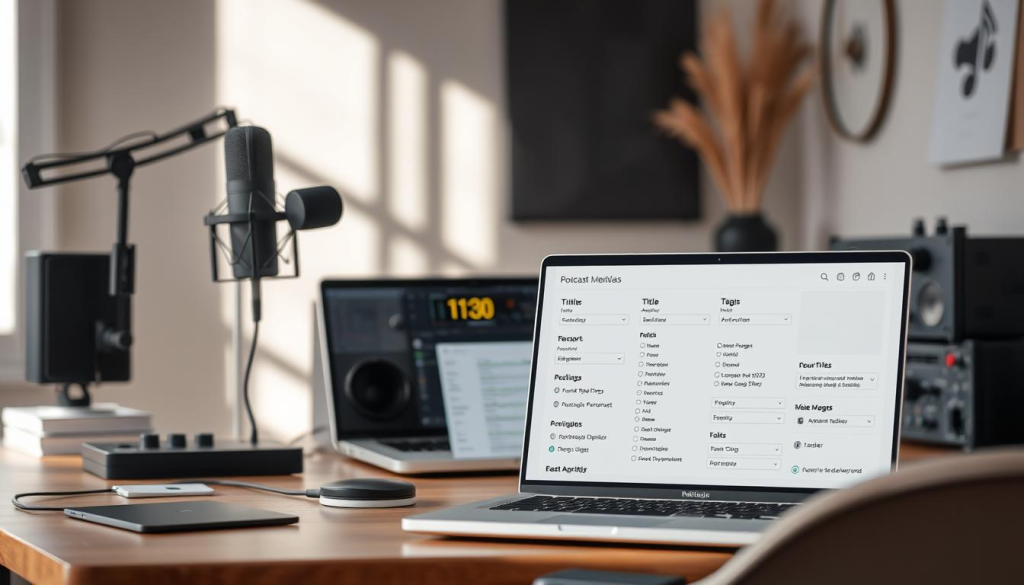
By optimizing your podcast metadata, you’ll make it easier for listeners to find you through voice search. This is especially true for smart speakers and voice assistants.
Creating Voice Commands That Drive Listeners to Your Podcast
As more people use voice-activated content, making your podcast easy to find is key. Voice commands, or invocation phrases, let users access your podcast on smart speakers. Crafting the right commands can boost your podcast’s visibility and make it easier for listeners to find and enjoy your content.
Developing Memorable Invocation Phrases
To make effective voice commands, create phrases that are easy to remember and say. A good phrase should be unique yet simple. For example, “Ask Tech Talk to play the latest episode” is a great choice for a podcast called “Tech Talk.”
Here are some tips for creating your invocation phrase:
- Keep it short and simple
- Avoid using numbers or special characters
- Make sure it’s easy to pronounce
- Ensure it’s unique and doesn’t conflict with other popular skills or commands
Testing Voice Commands Before Promotion
Before sharing your voice commands, test them on different devices and platforms. Try them out on smart speakers like Amazon Echo and Google Home to spot any problems.
“Testing your voice commands is like debugging your code – it’s essential to ensure everything works smoothly,” says an expert in voice technology. “By testing your invocation phrases, you can avoid frustrating your listeners and provide a seamless experience.”
Customizing Commands for Different Smart Speakers
Different smart speakers and voice assistants have different needs for voice commands. For example, Amazon Alexa skills need specific phrases that include the skill name. Tailoring your voice commands for various platforms can help more people find your podcast.
By making memorable invocation phrases, testing them well, and adjusting them for different devices, you can draw more listeners to your podcast. This will improve your voice discovery strategy.
Platform-Specific Optimization Techniques
Optimizing your podcast for different voice assistants needs a special approach. Each platform has its own features. I’ll look into how to make your podcast more discoverable on Amazon Alexa, Google Assistant, and Apple HomePod.
Amazon Alexa Optimization Strategies
To make your podcast work well with Amazon Alexa, focus on a smooth user experience. You should create Alexa skills that make it easy for listeners to find your content.
Creating Alexa Skills for Your Podcast
Creating an Alexa skill for your podcast gives users a personalized experience. Here’s what you need to do:
- Develop a skill that can understand and respond to user requests
- Integrate your podcast content with the skill
- Test and certify the skill to ensure it meets Amazon’s guidelines
Flash Briefing Integration
Integrating your podcast with Flash Briefing is another great way to optimize for Alexa. This feature lets users get your content through a personalized news briefing.
“By integrating your podcast with Flash Briefing, you can reach a wider audience and provide users with a convenient way to stay up-to-date with your content.”
Alexa Skill Discovery Features
To make your podcast more discoverable on Alexa, optimize your skill for discovery. Use relevant keywords and make sure your skill is easy to find through voice commands.
Google Assistant Optimization
Google Assistant offers many chances for podcasters to find new listeners. To optimize for Google Assistant, focus on creating Google Actions that let users access your content.
Google Actions for Podcast Discovery
Google Actions let you create a conversational interface for your podcast. This makes it easier for users to find and engage with your content.
Google Podcasts Manager Integration
To further optimize your podcast for Google Assistant, use Google Podcasts Manager. This tool gives you insights into your podcast’s performance and helps you make your content more discoverable.
Apple HomePod and Siri Optimization
Apple HomePod and Siri offer unique chances for podcasters. To optimize for these platforms, focus on Apple Podcasts Optimization and Siri Shortcuts.
Apple Podcasts Optimization
To optimize your podcast for Apple Podcasts, make sure your metadata is current. This includes your podcast title, description, and tags.
Siri Shortcuts for Your Show
Siri Shortcuts let you create custom voice commands for your podcast. By making a Siri Shortcut, you can give users a seamless listening experience.
Common Voice Discovery Mistakes to Avoid
When making your podcast more voice-friendly, watch out for common pitfalls. These mistakes can make it harder for people to find your podcast. I’ll talk about technical issues, content structure problems, and metadata opportunities you might miss.
Technical Pitfalls That Limit Discoverability
Poor audio quality is a big problem. If your podcast sounds bad, voice assistants can’t get it right. Use good recording gear and software to avoid this. Also, inconsistent or missing metadata can hurt your podcast’s visibility. Make sure your podcast’s details, like titles and tags, are right and up-to-date.
Here’s a quick list of technical mistakes to avoid:
| Technical Pitfall | Impact on Discoverability |
|---|---|
| Poor Audio Quality | Difficult for voice assistants to understand and transcribe |
| Inconsistent or Missing Metadata | Reduces accuracy in search results and discoverability |
| Incompatible Podcast Hosting | Limits accessibility and discoverability on certain platforms |
Content Structure Issues That Confuse Voice Assistants
Voice assistants need clear content to work well. Poorly formatted episode titles and descriptions can confuse them. Keep your titles and descriptions short and to the point. Also, use clear categories and tags to help voice assistants understand your podcast’s topics.
Overlooked Metadata Opportunities
Metadata is key for voice discovery. Missing out on certain metadata can hide your podcast from listeners. Providing transcripts for your episodes can help voice assistants get your podcast’s content. Also, using keyword-rich descriptions can help voice assistants find your podcast based on topics and themes.
By knowing and avoiding these mistakes, you can make your podcast easier to find. This way, more people can enjoy your podcast.
Promoting Your Podcast’s Voice Capabilities
Promoting your podcast’s voice features is key in today’s voice-first world. As more people use voice-activated content, teaching listeners how to access your podcast is crucial. This helps them enjoy your podcast with voice commands.
Teaching Listeners Voice Commands
To get listeners to use voice commands, teach them how. Mention the voice commands in your podcast episodes. For example, say, “To listen to our latest episode on Amazon Alexa, just say, ‘Alexa, play the latest episode of [Your Podcast Name]’.”
You can also make a page on your website with voice commands for various smart speakers. This makes it easy for listeners to find and use them.
Cross-Platform Promotion Strategies
A cross-platform promotion strategy is vital for reaching more listeners. This means making your podcast available on Amazon Alexa, Google Assistant, and Apple Siri.
For example, you can tell listeners about Google Assistant by saying, “Listen to our podcast on Google Assistant by saying, ‘OK Google, talk to [Your Podcast Name]’.” This attracts listeners who use different smart speakers.
Incorporating Voice Instructions in Episodes
Adding voice instructions to your podcast episodes can improve the listener experience. You can give voice commands at the start or end of episodes. For instance, say, “To catch up on our previous episodes, just ask your smart speaker to play [Your Podcast Name] on [Platform]’.”
Social Media Promotion Tactics
Using social media is a great way to promote your podcast’s voice features. Create posts that show how listeners can use voice commands to access your podcast. For example, a tweet might be, “Did you know you can listen to our podcast on Amazon Alexa? Just say, ‘Alexa, play [Your Podcast Name]’! #VoiceCommands #PodcastTips“
By using social media, you can reach more people. This encourages more listeners to use voice commands to enjoy your podcast.
Conclusion: Future-Proofing Your Podcast in the Voice-First Era
As voice technology grows, it’s crucial to make your podcast future-proof. In this voice-first era, keeping up with trends is key for finding your podcast. This helps with podcast discoverability.
By using the strategies from this article, your podcast can stay competitive. It’s important to keep improving to keep up with voice technology changes.
Make sure to check and update your podcast’s metadata, voice commands, and hosting often. This will help you stay ahead in the voice-first era. Doing this will help your podcast reach more people.