
As I explore podcasting, I’ve learned how vital analytics are. They help me grow my audience and make my content better. With many podcast hosting platforms out there, each with its own analytics tools, it’s key to see what they offer.
The podcasting world is booming, and creators want to use data to improve their shows. In this article, we’ll look at the analytics from top platforms like Spotify for Podcasters, Apple Podcasts Connect, and others. We’ll check out Buzzsprout, Libsyn, Podbean, Acast, Simplecast, and Transistor.
Key Takeaways
- Understand the different analytics tools offered by various podcast hosting platforms.
- Learn how to use insights from these platforms to improve your podcast.
- Compare the features and benefits of each platform’s analytics.
- Discover how to optimize your content using data-driven insights.
- Make informed decisions about which podcast hosting platform is best for you.
Why Podcast Analytics Matter for Show Growth
Using data metrics and listener insights is crucial for your podcast’s success. By knowing how your audience interacts with your content, you can make better choices. This helps improve your show’s quality and reach more people.
The Connection Between Data and Podcast Success
Podcast analytics give you insights into listener behavior. They help you see what works and what doesn’t. As podcast expert Daniel J. Lewis said, “The key to a successful podcast is not just creating great content, but understanding your audience and adapting to their needs.”
“The key to a successful podcast is not just creating great content, but understanding your audience and adapting to their needs.”
Key Metrics Every Podcaster Should Track
To grow your podcast, you need to watch specific metrics. These show how well your show is doing. They fall into two main areas:
Audience Growth Indicators
- Subscriber numbers
- Listener retention rates
- New listener acquisition rates
Engagement Metrics
- Average listen time
- Episode completion rates
- Listener drop-off points
Tracking these metrics helps you understand your audience better. For example, if many listeners stop at a certain point, you might need to change your format or pace.
Understanding Basic Podcast Metrics Across All Platforms
To make smart choices about your podcast, knowing the metrics from different hosting platforms is key. Each platform has its own way of measuring how well your podcast does. It’s important to understand these differences.
Downloads vs. Listens: What’s the Difference?
“Downloads” and “listens” are often mixed up, but they mean different things. Downloads count how many times an episode is downloaded. Listens count how many times it’s actually played. Knowing this helps you see how well your podcast is doing.
Audience Retention and Drop-off Points
Audience retention shows how well your podcast keeps listeners. Drop-off points show where people tend to stop listening. By looking at these, you can find out what keeps people interested and what might lose them.
Subscription Rates and What They Tell You
Subscription rates show how many listeners have chosen to follow your podcast. A high rate means your content is drawing people in and keeping them coming back. Watching these rates helps you see if your content strategy is working.
| Metric | Description | Importance |
|---|---|---|
| Downloads | Number of times an episode is downloaded | Indicates potential audience size |
| Listens | Number of times an episode is played | Reflects actual engagement |
| Audience Retention | Measures listener engagement throughout an episode | Helps identify engaging content |
Top Podcast Hosting Platforms and Their Analytics Packages
Understanding the analytics of each podcast hosting platform is key for growth. Each platform has its own strengths and weaknesses in analytics.
Overview of Major Hosting Solutions
Platforms like Buzzsprout, Libsyn, and Podbean offer various analytics features. Buzzsprout has easy-to-understand visual analytics. Libsyn provides detailed reports and historical data. Knowing these differences helps choose the right platform.
Free vs. Paid Analytics Features
Free and paid analytics features can greatly affect your podcast’s growth. Podbean offers strong free analytics. Others might need a paid plan for deeper insights. It’s important to consider your podcast’s size and goals when deciding.
IAB Certification and Why It Matters
IAB certification shows a platform’s analytics are accurate and reliable. As podcasters, we should look for IAB certified platforms. This ensures our decisions are based on trustworthy data. “Accurate measurement is the foundation of effective advertising and content creation,” the IAB says. This certification is crucial in hosting analytics comparison.
Spotify for Podcasters: Analytics Deep Dive
Spotify for Podcasters makes it easy to understand your audience. It offers detailed analytics. These tools help podcasters understand listener behavior, demographics, and how episodes perform.
Listener Demographics and Behavior Insights
Spotify for Podcasters gives insights into listener demographics like age, gender, and location. This info is key for making content your audience will love. It also helps you see how listeners find and interact with your podcast, improving your strategy.
Episode Performance Comparisons
Spotify’s analytics make it easy to compare episode performances. You can see which episodes get the most listens and engagement. This helps you spot what works and what needs work.
How to Access and Navigate the Dashboard
Getting to the Spotify for Podcasters dashboard is easy. Just log in and explore sections like listener demographics and episode performance. The design is simple, so you can find what you need fast.
Actionable Insights from Spotify Data
Spotify’s data lets you make smart choices about your content. For example, if a certain topic or format is a hit, focus on more of it. This way, you can keep your audience engaged.
| Metric | Description | Usefulness |
|---|---|---|
| Listener Demographics | Age, gender, and location of listeners | Tailoring content to audience preferences |
| Episode Performance | Comparative analysis of episode listens and engagement | Identifying successful content patterns |
| Listener Behavior | How listeners discover and engage with your podcast | Enhancing content strategy and engagement |
Apple Podcasts Connect: Understanding Your Data
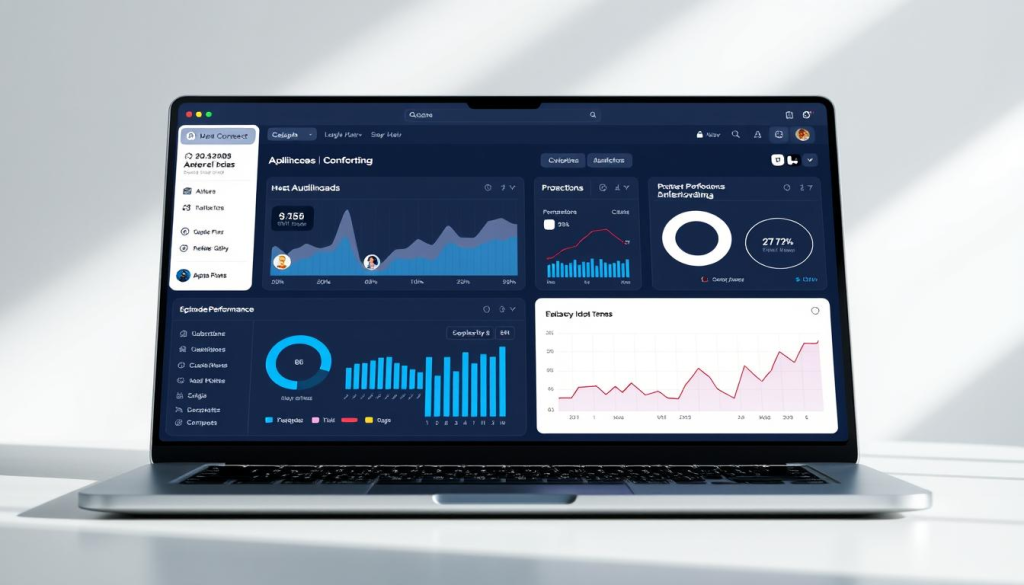
Getting to know the data from Apple Podcasts Connect is key for podcasters. It helps them improve their content strategy. Apple Podcasts Connect gives unique metrics that show how listeners behave and how your podcast does.
Interpreting Apple’s Unique Metrics
Apple Podcasts Connect tracks listeners, episode downloads, and how long people listen. These numbers are important for seeing how your content connects with your audience. For example, a high drop-off rate might mean some episodes or parts don’t hit the mark.
Trends and Patterns in Apple Listeners
By looking at Apple Podcasts Connect data, you can spot trends and patterns. You might see more listeners after a new episode or a steady retention rate. Knowing these can help you adjust your content and schedule to keep your audience engaged.
Limitations of Apple’s Analytics
Apple Podcasts Connect is great, but it has its limits. It might not give as much demographic info as other platforms. Knowing these limits helps you use the data you have wisely.
Making the Most of Apple’s Listener Data
To get the most from Apple’s data, focus on what’s most important for your podcast. This could be tracking listener numbers over time or seeing how different episode types do. By doing this, you can make smart choices about your content and how you share it.
| Metric | Description | Usefulness |
|---|---|---|
| Listener Numbers | Total count of unique listeners | High |
| Episode Downloads | Number of times episodes are downloaded | Medium |
| Audience Retention | Percentage of listeners who complete an episode | High |
Comparing Dedicated Podcast Hosting Analytics: Buzzsprout, Libsyn, and Podbean
Understanding podcast analytics is key. Dedicated hosting platforms offer many features to help. The right analytics can grow your audience and improve your content.
Let’s look at the analytics of three big platforms: Buzzsprout, Libsyn, and Podbean. Each offers unique listener insights.
Visual Analytics and Ease of Use
Buzzsprout is famous for its visual analytics. It makes data easy to understand at a glance. You get clear views of downloads, daily listeners, and where your audience is from.
Detailed Reporting and Historical Data
Libsyn is great for detailed reporting and history. You can see detailed stats over time. This helps you analyze trends and listener behavior deeply.
- Detailed daily and monthly download statistics
- Historical data for long-term trend analysis
- Geographic data to understand audience distribution
Audience Engagement Metrics
Podbean is all about audience engagement metrics. It shows how listeners interact with your podcast. You learn about episode completion rates and which episodes are hits.
Which Platform Offers the Best Value for Analytics
Choosing the right platform depends on what you need. Buzzsprout is great for visual analytics. Libsyn is best for historical data. Podbean focuses on audience engagement.
In summary, each platform excels in hosting analytics comparison. By matching your needs with each platform’s strengths, you can grow your podcast.
Advanced Analytics on Acast, Simplecast, and Transistor
To really get to know our listeners, we need to explore the advanced analytics from our hosting platforms. Acast, Simplecast, and Transistor lead in giving us detailed insights. These insights help us improve our content and grow our audience.
Acast’s Advertiser-Focused Metrics
Acast shines with its metrics for advertisers. These metrics give us insights into listener behavior that attract advertisers. This makes it easier for us to find and keep sponsors.
Simplecast’s Unique Listener Technology
Simplecast’s analytics use a special listener technology. This technology tracks listener behavior accurately without invading their privacy. It helps us understand how our audience engages with our content.
Transistor’s Growth and Trend Analysis
Transistor has great tools for tracking growth and trends. These tools help us see how we’re doing over time and find ways to get better. They’re key for checking if our content strategies are working.
Specialized Features for Serious Podcasters
All three platforms have special features for serious podcasters. They offer detailed demographic data and advanced engagement metrics. These features give us the insights we need to take our podcast to the next level. By using these advanced analytics, we can make our content better, grow our audience, and succeed in the competitive podcasting world.
How to Use Podcast Hosting Analytics to Improve Your Content Strategy
Podcast hosting analytics help me make my content better. I look at data from different platforms to see what my listeners like. This way, I can make content that really speaks to them.
Identifying Your Most Popular Topics and Formats
To find out what my listeners love, I check the data from my hosting platform. It shows me what topics and formats they enjoy the most. This helps me create more of what they want to hear.
For example, if my listeners love episodes with industry experts, I’ll make more of those. It’s all about giving them what they want.
Optimizing Episode Length Based on Listener Behavior
Looking at how my listeners behave helps me adjust my episode length. If they tend to stop listening at a certain point, I’ll make my episodes shorter. It’s all about keeping them engaged.
Timing Your Releases for Maximum Impact
When I release new episodes is just as important as what I release. I check when my listeners are most active. This way, I can make sure my episodes hit the mark.
Creating a Data-Driven Content Calendar
To plan my future episodes, I use the insights from my analytics. I look for patterns in what my listeners like. This helps me make a content calendar that really works.
| Content Type | Average Listen Time | Drop-off Point |
|---|---|---|
| Interviews | 45 minutes | 30 minutes |
| Storytelling | 30 minutes | 20 minutes |
| Educational | 60 minutes | 45 minutes |
By using podcast hosting analytics, I can make content that really connects with my audience. It’s all about creating something they’ll love.
Leveraging Demographic Data to Grow Your Audience and Monetize
To grow and make money from a podcast, using audience demographic data is key. Knowing who listens helps you make content they like. It also helps find new listeners and attract sponsors.
Targeting Content to Your Actual Listeners
By analyzing data, you can make content that really speaks to your listeners. For example, if most of your listeners are 25-45 years old, focus on topics they care about. Targeted content leads to higher engagement and audience retention.
Finding Untapped Audience Segments
Demographic data can also reveal new audience groups. By looking at listener demographics, you can find new people interested in your content. This can help increase your audience and make it more diverse.
Using Analytics to Attract Sponsors and Advertisers
Sponsors and advertisers want podcasts with a clear and engaged audience. By sharing demographic data, you show your podcast’s worth. Detailed analytics can be a key differentiator when attracting sponsors.
Calculating Your CPM and Podcast Value
To attract sponsors, knowing your podcast’s value is crucial. One important metric is CPM (Cost Per Mille), which shows the cost per thousand listeners. Here’s a simple table to calculate your CPM:
| Metric | Value |
|---|---|
| Total Listeners | 10,000 |
| Ad Revenue | $500 |
| CPM | $50 |
Knowing your CPM and podcast value helps you negotiate better with sponsors. This way, you can monetize your podcast more effectively.
Conclusion: Making Data-Driven Decisions for Podcast Success
Understanding podcast hosting analytics is key to success. Creators can use this knowledge to improve their shows, grow their audience, and reach their goals. It’s important to focus on the right data, like downloads, listens, and who’s listening.
With this data, podcasters can see what topics and formats work best. They can also adjust episode length and release times for better results. This way, they can make content that really speaks to their listeners.
As podcasting changes, making smart decisions based on data is more important than ever. By using analytics, creators can fine-tune their shows, attract more listeners, and find new opportunities. This approach helps them achieve their podcasting dreams.