

As a podcaster, I know how key it is to make my podcast guests happy. A good onboarding process makes the interview a success and boosts the show’s quality.
Having a smooth onboarding process makes my guests feel ready and at ease. This lets us dive into a deep conversation. And that makes the episode more interesting and helpful for my listeners.
With a careful guest onboarding plan, I can make sure both of us have a great time. This leads to a better guest experience.
Key Takeaways
- Streamlined onboarding enhances the overall quality of the podcast.
- A well-structured process creates a positive experience for both host and guest.
- Effective guest onboarding leads to more engaging and informative episodes.
- A thoughtful onboarding process prepares guests for a successful interview.
- A positive guest experience results in a better show.
Why a Smooth Onboarding Process Matters for Podcast Success
Creating a seamless experience for podcast guests is key to success. A smooth onboarding process makes guests feel at ease and ready. This leads to a more enjoyable and productive interview, boosting podcast success.
The Impact on Interview Quality
A good onboarding process directly affects interview quality. Guests who are well-prepared tend to have more meaningful conversations. This results in better podcast content.
Better Conversations Lead to Better Content
A smooth onboarding process helps guests feel comfortable. This leads to more open and honest discussions. The result is higher quality content that listeners love.
Reducing Editing Time and Effort
When guests are well-prepared, interviews flow better. This means less editing is needed. This saves time and effort, letting podcasters focus on other aspects of their show.
Building Your Podcast’s Professional Reputation
A professional onboarding process helps build a positive podcast reputation. Happy guests are more likely to share their positive experience. This leads to word-of-mouth referrals.
Word-of-Mouth Referrals from Happy Guests
Guests who have a good experience are more likely to recommend the podcast. This can attract new listeners and potential guests.
Standing Out in a Crowded Podcast Market
In a crowded podcast market, a professional onboarding process stands out. It shows a commitment to quality and detail. This sets the podcast apart from others in the same niche.
| Benefits of Smooth Onboarding | Impact on Podcast |
|---|---|
| Better Conversations | Higher Quality Content |
| Reduced Editing Time | Increased Productivity |
| Word-of-Mouth Referrals | Increased Listeners |
Understanding the Complete Podcast Guest Journey
To ensure a positive experience, it’s essential to understand the complete podcast guest journey. This journey encompasses several stages, from the initial contact to post-interview engagement.
Mapping the Guest Experience Timeline
The guest experience timeline is crucial for managing expectations and ensuring a smooth process. It includes several key phases:
Initial Contact Phase
The initial contact phase involves reaching out to potential guests, discussing their interest, and scheduling the interview. Clear communication is vital during this stage to set the tone for the rest of the experience.
Pre-Interview Preparation
Pre-interview preparation is critical for a successful interview. This includes providing guests with necessary information about the podcast, the interview format, and any technical requirements. Detailed preparation helps reduce guest anxiety and ensures they are comfortable during the interview.
Interview Day Experience
On the day of the interview, creating a welcoming environment is key. This involves conducting pre-call technical checks and being available to address any last-minute issues. A well-managed interview day contributes significantly to a positive guest experience.
Post-Interview Engagement
Post-interview engagement involves thanking the guest, sharing publication dates, and potentially requesting feedback or testimonials. Maintaining a connection with guests after the interview can lead to future collaborations and positive word-of-mouth.
Common Pain Points for First-Time Podcast Guests
First-time podcast guests often face certain challenges that can impact their experience. Understanding these pain points is crucial for providing a better guest experience.
Technical Confusion and Anxiety
Many guests experience technical confusion due to unfamiliarity with recording software or equipment. Providing clear technical guidelines can alleviate this anxiety.
Uncertainty About Content Expectations
Guests may also be uncertain about what to expect during the interview. Clear communication about the interview format and content boundaries can help manage these expectations.
| Stage | Guest Experience | Podcast Host Actions |
|---|---|---|
| Initial Contact | First impression, interest in the podcast | Reach out, discuss details, schedule interview |
| Pre-Interview | Preparation, understanding expectations | Provide necessary information, technical requirements |
| Interview Day | Comfort during the interview, technical ease | Conduct technical checks, create a welcoming environment |
| Post-Interview | Follow-up, appreciation | Thank guests, share publication dates, request feedback |
Essential Tools for Managing Podcast Guests Efficiently
Managing podcast guests is easier with the right software and platforms. It’s important to use the best tools for a smooth experience.
Scheduling Software Options
Scheduling is a key part of managing podcast guests. Using scheduling software makes booking easier for everyone.
Calendly vs. Acuity vs. ScheduleOnce
Calendly, Acuity, and ScheduleOnce are top choices for scheduling. Each has special features:
- Calendly is easy to use and works well with many calendar apps.
- Acuity has advanced features like payment and client forms.
- ScheduleOnce is known for its analytics and reminders.
Integration with Your Existing Systems
When picking a scheduling tool, think about how it fits with your current systems. This includes CRM or email marketing software.
Communication Platforms
Good communication is essential for a great podcast guest experience. The right platforms can make this easier.
Email Templates and Automation
Email templates and automation save time and keep messages consistent. They send personalized messages automatically, keeping guests informed.
Messaging Apps for Quick Questions
Messaging apps are great for fast questions or changes. They offer a quick way to communicate.
Document Management Systems
Keeping guest info safe and organized is important. Document management systems help keep everything in one place.
Organizing Guest Information Securely
Document management systems keep guest info, like contracts, safe and easy to find.
Creating Accessible Resource Libraries
Resource libraries share important info with guests, like prep guides. This makes sure guests have what they need.
| Tool Category | Examples | Benefits |
|---|---|---|
| Scheduling Software | Calendly, Acuity, ScheduleOnce | Streamlines booking, reduces no-shows |
| Communication Platforms | Email Templates, Messaging Apps | Enhances guest communication, saves time |
| Document Management | Secure Storage, Resource Libraries | Organizes guest information, improves accessibility |
Creating an Effective Guest Outreach Strategy
Creating a good guest outreach strategy is key to getting great guests for your podcast. It’s not just about sending out invites. It’s about building a connection and showing the value of being on your show.
Crafting the Perfect Invitation Email
The invitation email is your first chance to connect with potential guests. It’s vital to make a good impression. Your email should have a catchy subject line and clearly show why they should join your podcast.
Subject Lines That Get Opened
Writing a subject line that stands out is an art. It should be personalized and relevant. Mentioning the guest’s name or referencing their work can make a big difference.
Clear Value Proposition for Guests
It’s important to clearly explain the benefits of being on your podcast. This could include reaching more people, networking, or promoting their work. As “The key to successful outreach is showing potential guests what’s in it for them.”
Following Up Without Being Pushy
Following up with guests is a fine line. You want to be persistent but not too pushy. Timing is crucial.
Timing Your Follow-up Messages
Wait about a week after your first email before following up. This gives them time to think about it without feeling rushed.
When to Move On From Non-Responsive Prospects
If you don’t get a response after a few tries, it’s time to move on. There are plenty of other guests out there. Focus on those who are more likely to say yes.
Designing a Comprehensive Podcast Guests Information Form
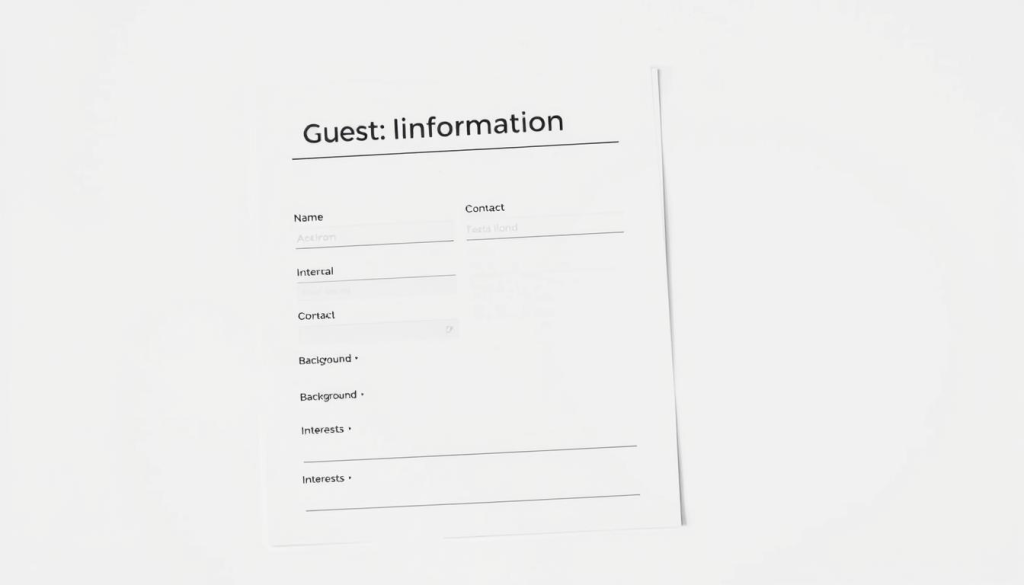
A well-designed guest information form is key to a successful podcast interview. It helps you gather all the details you need about your guests. This way, you’re ready for a great conversation.
Essential Questions to Ask
To make a good guest information form, you need to ask the right questions. These should cover your guest’s background and what they’re an expert in.
Biographical Information and Credentials
Begin by asking for your guest’s name, title, and credentials. This gives you a clear picture of their background and expertise.
Topic Preferences and Expertise Areas
Find out what topics your guest likes and what they’re good at. This helps you tailor the interview to their strengths and interests.
Promotional Needs and Social Handles
Ask about your guest’s promotional needs and social media handles. This lets you promote the interview well and meet their expectations.
Tools for Creating Digital Forms
There are many tools for making digital forms, each with its own benefits and drawbacks.
Google Forms vs. Typeform vs. JotForm
| Tool | Features | Integration |
|---|---|---|
| Google Forms | Simple, free, and easy to use | Seamless integration with Google Drive |
| Typeform | User-friendly interface, customizable templates | Integrates with various third-party apps |
| JotForm | Robust features, conditional logic, and HIPAA compliance | Integrates with over 100 apps and services |
How to Use the Information Effectively
After you’ve collected the needed information, it’s time to use it.
Creating Custom Interview Outlines
Use the info to make custom interview outlines. These should match your guest’s strengths and interests.
Personalizing the Guest Experience
Make the guest experience personal by addressing their specific needs and preferences. This builds rapport and makes the interview smooth.
Developing a Pre-Interview Checklist for Guest Preparation
To make sure your podcast episode is top-notch, having a pre-interview checklist is key. It helps get your guests ready for the interview. This includes technical, content, and timing details.
Technical Requirements and Setup
Getting the technical side right is crucial for a smooth interview. It covers a few important areas:
Microphone and Audio Environment Recommendations
Tell your guests to use a high-quality microphone. Also, make sure they’re in a quiet spot to cut down background noise. A quiet area with few distractions is best.
Internet Connection Testing Procedures
Have your guests check their internet connection before the interview. This avoids any last-minute tech problems. A stable internet is essential for a clear recording.
Recording Software Familiarization
Make sure your guests know how to use the recording software. You can send them a tutorial or guide on its use.
Content Preparation Guidelines
It’s also important to guide your guests on what to prepare for the content. This includes:
Suggested Topics and Talking Points
Give your guests some topics and talking points to work on beforehand. This helps them prepare and keeps the conversation on track.
Questions to Reflect On Before Recording
Ask your guests to think about key questions before recording. This preparation leads to more thoughtful and insightful answers during the interview.
“Sending a personal email to the guest with questions to be asked and reminders about wearing headphones and noise reduction can significantly enhance the quality of the interview.”
Timing and Availability Confirmation
Confirming the timing and availability of your guests is crucial for a stress-free interview.
Calendar Reminders and Time Zone Clarity
Send reminders to your guests and make sure they understand the time zone. This avoids any confusion about the interview time.
Buffer Time Recommendations
Advise your guests to have some buffer time before and after the interview. This helps manage any unexpected delays or issues.
| Pre-Interview Checklist Items | Description | Importance Level |
|---|---|---|
| Microphone Quality | Ensure good quality microphone use | High |
| Internet Connection | Test internet stability before interview | High |
| Recording Software | Familiarize with recording software | Medium |
| Content Preparation | Provide suggested topics and talking points | High |
| Timing Confirmation | Confirm interview time and time zone | High |
By following this pre-interview checklist, you can ensure your guests are well-prepared. This leads to a successful and engaging podcast episode.
Creating Clear Guest Guidelines and Expectations
As a podcaster, setting clear guidelines for your guests is key. It improves the quality of your show. It helps manage expectations and ensures guests are ready, making your podcast more engaging and professional.
Audio Quality Standards and Requirements
High audio quality is essential for a professional podcast. It’s important to tell your guests about your audio standards.
Headphone Usage and Microphone Placement
Tell your guests to use headphones to avoid echo and ensure clear sound. Also, remind them to position their microphones correctly for the best sound.
Environment Noise Control Tips
Ask your guests to record in a quiet place, away from noise. Simple steps like closing windows and turning off fans can greatly improve sound quality.
Interview Format and Flow Explanation
Explain the interview format and flow to your guests. This helps them prepare and feel more at ease during the recording.
Typical Episode Structure
Give your guests an outline of a typical episode. Include introductions, main topics, and closing remarks. This helps them understand the episode’s structure and prepare.
Host Intervention Protocols
Tell your guests how you’ll handle the conversation. Explain how you’ll intervene if needed to keep the discussion on track and smooth.
Content Boundaries and Sensitive Topics
It’s important to set content boundaries. This keeps the conversation respectful and appropriate for your podcast.
Establishing Off-Limit Subjects
Make it clear what topics are off-limits to your guests. This prevents uncomfortable moments and keeps the conversation suitable for your audience.
Handling Unexpected Controversial Topics
Prepare your guests for handling unexpected controversial topics. Having a plan ensures a smooth handling of these situations.
Streamlining Day-of-Interview Procedures
Effective day-of-interview procedures are key to a great podcast. When both the host and guest are ready, the interview flows well and sounds good.
Pre-Call Technical Checks
Before starting, do a thorough tech check. This makes sure everyone can hear each other clearly and that the recording gear works.
Audio Level Testing Protocol
Testing audio levels before helps avoid bad sound. Do a quick sound check to make sure the guest’s audio is clear.
Recording Backup Systems
Having a backup recording plan is smart. It could be recording on another device or using a cloud service.
Creating a Welcoming Environment
Making your guests feel welcome improves the interview. It makes the conversation more natural and enjoyable.
Pre-Interview Small Talk Strategies
Starting with small talk can ease your guests’ nerves. Talking about something not related to the podcast helps build rapport.
Calming Nervous Guests Techniques
Some guests might still feel nervous. Use deep breathing or a reassuring word to help them relax.
Handling Last-Minute Issues
Even with planning, unexpected problems can pop up. Being ready to solve these issues is important.
Technical Problem Troubleshooting
Having a plan for tech problems can save the day. This might include a backup internet or knowing how to quickly fix recording software.
Schedule Adjustment Protocols
Changes to the schedule can happen. Having a plan for rescheduling or adjusting the format helps manage stress and expectations.
Post-Interview Follow-Up with Podcast Guests
The interview may be over, but your engagement with your guests shouldn’t stop. A thoughtful follow-up can make a big difference. It’s key for building lasting relationships and boosting your podcast’s reputation.
Thank You Messages and Appreciation
Showing gratitude to your guests is more than just a courtesy. It’s a vital step in building a positive relationship. Personalized thank you messages can make your guests feel truly valued.
Personalized Notes vs. Template Messages
While template messages save time, a personalized note shows you’ve gone the extra mile. Mention specific topics or insights from the interview to show you appreciate their unique contribution.
Thoughtful Gift Considerations
Sending a thoughtful gift with your thank you message can deepen your appreciation. Choose something related to their work or a personalized item that fits your podcast’s theme.
Sharing Publication Dates and Promotional Materials
Keep your guests updated on the publication date and share promotional materials. This includes guest-specific graphics and social media copy suggestions.
Creating Guest-Specific Graphics
Designing graphics with your guest in mind can make them feel more connected. Make sure these graphics are easy to share on social media.
Suggested Social Media Copy
Give your guests suggested social media copy to help them share the episode. Include relevant hashtags and a compelling call-to-action.
Requesting Testimonials and Feedback
After publishing, ask for testimonials and feedback from your guests. This feedback can help you understand your podcast’s impact and how to improve.
Timing Your Feedback Requests
Timing is everything when asking for feedback. Ask when the episode is still fresh in your guest’s mind, ideally a few days after it’s published.
Using Feedback to Improve Your Process
Use the feedback to make your guest management process better. This might mean tweaking your pre-interview checklist, improving communication, or enhancing the guest experience.
Conclusion: Elevating Your Podcast Through Professional Guest Management
Effective podcast management is key to delivering top-notch episodes and building a strong reputation. A well-organized guest onboarding process can greatly improve your podcast’s quality and professionalism.
Professional guest management is more than just scheduling and interviewing. It’s about creating a detailed onboarding process. This includes clear communication, thorough preparation, and a welcoming space for your guests. This approach boosts interview quality and strengthens your podcast’s brand.
Using tools like scheduling software, communication platforms, and document management systems helps manage your podcast guests efficiently. This ensures a smooth experience from the first contact to after the interview. Such organization and attention to detail are crucial for making your podcast stand out in a crowded market.
Investing time and effort in professional guest onboarding and management brings big rewards. You’ll see better guest experiences, higher episode quality, and a stronger professional reputation for your podcast.