

I’ve seen a big change in how we listen to audio. Interactive podcasts have changed how we connect with our favorite shows.
Technology keeps getting better, making listener participation more important. We’re moving away from just listening. Now, we want to be part of the story.
The world of audio content is changing fast. It’s not just about new features. It’s about making a stronger bond between creators and listeners. With evolving formats, the future looks bright.
Key Takeaways
- The future of audio content is interactive.
- Listener participation is key to a show’s success.
- Technology is driving the evolution of podcasting.
- Dynamic experiences are redefining audience engagement.
- The relationship between creators and listeners is becoming more collaborative.
The Evolution of Podcast Formats
Podcasting has changed a lot since it started. It’s moved from just audio to a lively, interactive way to share stories. This change comes from new tech and what listeners want.
From Monologue to Dialogue: A Brief History
At first, podcasts were like one-way talks. Creators spoke, but listeners didn’t get to say much back. But now, with new features, listeners can join in and shape what’s shared.
Why Interactivity Is Transforming Podcasting
Adding interactivity has made podcasts more fun for listeners. With live polls, Q&A, and calls, people feel part of a community. This new way of podcasting makes it more open and exciting.
| Feature | Traditional Podcasting | Interactive Podcasting |
|---|---|---|
| Listener Engagement | Limited to listening | Active participation through polls, Q&A, and call-ins |
| Content Creation | Creator-driven | Collaborative, with listener input |
| Community Building | Limited community interaction | Fosters a sense of community through interactive elements |
Podcasting is still growing, and interactivity will keep shaping it. It’s exciting to see what’s next.
Understanding Interactive Podcasting
Interactive podcasting is changing how we listen to audio. It lets listeners join in, making the experience more personal. This way, creators can connect better with their audience.
Defining Interactive Elements in Audio Content
Podcasts can have many interactive parts. These include simple polls and surveys, and even choose-your-own-adventure stories. They let listeners get closer to the content.
- Polls and surveys to gather listener opinions
- Live Q&A sessions for real-time interaction
- Choose-your-own-adventure narratives for immersive storytelling
Benefits of Listener Engagement for Creators and Audiences
For creators, interactive podcasts offer great insights. They learn what their audience likes. This helps them make better content.
For listeners, it’s all about feeling part of a community. They feel heard through listener call-ins and voice messages. It’s a way to connect with others who share similar interests.
Essential Tools for Creating Interactive Podcasts
To make interactive podcasts, you need good hardware and software. You’ll want to invest in quality equipment and platforms. This will help you make episodes that sound professional.
Hardware Requirements
You’ll first need a quality microphone and an audio interface. The Blue Yeti microphone and the Focusrite Scarlett series are popular choices. They make sure your audio is clear and crisp, helping listeners connect with your content.
Here are some key hardware things to consider:
- A reliable microphone for capturing high-quality audio
- An audio interface to connect your microphone to your computer
- Headphones for monitoring your audio and catching any issues early
Software Platforms and Solutions
For interactive elements, you’ll need software that supports polls and Q&A sessions. Apple Podcasts Connect and Spotify for Podcasters have tools for adding these features to your episodes.
Some popular software options include:
- Podcast hosting platforms with built-in interactive features
- Third-party plugins for adding polls and Q&A sessions
- Audio editing software like Audacity or Adobe Audition for post-production
Budget-Friendly Options for Beginners
You don’t have to spend a lot to start making interactive podcasts. There are affordable options for beginners, like free or low-cost software and hardware.
Here are some budget-friendly tips:
- Start with a basic USB microphone like the Blue Snowball
- Use free or low-cost audio editing software
- Try free or trial versions of podcast hosting platforms
By using the right hardware and software, you can make interactive podcasts that engage your audience. This will help you succeed in podcasting.
Setting Up Your Podcast for Interactivity
To make your podcast engaging, focus on three main areas. First, prepare your recording space well. Then, create clear call-to-actions for listeners. Lastly, set up ways to talk to your audience.
Preparing Your Recording Environment
A good recording space is key for quality audio. Invest in the right equipment and software. Also, keep the area quiet and free from distractions.
Creating Listener-Friendly Call-to-Actions
Use simple language for your call-to-actions. Offer special content or shoutouts to encourage listeners to join in.
Establishing Communication Channels with Your Audience
Connecting with your audience is vital. Use social media, email, and your podcast site for communication. This helps you get feedback and boost engagement in live Q&A sessions.
| Channel | Purpose | Benefits |
|---|---|---|
| Social Media | Real-time engagement | Immediate feedback, community building |
| Email Newsletters | Updates and behind-the-scenes content | Direct communication, exclusive content |
| Podcast Website | Central hub for information | Easy access to episodes, show notes, and CTAs |
By making your podcast interactive, you’ll engage your listeners more. This can help you build a dedicated fan base.
Implementing Live Polls in Your Podcast
Live polls can make your podcast more engaging and inclusive. They help you gather feedback and encourage listeners to participate.
Step-by-Step Poll Creation Process
To start a live poll, pick a platform that works with your podcast host. Spotify and Apple Podcasts have built-in polling tools. Here’s how to do it:
- Choose a polling platform that fits your needs.
- Design your poll question and possible answers.
- Test the poll to ensure it works correctly.
- Integrate the poll into your podcast episode.
Timing and Placement for Maximum Engagement
When you place your poll is key. Put polls at the start or end of your episode for best results. You can also use them during breaks in your content.
| Poll Placement | Advantages |
|---|---|
| Beginning of Episode | Sets the tone for the episode, encourages early engagement. |
| End of Episode | Leaves a lasting impression, encourages listeners to participate after the main content. |
| During Natural Breaks | Provides a seamless transition, keeps listeners engaged. |
Analyzing and Discussing Poll Results with Your Audience
After the poll, look at the results and talk about them in future episodes. This shows you care about what your listeners think and builds a community.
Using live polls well can boost listener interaction and make your podcast more engaging.
Mastering Q&A Sessions
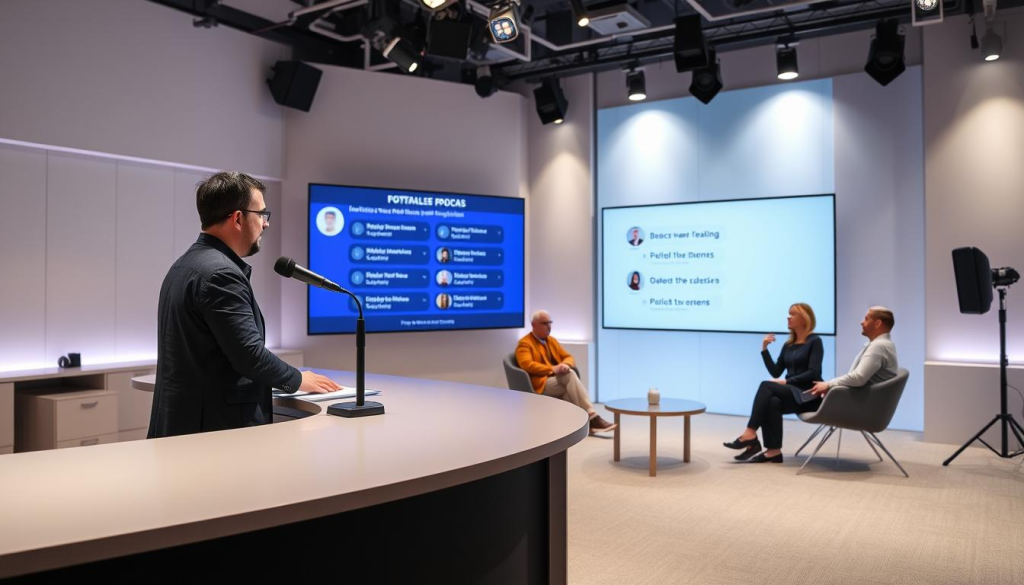
To make your podcast interactive, mastering Q&A sessions is key. These sessions let listeners talk directly to the host or guests. This builds a community and gets more people involved.
Structuring Effective Q&A Segments
It’s important to plan Q&A segments well. Decide on the length, format, and how to collect and answer questions. Good planning makes the Q&A flow smoothly and stay on topic.
Methods for Collecting and Selecting Questions
There are many ways to get questions, like email, social media, and live chat. Choosing the right questions is crucial. I mix these methods to get a variety of questions.
| Method | Advantages | Disadvantages |
|---|---|---|
| Allows for detailed questions | Can be time-consuming to sift through | |
| Social Media | Engages listeners on multiple platforms | Can be challenging to track questions |
| Live Chat | Provides real-time interaction | Limited by the number of participants |
Handling Difficult or Off-Topic Questions Gracefully
Not every question is easy or on topic. It’s vital to handle these questions well. I acknowledge the question, explain why it’s not relevant, and promise to cover it later.
Incorporating Listener Call-ins and Voice Messages
Listener call-ins and voice messages are changing podcasting. They add a personal touch, making podcasts more dynamic and engaging. This helps hosts connect better with their audience.
Technical Setup for Call-in Episodes
To include listener call-ins, podcasters need the right tech. They use platforms like TwiVoicer or Zencastr. These tools ensure high-quality audio and easy integration into the podcast.
Screening and Preparing Callers
Screening and preparing callers is key for a smooth experience. Podcasters should brief listeners before the call. This helps manage the episode flow and keeps quality high.
Editing and Integrating Voice Messages
Editing voice messages requires careful attention to audio quality. Podcasters use tools like Audacity or Adobe Audition. This ensures the messages are clear and fit well in the episode.
| Tool | Purpose | Features |
|---|---|---|
| TwiVoicer | Call-in Platform | Seamless call-ins, high-quality audio |
| Zencastr | Remote Recording | High-quality remote interviews, easy integration |
| Audacity | Audio Editing | Free, open-source, multi-track editing |
By adding listener call-ins and voice messages, podcasters make their shows more engaging. This boosts listener participation and changes the way podcasts are made.
Building Community-Driven Content Creation
As a podcaster, getting your listeners involved in making content can change the game. By letting your audience help create, you build a dedicated community around your podcast.
Strategies for Crowdsourcing Episode Topics
Getting your audience to suggest topics is a smart move. It makes sure your content hits home with them. Here’s how:
- Do surveys or polls on social media to see what topics people want
- Ask listeners to send in topic ideas via email or voicemail
- Make a special page on your website for topic suggestions
By letting your listeners help choose topics, you make them feel like they own the show. This boosts engagement big time.
Facilitating Listener-Suggested Guests and Experts
Bringing in guests or experts suggested by listeners can bring new views to your podcast. Here’s how to make it happen:
- Ask your listeners to suggest guests or experts they’d like to hear
- Have a form on your website for guest suggestions
- Use social media to spread the word about guest suggestions
This not only shakes up your content but also makes your listeners feel important.
Creating Collaborative Episodes with Your Audience
Creating episodes together with your listeners is a great way to engage them. Here’s how to do it:
- Host live episodes where listeners can join in on the conversation
- Make episodes based on stories or experiences from your listeners
- Use listener feedback to shape your episodes
This way, you build a stronger bond with your audience and make your podcast more fun to listen to.
Exploring Innovative Podcast Formats for Engagement
Podcast formats are changing, making them more exciting for listeners. The secret to keeping people interested is to make the experience lively and interactive.
Choose-Your-Own-Adventure Podcast Structure
The choose-your-own-adventure format is really cool. It lets listeners decide what happens next. This makes them feel like they’re part of the story, leading to different episodes or paths.
Interactive Storytelling Techniques
Interactive storytelling is becoming more popular. It uses sound, characters, and storylines that pull listeners in. This makes the story feel real and personal.
Gamification Elements in Audio Content
Gamification adds fun to podcasts. It turns them into games, making them more engaging and interactive. This draws listeners in and keeps them coming back.
Points and Rewards Systems
Points and rewards systems motivate listeners. They can earn points for doing things in the podcast. This encourages them to get involved and do more.
Challenges and Competitions
Challenges and competitions are great for engaging listeners. They can join contests, quizzes, or other activities. This builds a community and makes the podcast more fun.
By using these new formats and techniques, podcasters can make their shows more immersive. This leads to a more loyal and dedicated audience.
Live Streaming Your Podcast Successfully
Live streaming has changed how podcasters connect with their audience. It offers a chance for real-time interaction. As live Q&A sessions and interactive podcasts become more popular, it’s key to know how to use live streaming well.
Selecting the Right Platform for Your Audience
Picking the right platform for live streaming is vital to reach your audience. You can choose from YouTube Live, Facebook Live, and Twitch. Think about where your listeners spend most of their time and what each platform offers, like chat and ways to make money.
| Platform | Key Features | Audience |
|---|---|---|
| YouTube Live | Integration with YouTube, live chat, super chat | Large, diverse audience |
| Facebook Live | Live comments, reactions, sharing options | Existing Facebook followers |
| Twitch | Live chat, subscriptions, donations | Gaming and entertainment-focused |
Managing Real-Time Interaction During Broadcasts
Handling live interactions needs planning and knowing your content well. Talk to your audience through Q&A, polls, and chat. Be ready for any tech problems or surprise questions.
“The key to a successful live stream is being authentic and engaging with your audience in real-time.”
Converting Live Sessions to On-Demand Episodes
Turning live streams into on-demand episodes can reach more people. You need to edit the recording, add metadata, and post it on your hosting platform.
Editing Considerations for Live Content
When editing live content, cut out what’s not needed but keep the conversation flow. Add an intro or summary for on-demand listeners.
Repurposing Interactive Elements
Use interactive parts from your live stream, like Q&A or polls, to make your on-demand content better. Summarize the live interaction or highlight key questions and answers.
By following these tips, podcasters can use live streaming to boost listener participation and engagement. This can help grow their audience and make their content richer.
Measuring the Success of Your Interactive Podcast
To see how well your interactive podcast is doing, you need to watch certain key numbers. These numbers show how much people are listening and taking part. As podcasting changes, knowing these numbers helps you make your show better and keep your listeners happy.
Key Metrics to Track for Engagement
When you track how engaged your listeners are, you look at a few important things:
- Listener retention rates
- Participation in polls and Q&A sessions
- Number of listener-submitted questions or comments
- Engagement on social media platforms related to your podcast
| Metric | Description | Importance |
|---|---|---|
| Listener Retention | Percentage of listeners who continue to engage throughout the episode | High |
| Poll Participation | Number of listeners who participate in polls | Medium |
| Q&A Engagement | Number of questions submitted and answered | High |
Audience Feedback Analysis Techniques
Looking at what your audience says is key to knowing what they like and how to make your show better. You can use:
- Surveys and polls
- Social media listening
- Email feedback
Iterating Your Format Based on Performance Data
With the data you collect, you can make your podcast even better. You might change how often you have certain parts or try new things based on what your listeners say.
Conclusion
Podcasting is changing fast, thanks to interactivity. Now, podcasts can include polls, Q&A sessions, and more. This makes it easier for creators to connect with their listeners.
The future of podcasts looks bright. They will keep getting better by adding new ways to interact. This will help podcasters build stronger bonds with their fans.
Technology is getting better, and so are our tastes. This means interactive podcasts will keep getting more exciting. I think this will open up new ways for creators to engage with their audience, shaping the future of podcasting.