

As a podcaster, being ready to record anywhere is key. That’s why a podcast go-bag is vital. It’s a portable kit with all you need to record high-quality audio anytime, anywhere.
Having a good go-bag changes the game for mobile podcasters. It makes sure you’re always set to capture amazing sound. Whether it’s for interviews, voiceovers, or ambient audio, you’re covered.
A typical go-bag has a portable recorder, microphones, headphones, and more. With these essentials close by, you can focus on making great content.
Key Takeaways
- Understand the importance of a podcast go-bag for mobile podcasters.
- Learn the essential components of a podcast go-bag.
- Discover how a well-prepared go-bag can improve recording quality.
- Explore the benefits of having a portable recording setup.
- Identify the must-have accessories for a podcast go-bag.
Why Every Podcaster Needs a Go-Bag
Field recording can be unpredictable. A well-stocked go-bag is essential for adapting to changing circumstances. As a podcaster, you never know when an unexpected opportunity will arise. Being prepared is key to capturing high-quality audio.
The Unpredictability of Field Recording
Field recording is inherently challenging. Environmental factors like background noise, weather, and equipment malfunctions can be tough. A go-bag helps you mitigate these risks by having the necessary gear.
For instance, having a portable recorder and a variety of microphones can help you adjust to changing conditions. This ensures that your audio remains clear and crisp.
Opportunities You’ll Miss Without Portable Gear
Without a go-bag, you risk missing out on valuable recording opportunities. This includes interviews in unique locations or capturing ambient sounds that add depth to your podcast. Having portable recording gear allows you to be spontaneous.
It lets you take advantage of unexpected opportunities, enriching your content and engaging your audience. By being prepared, you can focus on the recording rather than worrying about your equipment.
Assessing Your Podcast Equipment Needs
Before you start building your mobile podcast studio, it’s key to figure out what equipment you need. The type of podcast you make affects the gear you’ll need. This is true whether you’re recording by yourself or doing interviews.
Determining Your Recording Style
Your recording style is crucial in choosing the right equipment. If you’re recording solo, your needs are different from someone who does interviews. Think about where you’ll be recording and the sound quality you aim for.
Solo vs. Interview Recording Considerations
For solo recording, you’ll need a good microphone and a portable recorder. Interviews require more, like extra microphones, a mixer, and tools to handle multiple sounds. Think about how complex your setup will be and how flexible it needs to be.
Balancing Quality and Portability
One big challenge in making a mobile podcast studio is finding a balance between sound quality and being portable. You need equipment that’s small, light, but still makes great sound. Look at the size, weight, and power needs of your gear.
By carefully choosing your equipment, you can make a mobile podcast studio that works well and is easy to use. This way, you can make top-notch podcasts wherever you go.
Essential Portable Recorders for On-the-Go Podcasting
For podcasters always on the move, a portable recorder is key. It’s vital for recording interviews or capturing sounds for your episodes. The right recorder can greatly improve your audio quality.
Handheld Digital Recorders
Handheld digital recorders like the Zoom H5 and Tascam DR-40X are great for podcasters. They are small, easy to use, and have top-notch microphones. The Zoom H5, for example, lets you change microphones for different settings.
Smartphone Recording Solutions
For those who like recording on their smartphones, options like the Rode SC6-L and iRig are perfect. They connect to your phone, giving you pro-grade audio. They’re great for podcasters who use their phones for other tasks.
Portable Mixer-Recorder Combos
Portable mixer-recorder combos, like the Zoom PodTrak P4 and Rodecaster Pro, are more advanced. They handle multiple audio sources, let you monitor live, and have built-in effects. They’re best for podcasters who do interviews or panel discussions.
When picking a portable recorder, think about what you need. Consider your content, recording places, and budget. The right device will make your podcast sound great, wherever you are.
Selecting the Right Microphones for Field Recording
To get top-notch field recordings, knowing your microphone options is key. The right microphone can greatly affect your recording’s quality. This depends on the setting and the sound you aim to capture.
Dynamic vs. Condenser for Different Environments
Dynamic microphones are tough and great for loud places like live events or outdoors. They block out background noise well and can handle loud sounds. But, condenser microphones are more sensitive. They’re best for quiet spots, like interviews or capturing ambient sounds.
Lavalier Microphones for Interviews
Lavalier microphones, or lapel mics, are perfect for interviews. They’re small and clip onto clothes, giving clear, close audio. The Rode SmartLav+ and Shure MVL are top picks. They focus on the speaker’s voice, cutting down on background noise.
Shotgun Mics for Ambient Sound Capture
Shotgun microphones are very focused and capture specific sounds in noisy areas. They’re great for film, video, and recording ambient sounds. The Rode NTG and Sennheiser MKE600 are favorites for their clear, isolated audio.
| Microphone Type | Best Use | Examples |
|---|---|---|
| Dynamic | Loud environments, live events | Shure SM7B, Sennheiser MD421 |
| Condenser | Quiet settings, nuanced sounds | Rode NT1-A, AKG C414 |
| Lavalier | Interviews, public speaking | Rode SmartLav+, Shure MVL |
| Shotgun | Ambient sound capture, film production | Rode NTG, Sennheiser MKE600 |
Knowing the different microphones and their uses helps you choose the best for your field recordings. This ensures your audio is top-notch and meets your professional needs.
Headphones and Monitoring Solutions
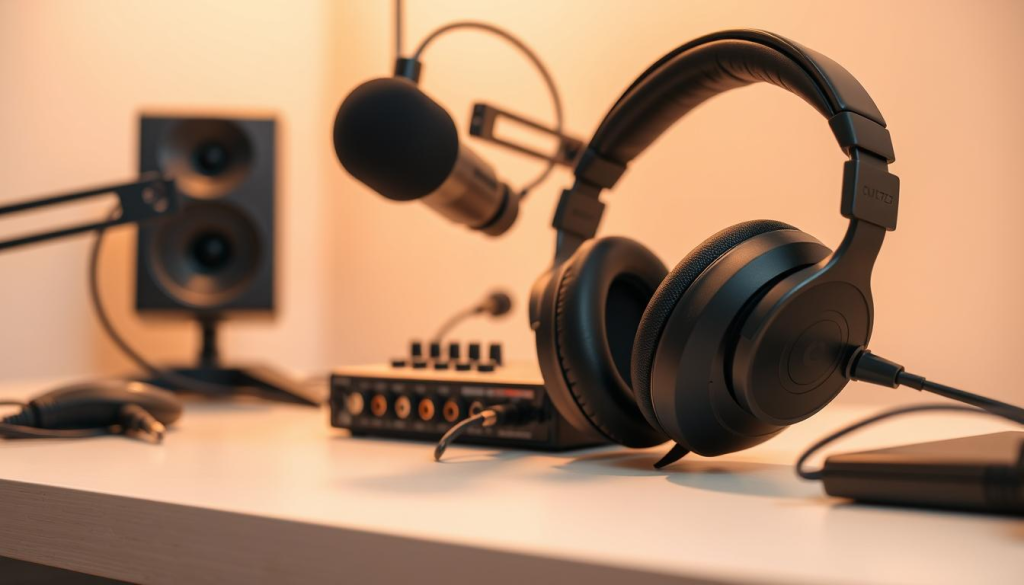
Recording in the field needs the right headphones for top-notch audio. In a mobile podcast studio, good headphones let you check your audio and tweak it as needed. This ensures your recording sounds great.
Closed-Back Options for Field Use
Closed-back headphones are great for field recording because they block out sound. The Sony MDR-7506 and Audio-Technica ATH-M50x are favorites among podcasters. They have a balanced sound and are tough, perfect for frequent use.
In-Ear Monitoring Alternatives
In-ear monitors are a good choice for those who want a small setup. The Shure SE215 and KZ ZS10 Pro are known for their sound and comfort. They cut down on background noise and are smaller than regular headphones.
Volume and Sound Isolation Considerations
When picking headphones, think about volume control and sound isolation. You need headphones that can handle loud sounds without getting distorted. Also, good sound isolation helps you hear your audio clearly, even in noisy places.
Power Solutions for Extended Recording Sessions
As a podcaster, managing power is key for long recording sessions. Recording in the field can be thrilling, but running out of battery is a disaster.
Battery Types and Runtime Expectations
It’s important to know about different batteries and how long they last. Rechargeable lithium-ion batteries are great because they hold a lot of charge and last a long time. For example, the Zoom H5 recorder has a battery that lasts up to 11 hours.
Portable Power Banks and Charging Options
Portable power banks are essential for long recording sessions. Brands like Anker and RAVPower make high-capacity power banks. When picking a power bank, look at its capacity, weight, and how fast it charges.
Power Management Strategies in the Field
Good power management is more than just a power bank. It’s about watching how much power your devices use and using features that save power. For instance, using a device like the Zoom PodTrak P4 can help use power wisely.
| Device | Battery Life | Power Saving Tips |
|---|---|---|
| Zoom H5 | Up to 11 hours | Turn off backlight, use low power mode |
| Tascam DR-40X | Up to 13 hours | Disable Wi-Fi, lower recording quality |
| Rodecaster Pro | Up to 6 hours | Use power-saving mode, turn off phantom power when not in use |
Budget-Friendly Podcast Equipment Options
Creating a podcast go-bag on a budget is possible with smart choices. You don’t need to spend a lot to make a good podcast setup. Knowing what you need and making smart choices can help you build a great podcast go-bag without spending too much.
Entry-Level Gear That Delivers Professional Results
For beginners, entry-level gear can work well. The Zoom H4n is a top pick for recording on the go, and it’s affordable. Microphones like the Blue Yeti or Rode NT-USB also offer great sound without the high cost of top models.
Mid-Range Investments for Serious Podcasters
When you’re more serious about podcasting, mid-range gear can improve your sound. The Zoom H5 or Tascam DR-40X have cool features like changeable mics and better sound. For interviews, the Rode Wireless Go is perfect for clear, wireless audio.
When to Splurge vs. When to Save
It’s important to know when to spend more and when to save. For key items like microphones, it’s worth investing in quality for clear sound. But for things like cables or basic recorders, cheaper options can work just fine.
| Equipment Type | Budget-Friendly Option | Mid-Range Option |
|---|---|---|
| Portable Recorder | Zoom H4n | Zoom H5 |
| Microphone | Blue Yeti | Rode NT-USB |
| Lavalier Microphone | Rode Wireless Go | Sennheiser G4 |
Choosing the right equipment and balancing cost with quality is key. Start with the basics and upgrade as you grow. This way, you can make a strong and flexible podcast go-bag.
Essential Accessories for Your Mobile Setup
For any podcaster, the right accessories make all the difference. They turn your mobile studio into a top-notch setup. The right gear can make your recordings sound better and be more flexible.
Cables, Adapters, and Connectors
Your mobile studio’s success depends on its connections. You need the right cables, adapters, and connectors for smooth operation. This includes XLR cables, TRS adapters, and USB connectors for field recording.
Windscreens and Pop Filters for Outdoor Recording
Recording outside can be tough due to wind and plosive sounds. Windscreens and pop filters help a lot. They cut down on these noises, making your audio cleaner. Choose high-quality ones that fit your mics and are easy to attach.
Stands, Mounts, and Stabilization Tools
Stability is crucial for field recording. Stands, mounts, and stabilization tools keep your gear steady. This reduces damage and ensures clear recordings. From mic stands to camera mounts, these are must-haves for a pro mobile studio.
Organizing and Testing Your Podcast Go-Bag
Having a well-prepared go-bag is key for podcasting on location. It’s more than a container for your gear. It’s a mobile recording studio that must be organized, reliable, and ready for anything.
Bag Selection and Organization Systems
Choosing the right bag is the first step. Look for brands like Peak Design, Lowepro, and Pelican for quality options. A bag with customizable compartments helps keep your gear organized and easy to find.
Using dividers or pouches can separate your equipment, cables, and accessories. This makes it simpler to find what you need fast.
| Brand | Model | Key Features |
|---|---|---|
| Peak Design | Tech Pouch | Customizable dividers, durable material |
| Lowepro | ProTactic 450 AW | Weather-resistant, laptop compartment |
| Pelican | IMPACT 30 | Waterproof, customizable interior |
Creating a Pre-Recording Checklist
A pre-recording checklist is vital for being ready. It should cover checking your equipment, battery levels, and cables. Regularly update this checklist to avoid last-minute issues and ensure smooth recordings.
Weatherproofing and Protection Strategies
Protecting your equipment from the weather is essential. Use weatherproof covers and silica gel packets to keep it dry. For outdoor recordings, windshields or pop filters can reduce wind and plosive sounds. Clean and maintain your equipment to make it last longer.
By focusing on these areas, you can make a go-bag that’s more than just equipment. It becomes a well-organized, reliable tool for capturing great recordings anywhere.
Conclusion: Building Your Perfect Podcast Go-Bag
Creating the perfect podcast go-bag is a journey. It starts with knowing what you need to record, picking the best equipment, and organizing it well. You’ve learned how important the right gear is for top-notch audio in different settings.
By thinking about what we’ve talked about, you can make a go-bag that fits your podcasting needs. Whether you’re recording alone or interviewing guests, a well-packed bag means you’re always set to capture amazing sound. It’s not just about the equipment, but how you use it to share your stories.
With the right tools and some practice, you’re on your way to making podcasts that connect with your listeners. So, grab your go-bag, go out, and start recording. The world is full of stories just waiting to be shared.