

The way we record audio has changed a lot. Now, more people want to set up a portable recording studio. This is because new technology lets us record high-quality audio anywhere.
I can now take a professional setup with high-quality recording equipment anywhere. This makes it perfect for on-location interviews. A portable studio lets you record great audio in different places. This is great for content creators.
Key Takeaways
- Advancements in technology have made portable recording studios possible.
- A portable studio allows for high-quality recording sessions anywhere.
- On-location interviews benefit from the flexibility of a portable studio.
- Content creators can capture high-quality audio in various environments.
- A portable recording studio is ideal for interviews and other applications.
Why On-Location Interviews Enhance Your Podcast
On-location interviews can make your podcast better, adding authenticity that studio recordings can’t match. Recording in the field captures more than just the words. It also grabs the setting and mood around it.
The Authenticity Factor of Field Recordings
Field recordings add a real touch to your podcast that studios can’t. With the right field recording gear, you can pick up the small details of the place. This makes your interviews more interesting and real.
Creating Unique Content Through Environmental Context
The place where you record can become a key part of your podcast. It can shape the conversation and add depth. With a portable interview kit, you can record in different spots. This makes your podcast unique and memorable for listeners.
Assessing Your Portable Studio Needs
To create a great portable recording studio, first figure out where you’ll be recording. Knowing this helps you choose the right gear and set up your studio.
Determining Your Recording Environment Types
Recording in different places has its own set of challenges. Here are some common ones:
Indoor Public Spaces
Coffee shops and museums are good for interviews. But, they can have background noise that’s hard to control.
Outdoor Urban Settings
Outdoor urban areas are lively for interviews. But, you must deal with noise from cars, people, and more.
Remote Natural Environments
Nature can provide a calm setting for recording. Yet, you might face sounds from animals and changing weather.
Balancing Quality, Portability, and Budget
Choosing the right equipment for your portable studio is key. You need to balance quality, how easy it is to carry, and cost. Here’s a look at what to consider:
| Equipment | Quality | Portability | Budget |
|---|---|---|---|
| High-end Microphones | Excellent | Low | High |
| Portable Recorders | Good | High | Moderate |
| Laptop-based Systems | Variable | Moderate | Variable |
Understanding your recording spots and balancing your needs will help you build a portable studio that works for you.
Essential Podcast Equipment for Your Portable Studio
Recording interviews on-location requires the right equipment. A portable studio with the right gear lets you capture top-notch audio anywhere. This makes your podcast sound professional and engaging.
Microphone Options for Field Recording
Choosing the right microphone is key for field recording. Each microphone has its own strengths and weaknesses. For example, dynamic microphones are great for loud places because they can handle high sound levels.
Shure SM58 and Rode Reporter
The Shure SM58 is a legendary dynamic microphone. It’s known for its durability and clear sound, making it perfect for public speaking and live performances. The Rode Reporter is another top choice. It’s small but packs high-quality audio, ideal for journalists and podcasters on the move.
Sennheiser MD46 and Electro-Voice RE50
The Sennheiser MD46 offers a natural sound with good presence. It’s great for many recording situations. The Electro-Voice RE50 is versatile, handling both speech and music well. It’s reliable in various environments.
Portable Recorders and Audio Interfaces
A portable recorder or audio interface is vital for quality audio capture. The Zoom H6 is a top choice. It allows multi-track recording and connects to external microphones, perfect for complex setups.
Headphones and Monitoring Solutions
Quality headphones are crucial for monitoring your audio in the field. They let you catch and fix issues as you record. Look for headphones with clear sound and comfortable wear for long use.
With the right equipment, your podcast recordings will be top-notch, no matter where you’re recording.
Selecting the Right Microphones for On-Location Work
Choosing the right microphone is key for on-location recording. The right one can make a big difference in getting great audio, even in tough spots.
Dynamic vs. Condenser Microphones for Field Use
When picking between dynamic and condenser microphones, think about where you’re recording and what you’re recording. Dynamic microphones are tough and work well in loud places. Condenser microphones are more sensitive and pick up more sounds, but they might need extra power and can pick up background noise.
Shotgun and Lavalier Microphones for Interviews
Shotgun microphones Lavalier microphones, or lapel mics, are also popular for interviews. They’re small and can be clipped to the speaker’s clothes.
Rode NTG Series and Sennheiser MKE600
The Rode NTG series and Sennheiser MKE600 are top picks for shotgun microphones. They’re great at cutting out background noise and focusing on the sound you want.
Rode Wireless Go II and Sennheiser AVX Systems
For wireless recording, the Rode Wireless Go II and Sennheiser AVX are top choices. They offer clear audio and are perfect for interviews where you need to move around.
Microphone Accessories for Outdoor Recording
When recording outside, you need the right accessories to protect your mic and get better sound. Windscreens, like dead cat windscreens, are key for cutting down wind noise.
| Microphone Type | Best For | Key Features |
|---|---|---|
| Dynamic | Loud environments | Robust, high SPL handling |
| Condenser | Studio-quality recording | Sensitive, wide frequency range |
| Shotgun | Directional recording | Narrow pickup pattern |
| Lavalier | Interviews, public speaking | Discreet, easy to use |
Portable Recorders vs. Laptop Recording Solutions
When doing on-location interviews, picking the right recording gear is key. You have to decide between portable recorders and laptops. The choice depends on the quality of sound, how easy it is to use, and where you’re recording.
Portable recorders are great for capturing top-notch audio anywhere. The Zoom H5, Tascam DR-40X, and Sound Devices MixPre-3 are favorites among pros. They’re tough and packed with features, making them perfect for interviews on the move.
Standalone Field Recorders
Standalone field recorders are small and easy to use. They have lots of input options and top-notch preamps. For instance, the Zoom H5 lets you swap out microphone capsules for different sounds.
Mobile Device Recording with Interfaces
If you like using your phone or tablet for recording, there are great options. The iRig and Rode SC6-L interfaces connect high-quality mics and instruments to your device. They’re great for podcasters and journalists.
Laptop-Based Portable Studios
Laptop setups, like those with Focusrite Scarlett and Audient EVO interfaces, offer a traditional recording feel. They’re easy to carry and can produce professional audio. Plus, they’re super customizable.
In short, whether to use portable recorders or laptop setups depends on what you need. Knowing the benefits of each can help you choose the best for your on-location interviews.
Power Solutions for Extended Recording Sessions
Recording on-location needs a reliable power source for smooth interviews. This is key for long recording times when equipment must stay powered.
Battery Options and Runtime Considerations
It’s important to pick the right batteries for your gear. Think about how long your devices will run and their power needs. Rechargeable batteries save money and are good for the planet.
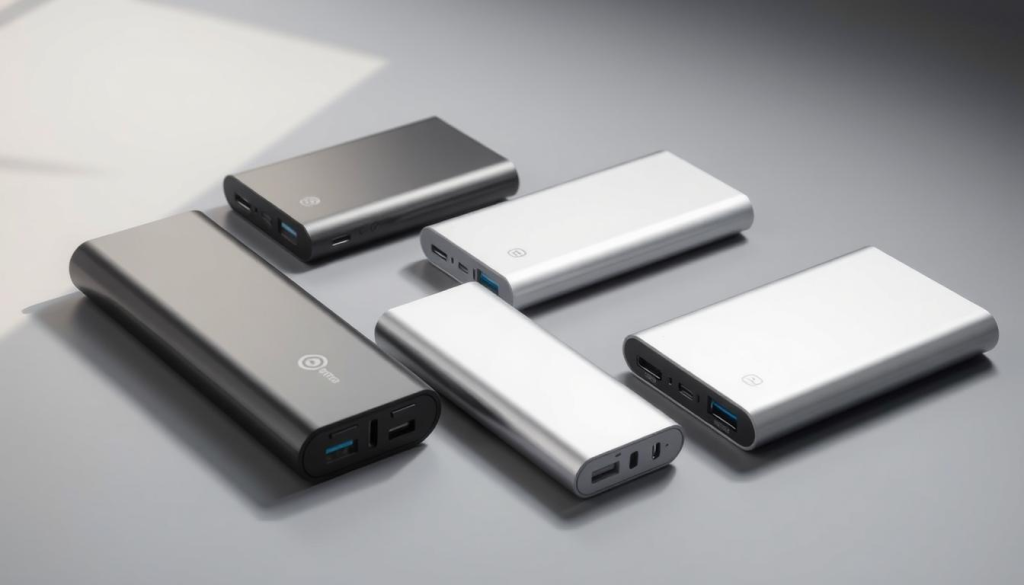
Portable Power Banks and Solar Chargers
Portable power banks like the Anker PowerCore+ are great for on-location recording. They’re small and efficient, keeping your devices charged. Solar chargers, like the Goal Zero Venture, are also good for outdoor use, offering green power.
Anker PowerCore and Goal Zero Venture
Anker PowerCore+ and Goal Zero Venture are top picks for podcasters. They offer a dependable, portable power source, keeping your gear running all session long.
Power Management Strategies
| Strategy | Description | Benefit |
|---|---|---|
| Carry Extra Batteries | Pack additional batteries for your equipment. | Ensures continuous power. |
| Use Power Banks | Utilize portable power banks to charge devices on the go. | Provides a reliable power source away from traditional outlets. |
| Monitor Power Levels | Keep an eye on the battery levels of your devices. | Prevents unexpected power loss during recording. |
Audio Treatment in Uncontrolled Environments
On-location interviews come with unique audio challenges. You need the right tools and techniques to manage the audio environment well.
Portable Acoustic Treatment Solutions
It’s hard to control every part of the environment. But, there are portable solutions. For example, a portable vocal booth or a reflection filter can cut down echo and reverberation.
Windscreens, Pop Filters, and Shock Mounts
Outdoor recording needs extra gear to fight wind noise and other issues. A dead cat windscreen is great for reducing wind noise. A basic pop filter helps with plosive sounds indoors. Shock mounts are key for reducing vibrations and handling noise.
Rycote Windshields and Rode DeadCat
Brands like Rycote and Rode make top-notch windscreens and dead cats for field recording. Rycote windshields are famous for their wind noise reduction. Rode’s DeadCat is a favorite among podcasters and videographers.
| Accessory | Purpose | Brand Example |
|---|---|---|
| Windscreens | Reduce wind noise | Rycote |
| Pop Filters | Minimize plosive sounds | Rode |
| Shock Mounts | Reduce vibrations and handling noise | Rode |
Finding and Creating Quiet Spaces on Location
Looking for a quiet spot can really boost audio quality. This might mean scouting locations ahead of time or using noise-reducing materials to make a recording area.
With the right gear and smart location choices, you can get great audio even in tough spots.
Building Your Travel Podcast Setup
Setting up a travel podcast involves choosing the right gear and organizing it well. When I’m on the move, recording quality interviews is key. The right equipment makes a big difference.
Essential Cables and Adapters
A good travel podcast setup needs essential cables and adapters. They make sure my gear works with different microphones, headphones, and devices. Here are some must-haves:
- XLR cables for connecting microphones to my recorder or audio interface
- TRRS adapters for compatibility with different devices
- Extension cables for added flexibility
Storage and Organization Systems
Keeping my gear organized is key for quick setup and teardown. I use storage and organization systems like:
- Pelican Cases for protecting my equipment during travel
- Think Tank Bags for organizing cables and accessories
- Windscreens to reduce wind noise
- Waterproof covers for my recorder and other sensitive equipment
Pelican Cases and Think Tank Bags
Investing in Pelican Cases and Think Tank Bags has changed my travel podcast setup. They protect my gear well and make it easy to carry.
Weatherproofing Your Equipment
Weather can be unpredictable, and protecting my equipment is crucial. I use weatherproofing solutions like:
“A good windscreen can make a huge difference in the quality of your recordings, even when recording outdoors.”
By focusing on these areas, I make sure my travel podcast setup is reliable and efficient. It’s ready for any recording situation.
Setting Up Your On-Location Audio Kit in Minutes
A well-prepared on-location audio kit is key for successful interviews. The right gear and a quick setup let you record great audio anywhere.
Quick-Assembly Workflow
Having a quick setup is crucial. Organize your gear in a bag or case with compartments. This makes it easy to find and use each piece.
Pre-Recording Checks and Tests
Do checks and tests before recording. Make sure all gear works, batteries are charged, and cables are secure. A test recording can spot problems early.
Optimizing Microphone Placement in Various Environments
Getting the best audio means the right microphone placement. Outdoors, a windscreen cuts down wind noise. Indoors, place the mic to avoid echo. Here’s a quick guide:
| Environment | Microphone Placement | Additional Tips |
|---|---|---|
| Outdoor | Use a windscreen, position away from wind sources | Monitor for background noise |
| Indoor | Minimize echo by positioning near the subject | Use a pop filter to reduce plosives |
Follow these tips and you’ll be ready to record top-notch interviews anywhere.
Recording Techniques for Field Interviews
To capture the essence of on-location interviews, it’s essential to employ effective recording techniques. Field recording requires the right equipment and know-how for high-quality audio.
Capturing Room Tone and Ambient Sound
Capturing room tone and ambient sound is crucial for a rich audio experience. I always record at least 30 seconds of room tone before or after the interview. This helps in post-production to maintain consistency and reduce background noise.
Monitoring Audio Levels in Noisy Environments
In noisy environments, monitoring audio levels is vital to prevent distortion. I use high-quality headphones to monitor the audio in real-time, adjusting gain levels as necessary. Always keep an eye on your audio meters to avoid clipping.
Backup Recording Strategies
Having a backup recording strategy is indispensable. I use a secondary recording device, like a smartphone with a high-quality recording app, to ensure that I have a backup in case of equipment failure.
Redundant Systems and File Management
Implementing redundant systems involves using multiple recording devices or paths. I manage my files by saving them in multiple locations, such as external hard drives and cloud storage, to ensure they’re safe.
| Recording Technique | Description | Benefit |
|---|---|---|
| Capturing Room Tone | Record 30 seconds of ambient sound | Enhances audio consistency |
| Monitoring Audio Levels | Use high-quality headphones | Prevents distortion |
| Backup Recording | Use a secondary device | Ensures data safety |
Troubleshooting Common On-Location Audio Problems
Troubleshooting is key for on-location interviews. It ensures your audio is top-notch. Whether in a quiet café or outdoors, issues can pop up. Knowing how to fix them fast is crucial for success.
Dealing with Unexpected Background Noise
Background noise is a big challenge in on-location recording. Directional microphones can help by focusing on the subject’s voice. Also, finding a quiet spot or using noise-reducing materials can help a lot.
Handling Wind and Weather Interference
Wind and weather can mess with your audio when recording outside. A dead cat windscreen can cut down wind noise. Also, placing your microphone to avoid harsh weather can help.
Quick Fixes for Technical Failures
Technical issues can occur, but being ready can lessen their impact. Always check your gear and have backup equipment. For problems like signal issues or battery drain, having a plan is key.
Signal Problems and Battery Issues
Signal problems often stem from bad connections or setup. Check your cables and settings. Battery issues can be fixed by carrying spares and using power banks.
| Issue | Solution |
|---|---|
| Background Noise | Use directional microphones and find quiet locations |
| Wind Noise | Use a dead cat windscreen |
| Technical Failures | Regularly check equipment, have backup gear, and plan for common issues |
Conclusion: Creating Professional Interviews Anywhere
With the right podcast equipment and creativity, any space can become a professional recording spot. Building a portable studio lets you get high-quality audio on the go. This makes your interviews sound real and interesting.
Choosing the right microphones and using smart recording methods can make your interviews sound great. You can do this in a quiet studio or a busy outdoor spot. The trick is to have the right on-location audio gear and know-how.
Keep honing your podcasting skills. Try out different recording setups and methods to see what works for you. With a portable studio, you can make unique and engaging content. This content will surely connect with your listeners.