

As a creator, talking directly to your audience can really boost engagement and success. I think making a thriving Facebook group is a smart way to build a dedicated podcast community.
With a Facebook group that matches your podcast, you can start conversations, share exclusive content, and grow a loyal fan base. In this article, I’ll show you how to make a Facebook group that keeps people coming back.
Key Takeaways
- Create a clear and concise group description
- Set up relevant group rules and guidelines
- Encourage engagement through discussions and content sharing
- Use Facebook group features to enhance user experience
- Monitor and adjust your group strategy regularly
Why Facebook Groups Are Valuable for Podcast Creators
As a podcast creator, using Facebook Groups can really boost listener engagement and loyalty. You can build a community around your podcast. This lets you start discussions, get feedback, and grow a loyal fan base.
The Direct Connection with Your Audience
Facebook Groups offer a way for direct interaction with your audience. You can have real-time discussions and get feedback. This makes your listeners feel important and heard, leading to deeper engagement.
You can share behind-the-scenes content, ask for feedback, and join in on conversations. This builds a personal connection with your audience.
Community Building Beyond Episodes
A Facebook Group lets you build a community that goes beyond your podcast episodes. Listeners can discuss topics related to your podcast, share their experiences, and support each other. This boosts listener engagement and creates a loyal community around your podcast.
By using Facebook Groups well, you can elevate your podcast. You’ll create a vibrant and engaged podcast community. This community will support your podcast and offer valuable feedback for growth.
Setting Up Your Podcast Community on Facebook
A well-structured Facebook Group is key for engaging your podcast listeners. When setting up, you’ll make important decisions that shape your community’s growth.
Choosing Between Public, Private, or Secret Groups
Facebook has three group types: Public, Private, and Secret. Public groups are open to all, and anyone can see their content. Private groups are for members only, keeping content hidden from outsiders. Secret groups are hidden from search results and invite-only. Pick the right type based on your podcast’s needs and privacy level.
Creating a Compelling Group Description
Your group description is vital for setting the tone and attracting members. It should clearly outline the group’s purpose, rules, and benefits. Use this chance to show what makes your podcast special and what members can look forward to.
Designing Eye-Catching Cover Images and Branding
Your group’s cover image is the first thing visitors see. It must be eye-catching and match your podcast’s branding. Here are tips for a great cover image:
- Use high-quality images or graphics.
- Include your podcast’s name and branding elements.
- Keep the design clean and uncluttered.
Establishing Clear Group Rules and Guidelines
To create a positive and engaging Facebook group, setting clear rules is essential. Good group moderation helps keep the atmosphere respectful. This way, listeners feel free to join in.
Essential Rules Every Podcast Group Should Have
Every podcast group needs basic rules for a great experience. These rules might stop spamming, harassment, or off-topic talks. For example, a rule could say, “No promotional posts without admin okay.”
As the group admin, you must set these rules and stick to them.
Key rules to consider:
- Respect other members and their opinions
- No spamming or self-promotion without permission
- Stay on topic or discuss approved themes
- No harassment or bullying
How to Communicate Guidelines Effectively
It’s just as important to share your guidelines well. Pin a post at the group’s top with the rules. Also, welcome new members with a message that points to the rules.
“Clear communication is key to a well-moderated group.” Experienced moderators say being open about rules and their consequences keeps things in order. It also encourages good participation.
By setting clear rules and sharing them well, you build a community that’s both fun and respectful. This boosts listener engagement and loyalty to your podcast.
Crafting a Content Strategy for Consistent Engagement
To keep your audience engaged, you need a good content strategy for your Facebook group. A well-thought-out plan keeps listener engagement high and builds a strong community.
Types of Posts That Drive Interaction
Posting content that your audience loves is key. This can be questions, polls, or discussions on topics they care about. For example, you could ask listeners about their thoughts on a recent episode or what they prefer.
Creating a Content Calendar for Your Group
A content calendar helps you plan and schedule posts ahead of time. It keeps things consistent and saves you time. You can plan posts around your podcast, upcoming events, and themes. Here’s a simple example:
| Day | Content Type | Topic |
|---|---|---|
| Monday | Discussion | Upcoming Episode |
| Wednesday | Poll | Listener Preferences |
| Friday | Question | Recent Episode Feedback |
Balancing Podcast-Related and General Interest Content
It’s important to mix up the types of content you post. This keeps your group lively and interesting. Posting about your podcast and other topics keeps fan interaction strong.
With a good content strategy and a content calendar, you can keep your group engaged and thriving.
Building a Thriving Podcast Community Through Effective Moderation
Creating a great podcast community is more than just sharing cool content. It’s about effective moderation. A well-run Facebook Group can really help make your community positive and fun for everyone.
Selecting and Training Reliable Moderators
Finding the right moderators is key. Look for people who are active, positive, and share your podcast’s values. After picking them, it’s important to train them well. Give them clear guidelines on what’s expected, including how to handle tough situations.
Handling Difficult Members and Situations
Even with good moderation, tough times can happen. It’s vital to have a plan for these moments. This includes setting clear rules and knowing how to deal with conflicts or bad behavior. Teaching moderators to stay calm and professional helps solve problems well.
Using Facebook’s Moderation Tools Effectively
Facebook has many tools to help moderators manage their groups well. Make sure you and your moderators know how to use them. This includes pinning important posts, muting or removing members when needed, and using the “Questions” feature to get people talking. Knowing and using these tools can really improve your group’s moderation.
| Moderation Tool | Description | Benefit |
|---|---|---|
| Pin Posts | Pinning important posts to the top of the group | Keeps essential information visible to all members |
| Mute/Remove Members | Ability to mute or remove members causing disruption | Maintains a positive and respectful group environment |
| Questions Feature | Using the “Questions” feature to spark discussions | Encourages engagement and fosters community interaction |
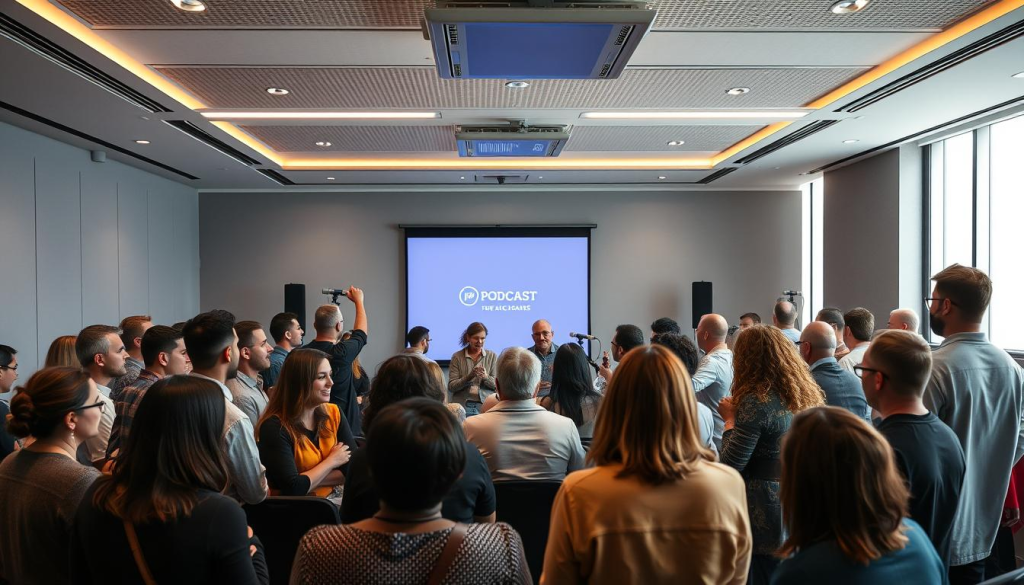
Leveraging Group Features to Enhance Listener Experience
The secret to a great podcast community is using Facebook Group features. These tools help boost listener engagement and make your show more interactive.
Utilizing Polls, Events, and Units Features
Facebook Groups have many features to increase engagement. Polls are great for getting feedback from your listeners. They help you know what they like and make better content choices.
Events are perfect for live sessions, Q&A, or watch parties. They bring your community together and get people involved. The Units feature helps organize content, making it easier for members to find what they’re interested in.
Creating Exclusive Content for Group Members
Offering exclusive content makes your group members feel special. This could be bonus episodes, behind-the-scenes looks, or interviews with experts. It rewards your loyal listeners and invites more to join in.
By using these features and sharing special content, you improve the listener experience. This builds a more engaged and loyal community around your podcast.
Integrating Your Podcast Content with Your Facebook Group
Merging your podcast with your Facebook group can make your community more engaged. This step is key to creating a unified experience for your listeners. It helps them feel closer to your podcast and each other.
Pre-Episode Engagement Strategies
Before a new episode comes out, it’s important to build excitement and get people talking in your Facebook group. You can use different tactics to keep your current listeners interested and draw in new ones.
Gathering Listener Questions and Input
One great way to get your listeners involved is by asking for their questions or ideas about the next episode. You can post a question asking for their thoughts or suggestions. Then, you can answer these questions in your podcast, making it more interactive and relevant.
Building Anticipation for Upcoming Episodes
It’s crucial to create excitement for your upcoming episodes. You can share teasers, sneak peeks, or behind-the-scenes looks to get people excited. Use Facebook’s poll feature to ask listeners to guess the topic of the next episode or vote for a guest. This boosts engagement.
Post-Episode Discussion Prompts
After an episode is out, it’s important to keep the conversation alive in your Facebook group. You can do this by posting questions or prompts about the episode. For example, you could ask members to share their thoughts on a topic from the podcast or how it relates to their life.
Repurposing Podcast Content for Group Posts
Turning your podcast content into Facebook group posts is a smart way to keep your group active. You can share quotes, create infographics, or summarize key points from your episodes. For instance, you could make a table with the main points from your podcast and share it in your group.
| Episode Topic | Key Points |
|---|---|
| Guest Interview | Insights into the industry, tips for beginners |
| Storytelling Techniques | How to craft compelling stories, emotional connections |
Growing Your Group Membership Strategically
To grow your Facebook group, use a mix of promotional tactics. As a podcaster, it’s key to use different channels to draw in new members and keep current ones. A smart plan will help your community grow and boost fan interaction.
Promoting Your Group on Your Podcast
One great way to promote your Facebook group is by talking about it on your podcast. I always set aside a part to talk about the group’s perks, like special content and group chats. This gets listeners interested and wanting to join.
Cross-Promotion with Complementary Communities
Working with other podcasters or influencers in your field can also help. I look for chances to promote my Facebook group with other groups. This way, I reach more people and get new members.
Using Email and Social Media to Drive Group Membership
Email newsletters and social media are also good for getting more group members. I post interesting stuff and promotions on my social media, pointing followers to my Facebook group. This helps me reach more people and grow my community.
Measuring Success and Analyzing Group Performance
It’s crucial to measure your Facebook group’s success to improve your strategy. You need to track important metrics to understand your group’s activity and how members interact.
By knowing these metrics, you can make smart decisions. You can change your content strategy and boost engagement in your podcast community.
Key Metrics to Track in Facebook Groups
Facebook’s analytics tool gives you valuable insights into your group’s performance. Key metrics to watch include:
- Member Growth: Keep an eye on how many new members join your group.
- Engagement Levels: Look at the number of posts, comments, and reactions in your group.
- Top Posts: Find out which content gets the most engagement to see what your audience likes.
By analyzing these metrics, you can understand your group’s dynamics better. You can also spot areas to improve.
Using Insights to Refine Your Strategy
After you’ve collected data on your group’s performance, use it to refine your strategy. For example, if you see that certain posts get more engagement, add more of that content to your calendar.
| Metric | Insight | Action |
|---|---|---|
| Low Engagement | Content not resonating | Experiment with new content types |
| High Member Growth | Effective promotion strategies | Continue and amplify promotion efforts |
Keep an eye on your group’s performance and adjust your strategy as needed. This way, you can create a more engaging and interactive podcast community.
Advanced Strategies for Deep Listener Engagement
Deepening listener engagement is key for a thriving podcast community. There are several advanced strategies you can use. To create an immersive experience, go beyond the basics and use innovative approaches.
Boost engagement by hosting virtual events and live sessions in your Facebook group. This could include Q&A sessions, live podcast recordings, or workshops. It creates unique opportunities for listeners to interact with you and each other in real-time.
Hosting Virtual Events and Live Sessions
Hosting virtual events can range from simple Q&A sessions to complex multi-day conferences. The goal is to create an experience that resonates with your audience. For example, use Facebook’s Live Streaming feature for special podcast episodes or behind-the-scenes looks.
Creating Member Spotlight and Recognition Programs
Recognizing and spotlighting group members boosts their sense of belonging. Create a “Member of the Month” feature to highlight their contributions. This could be through a post or a short interview.
For example, you might say,
“I’m thrilled to feature Sarah as our Member of the Month! Sarah has been an active participant in our discussions and has even started a few threads of her own. Thanks for being an integral part of our community, Sarah!”
Developing Group-Exclusive Series and Challenges
Create exclusive content or challenges for your group members. This could be a special podcast series or a challenge that prompts members to share their thoughts. It drives engagement and encourages participation.
| Strategy | Description | Benefits |
|---|---|---|
| Virtual Events | Live sessions, Q&A, workshops | Real-time interaction, community building |
| Member Spotlight | Highlighting member achievements | Increased sense of belonging, encouragement |
| Exclusive Series | Content available only to group members | Driven engagement, increased participation |
By using these advanced strategies, you can boost listener engagement and create a dynamic community. Be creative and responsive to your audience’s needs and preferences.
Conclusion: Building a Thriving Podcast Community That Lasts
Creating a successful podcast community on Facebook takes effort and flexibility. By using the strategies from this article, you can build a loyal and active community around your podcast.
It’s important to moderate well and know what your audience needs. Keeping listeners engaged is key. You can do this by posting often, using Facebook’s tools like polls, and sharing special content for group members.
Keep growing and improving your podcast community. Focus on giving value to your listeners and getting them involved. This will help you build a lasting community that supports your podcast’s success and keeps listeners coming back.