
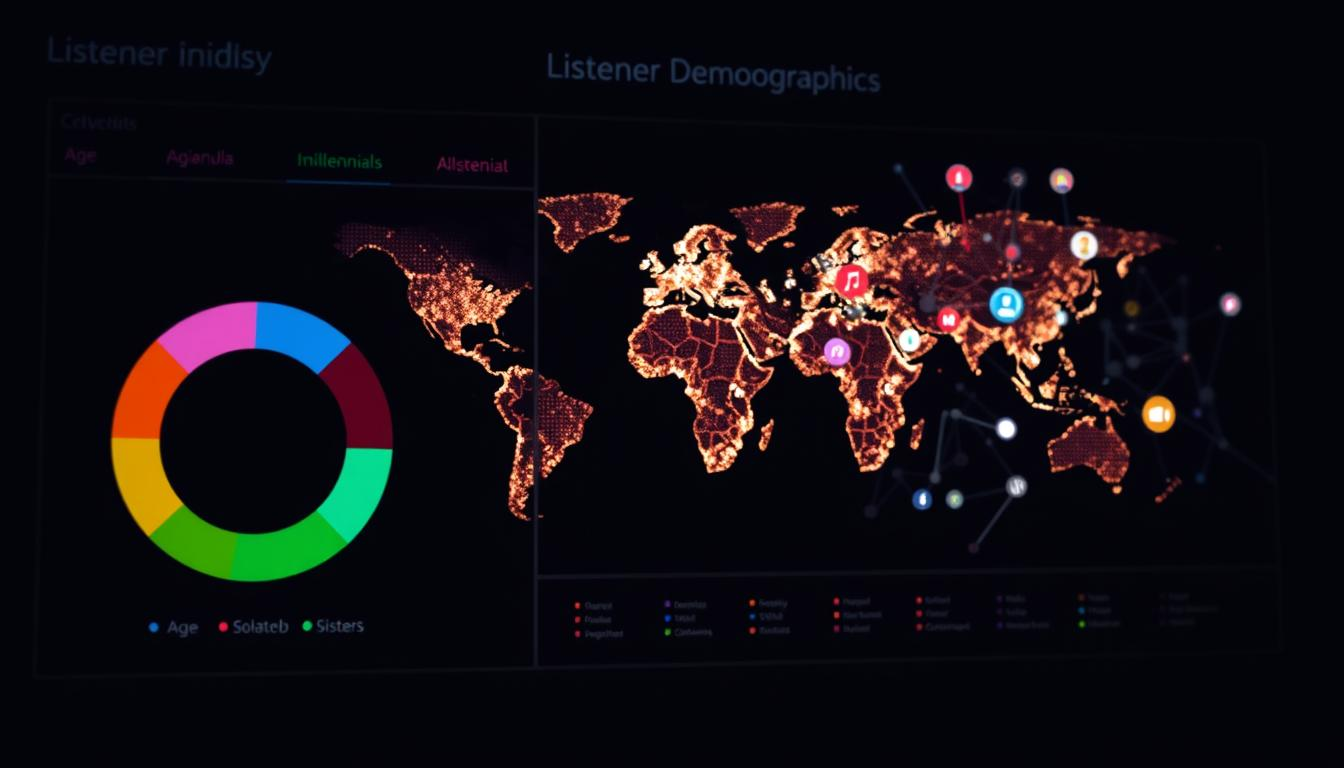
Exploring advanced analytics shows how important it is to know what listeners do. With more people listening to podcasts, using podcast analytics is key for smart choices.
Looking closely at how listeners move through content gives us great insights. This helps podcasters make their shows better, reaching more people. Tools for advanced analytics give a full picture of how listeners interact, guiding better content plans.
Key Takeaways
- Understanding listener behavior is crucial for podcasters.
- Advanced analytics provides valuable insights into audience preferences.
- Data-driven decisions can significantly enhance content optimization.
- Leveraging analytics tools helps refine content strategies.
- Listener journey and funnels analysis is key to improving engagement.
The Fundamentals of Podcast Analytics
Understanding podcast analytics is key for creators wanting to improve their content. As podcasting grows, so does the need for better tools to measure it.
Why Traditional Metrics Don’t Tell the Full Story
Metrics like download numbers and demographics give a basic view of a podcast’s reach. But they don’t show listener behavior and engagement patterns. To really get to know their audience, podcasters must look beyond these numbers.
The Evolution of Podcast Measurement Standards
The industry is moving towards more accurate and detailed measurement standards. This change is because of the need for better tracking and a deeper understanding of the listener journey. New standards aim to show how listeners engage with podcast content more clearly.
Setting Strategic Goals for Your Analytics Framework
To use podcast analytics well, creators need to set clear goals. These goals fall into three main areas:
- Engagement Goals: Focus on keeping listeners and getting them to interact more.
- Growth Goals: Aim to grow the audience.
- Monetization Goals: Work on making money through sponsorships and ads.
Engagement Goals
Engagement goals are about improving how listeners interact with the podcast. This means analyzing audience segments to make content that speaks to different groups.
Growth Goals
Growth goals are about expanding the podcast’s reach. By looking at listener data, creators can find ways to draw in new listeners.
Monetization Goals
Monetization goals are about making money. By understanding how listeners behave, podcasters can make their content more attractive for sponsorships and ads.
Essential Tools for Advanced Podcast Analytics
To get the most out of podcast analytics, you need the right tools. Advanced analytics tools give you insights into how listeners behave. This helps podcasters improve their content and grow their audience.
Comprehensive Analytics Platforms Comparison
There are many analytics platforms for podcasters. Each offers different features and insights. Chartable and Podtrac are two big names in this field.
Chartable, Podtrac, and Spotify for Podcasters
Chartable and Podtrac lead in podcast analytics. They give detailed info on listener demographics and how they engage. Spotify for Podcasters also offers valuable data on listener behavior.
| Platform | Key Features | Insights |
|---|---|---|
| Chartable | Listener demographics, engagement metrics | Detailed listener insights, ranking and visibility |
| Podtrac | Listener behavior, geographic data | Comprehensive listener data, ad performance metrics |
| Spotify for Podcasters | Listener engagement, demographic data | Insights into listener behavior, engagement metrics |
Apple Podcast Analytics
Apple Podcast Analytics offers insights into listener behavior. It shows the number of listeners, episodes consumed, and engagement metrics.
Specialized Tracking Software Options
Specialized tracking software can give more insights into listener behavior. These tools track specific metrics like listener retention and engagement.
Integrating Analytics with Your Existing Tech Stack
To get the most from your analytics tools, integrate them with your tech stack. This includes your website, CRM, or marketing automation tools.
By using these essential tools and integrating them, you can understand your audience better. This helps you optimize your content strategy for growth.
Mapping the Complete Listener Journey
To truly understand your audience, you need to map their journey from discovery to loyalty. This involves identifying critical touchpoints, tracking engagement patterns, and creating visual journey maps to gain better insights.
Identifying Critical Touchpoints in the Listener Experience
Critical touchpoints are moments when listeners interact with your podcast, such as discovering it, listening to an episode, or subscribing. Identifying these touchpoints helps you understand how listeners engage with your content.
- Discovery: How listeners find your podcast.
- First Listen: The initial experience of listening to your podcast.
- Subscription: When a listener decides to subscribe.
Tracking the Path from Discovery to Subscription
Tracking this path involves analyzing how listeners move from discovering your podcast to becoming subscribers. This process helps you identify areas for improvement.
- Monitor discovery channels (e.g., social media, search, recommendations).
- Analyze listener behavior during the first listen.
- Optimize subscription processes based on listener feedback.
Measuring Engagement Patterns Over Time
Understanding how engagement changes over time is crucial. This includes analyzing drop-off points and episode completion rates.
Drop-off Points Analysis
Identifying where listeners drop off helps you understand what might be causing them to lose interest. This could be due to content, format, or other factors.
Episode Completion Rates
Tracking how many listeners complete an episode gives insights into content engagement. High completion rates indicate engaging content.
Creating Visual Journey Maps for Better Insights
Visual journey maps help illustrate the listener’s experience, making it easier to identify patterns and areas for improvement. These maps can be crucial for optimizing your podcast’s performance.
By mapping the complete listener journey, you can gain a deeper understanding of your audience and create a more engaging experience. This ultimately drives loyalty and growth.
Building Effective Podcast Funnels
Creating a successful podcast is more than just great content. It needs a strategic approach to guide listeners through a well-designed funnel. Understanding and optimizing podcast funnels is key for growth and engagement.
Defining Your Podcast Funnel Stages
A typical podcast funnel has three stages: Awareness, Consideration, and Conversion. Each stage has its own metrics to understand the audience’s journey.
Awareness Stage Metrics
At the awareness stage, metrics like total downloads and unique listeners show how well your podcast reaches new audiences. A spike in downloads after a new episode can mean your marketing is working.
Consideration Stage Metrics
Metrics like episode completion rates and subscriber growth rate are important in the consideration stage. They show if your content is engaging and if listeners are becoming loyal.
Conversion Stage Metrics
Conversion stage metrics, like reviews and shares, show how well your podcast drives actions. A high number of shares on social media means your content resonates with your audience.
Key Conversion Metrics That Drive Growth
Conversion metrics are crucial for a successful podcast funnel. By focusing on metrics like listener retention, podcasters can improve their content strategy. Advanced analytics tools help track these metrics, providing insights for growth.
Identifying and Fixing Funnel Leaks
Leaks in your podcast funnel can happen at any stage. They might be listeners dropping off after a few episodes or not subscribing despite regular listens. To find these leaks, you need to dive deep into your analytics. Once found, you can improve content quality, enhance listener engagement, or optimize your call-to-actions to fix them.
A/B Testing for Funnel Optimization
A/B testing is a great way to optimize your podcast funnel. By testing different elements, like episode titles or cover art, you can see what works best. This data-driven approach helps improve your podcast funnel continuously, making sure it stays effective and aligned with your audience’s preferences.
Advanced Audience Segmentation Techniques
Advanced audience segmentation is a powerful tool for podcasters. It helps them understand their listeners better. By dividing their audience into segments, podcasters can create content that speaks to each group. This leads to more engagement and loyalty.
Demographic vs. Behavioral Segmentation Approaches
There are two main ways to segment your audience: demographic and behavioral. Demographic segmentation looks at characteristics like age, gender, and income. Behavioral segmentation examines how listeners interact with your podcast.
Both methods are useful. Using both can give you a full picture of your audience. For example, knowing your listeners’ age and gender helps tailor content. Understanding their listening habits helps with scheduling.
Creating Data-Driven Listener Personas
Creating data-driven listener personas is a great way to use segmentation. These personas are detailed profiles based on real data. They help you understand your ideal listeners and create content for them.
- Identify key demographic characteristics
- Analyze listening habits and preferences
- Determine pain points and interests
Tailoring Content Strategy to Segment Preferences
After identifying your audience segments and creating personas, tailor your content. Adjust your tone, format, or topics to meet their preferences.
For example, if some listeners prefer detailed analysis, create longer episodes for them. If others like short, concise content, adapt your format.
Tracking Segment Performance Over Time
It’s crucial to track how each segment performs over time. Monitor engagement, retention, and growth to understand their response to your content.
Retention Analysis by Segment
Retention analysis shows how well you keep listeners in each segment. Knowing which segments are most loyal helps you focus on retaining them.
Engagement Patterns by Segment
Understanding engagement patterns by segment helps you tailor your content. It informs decisions on format, tone, and distribution channels.
By using advanced audience segmentation, podcasters can understand their listeners better. They can create targeted content that resonates with each group. Whether through demographic or behavioral segmentation, data drives your content strategy and boosts engagement.
Leveraging Behavioral Data for Podcast Growth
Advanced analytics let podcasters dive into behavioral data. This data shows patterns that guide content and marketing choices. By knowing how listeners interact, creators can craft better strategies to boost engagement and growth.
Identifying Patterns in Listening Habits
Looking at listener behavior uncovers trends. This includes when people listen most, how long they want episodes, and when they stop listening. Knowing this helps improve how content is delivered and keeps listeners coming back.
Predicting Future Listener Behavior with Historical Data
By studying past data, podcasters can guess what listeners will do next. This lets them adjust their content strategy ahead of time. It helps make content that listeners love, building loyalty and attracting new fans.
Personalizing the Podcast Experience
Personalizing the podcast experience boosts listener engagement. This can be done in a few ways:
- Content Recommendations: Suggesting episodes based on listener preferences and behavior.
- Targeted Messaging: Tailoring promotional messages to specific segments of the audience based on their listening habits.
Content Recommendations
Podcasters can use behavioral data to suggest episodes that listeners might enjoy. This can be done by adding episode recommendations in the podcast feed or on the podcast’s website.
Targeted Messaging
Targeted messaging lets podcasters send personalized messages to their audience. This strengthens the bond between the podcast and its listeners. It can also improve the success of promotional efforts.
Ethical Considerations in Behavioral Tracking
When using behavioral data, it’s crucial to think about ethics, like listener privacy. Podcasters need to respect their audience’s privacy while using data. They should follow privacy rules and be open about how they use data.
| Behavioral Data Application | Benefits | Ethical Considerations |
|---|---|---|
| Content Recommendations | Increased listener engagement | Data privacy |
| Targeted Messaging | Higher conversion rates | Transparency in data use |
| Predictive Analytics | Proactive content strategy | Potential bias in predictions |
From Data to Action: Implementing Analytics Insights
Getting your podcast to grow means putting analytics into action. We’ll explore how to use advanced podcast analytics to make smart decisions.
Content Strategy Refinement Based on Analytics
Improving your content strategy starts with knowing what your listeners like. By looking at how they behave, you can spot trends. This helps you create content that they’ll enjoy more.
Key actions include:
- Looking at listener retention to find what keeps them coming back
- Using demographic data to get to know your audience better
- Changing your content calendar based on what you learn
Monetization Optimization Techniques
Monetizing your podcast is key, and analytics help a lot. By understanding your listeners, you can boost sponsorships and premium content sales.
Sponsor Placement Optimization
Putting sponsors in the right spots is crucial. Analytics help find the best times for sponsor messages, making them more effective.
Premium Content Opportunities
Analytics also show what premium content your listeners will pay for. This lets you create content that they’ll love and pay for.
| Monetization Strategy | Analytics Insight | Potential Outcome |
|---|---|---|
| Sponsor Placement | Listener behavior during sponsorship messages | Increased engagement with sponsors |
| Premium Content | Listener willingness to pay for specific content | Increased revenue from premium content |
Audience Growth Tactics Driven by Data
Using data to grow your audience means understanding your listeners. This includes targeted marketing based on who they are and how they behave.
“The key to successful podcasting lies in understanding your audience and delivering content that resonates with them.”
Creating Feedback Loops Between Data and Content
It’s important to keep improving by listening to your audience. Regularly checking feedback and behavior helps you make your content better.
By always improving based on what you learn, your podcast will stay fresh and interesting.
Real-World Success Stories: Podcast Analytics in Action
In the world of podcasting, using data to make decisions is changing how shows reach their listeners. Many success stories show how analytics can help. By looking at these stories, we can learn how to use analytics well and improve our shows.
How an Indie Podcast Doubled Listeners Through Analytics
An independent podcast doubled its listeners in a few months by using analytics. They tracked how listeners acted and changed their content to match what their audience liked. They were able to segment their audience well, making their content more targeted.

Network-Level Analytics Implementation
A podcast network used a big analytics platform for all its shows. This let them see how different shows did and find ways to grow. By looking at data from all their shows, they made their content better and got more listeners.
Lessons Learned from Top-Performing Shows
Looking at top podcasts shows some key things. Tracking and analyzing listener data is very important. Also, being able to change content based on what analytics show is key.
Common Patterns in Successful Analytics Strategies
- Regular monitoring of listener behavior
- Data-driven content creation
- Continuous optimization of distribution channels
Avoiding Common Analytics Pitfalls
Analytics can be very powerful, but there are traps to avoid.
“One of the biggest mistakes is relying too heavily on vanity metrics that don’t accurately reflect listener engagement,”
says a leading podcast analytics expert. It’s better to use a mix of metrics for a true picture of how well a show is doing.
| Metric | Description | Importance |
|---|---|---|
| Listener Retention | Percentage of listeners who continue to listen over time | High |
| Episode Completion Rate | Percentage of listeners who complete an episode | Medium |
| Subscriber Growth Rate | Rate at which new subscribers are acquired | High |
By learning from these success stories, podcasters can make their analytics better. This can help them grow and keep their listeners engaged.
Conclusion: Mastering Your Podcast’s Performance
Mastering podcast analytics is key to growing and succeeding in podcasting. Advanced analytics help podcasters understand their audience better. This way, they can tailor their content to what listeners want.
We’ve looked at the basics of podcast analytics, important tools, and how to track listener journeys. These steps help podcasters learn what their audience likes and dislikes.
Using advanced analytics, creators can improve their content, make more money, and grow their audience. By doing this, they can keep up with the changing podcast world and succeed in the long run.
By getting good at podcast analytics, you’ll build a loyal fan base. This will help you reach your podcasting goals.