
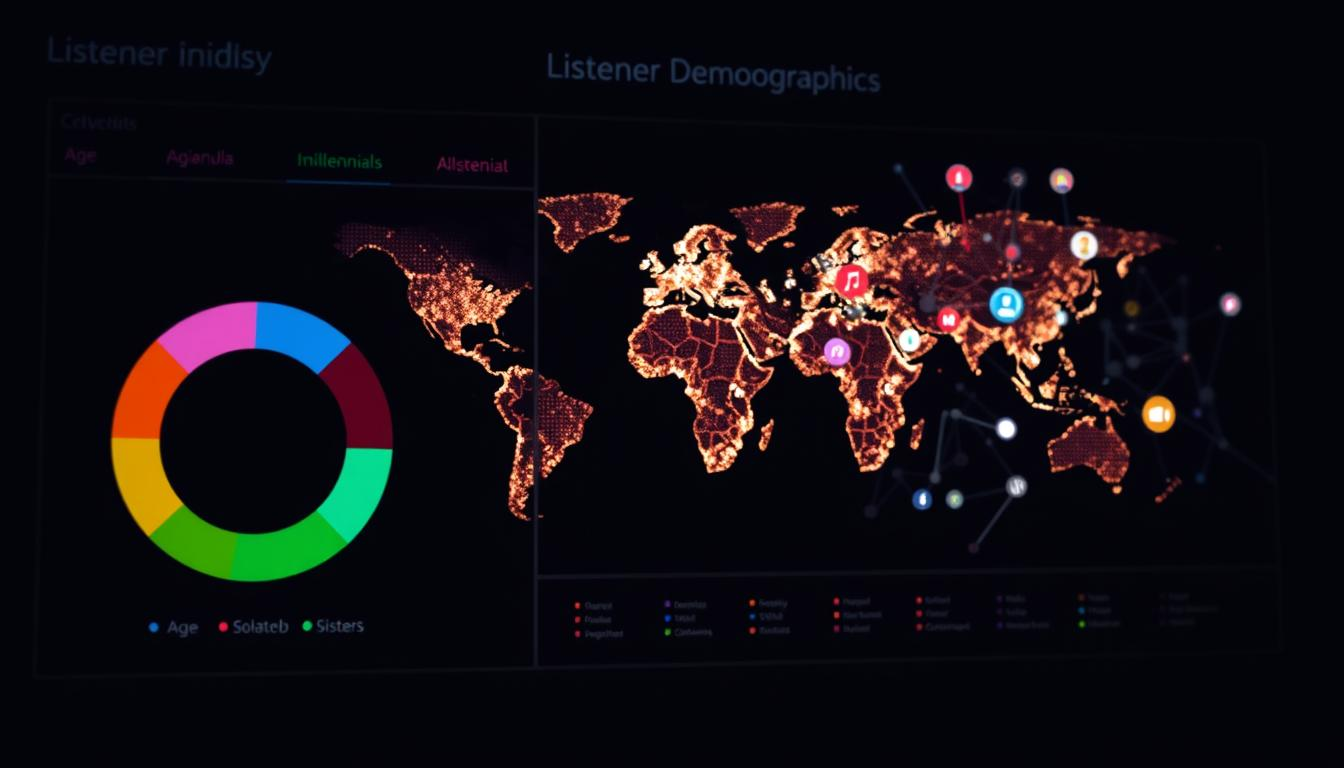
As a content creator, knowing your audience is key to making engaging content. It’s important to understand where your listeners are located.
Using geographic data helps me make content that fits my audience’s location. This boosts engagement and grows my audience. I analyze listener location to make sure my content speaks to them.
Key Takeaways
- Understanding geographic data helps in creating targeted content.
- Analyzing listener location can boost engagement.
- Tailoring content to audience location can lead to audience growth.
- Using geographic data effectively can enhance content relevance.
- Location-based content can lead to a more personalized experience.
The Value of Geographic Data for Podcast Creators
Podcasters can boost listener engagement and loyalty by using regional insights. Knowing where your listeners are can change how you create content.
How Location Insights Transform Content Strategy
Geographic data helps podcasters make content that fits their audience demographics better. This makes your podcast more appealing and keeps listeners coming back. It also makes marketing more effective.
The Business Case for Geographic Targeting
Using geographic targeting can also boost your podcast’s business side. By knowing regional insights, you can draw in sponsors who want to reach certain areas.
Increased Listener Engagement Metrics
Creating content for specific areas can lead to more engagement. Listeners are more interested in topics that matter to them locally.
Improved Monetization Opportunities
With geographic data, you can offer ads that are more relevant to your listeners. This makes your podcast more appealing to local sponsors, increasing your ad revenue.
| Benefits | Description | Impact |
|---|---|---|
| Increased Engagement | Content tailored to local interests | Higher listener retention |
| Targeted Advertising | Ads relevant to specific regions | Increased ad revenue |
| Enhanced Sponsorship | Attracting location-specific sponsors | Better monetization opportunities |
Essential Podcast Analytics: Finding Your Listener Location Data
Knowing where your listeners are is key to making content they love. To get this info, you need to access it. Most podcast platforms and hosting sites give you some geographic data.
Platform-Specific Geographic Reports
Big podcast platforms give you detailed analytics on where your listeners are. For example, Apple Podcasts Connect shows you where your listeners are. This helps you make content that fits their region.
Apple Podcasts Connect Analytics
Apple Podcasts Connect gives you a full view of your listeners’ demographics, including where they are. This info is super useful for knowing your audience’s location and what they like.
Spotify for Podcasters Dashboard
Also, Spotify for Podcasters dashboard gives you geographic insights. It helps you see where your listeners are. Then, you can adjust your content to fit their needs.
Host-Provided Geographic Insights
Many podcast hosting platforms also give you geographic insights. Libsyn, Buzzsprout, and Simplecast are some hosts that share detailed listener location data.
Libsyn, Buzzsprout, and Simplecast Tools
These hosting platforms have analytics tools with geographic data. For instance, Libsyn’s analytics can show you where your listeners are. Buzzsprout gives detailed reports on listener demographics, including location.
Using these tools and insights, you can make a better content strategy. This strategy will be more effective for your audience based on their location.
Interpreting Geographic Data: Beyond the Numbers
Understanding geographic data is crucial for making your content fit specific areas. It’s important to look beyond just the numbers. You need to see the trends and patterns in your listeners’ locations.
To do this well, you must tell the difference between real trends and oddities in your data. For example, a sudden increase in listeners from a certain city might be due to a local marketing win or a local news story. Or, it could be a one-time thing or a data error. By studying these trends over time, you can get a clearer picture of your audience’s habits.
Distinguishing Between Meaningful Trends and Anomalies
To spot real trends, I look for patterns that keep showing up. If a certain episode really hits it off with listeners from a specific area, I think about making more content for them. This means linking where people are listening to how well episodes do, to see what they like.
Correlating Location Data with Episode Performance
Looking at how episodes do in different places helps me fine-tune my content strategy. This might mean adding local references or cultural nods that listeners in certain areas will appreciate.
Identifying Regional Content Preferences
Knowing what content different areas prefer lets me tailor my podcast to meet their unique needs. For example, if listeners in the Northeast like episodes about industry trends, I’ll focus on that more.
By understanding and using this data, I can make a podcast that really speaks to listeners in various places.
Developing a Location-Based Content Strategy
With geographic insights, I can make my content more targeted. I understand where my listeners are, so I can speak to them locally and globally. This way, my content hits home with them.
Creating Listener Personas by Region
Geographic data lets me create listener personas by region. I analyze demographics and listening habits to get a clear picture. For example, West Coast listeners might love tech podcasts, while East Coast folks prefer business and finance.
Balancing Global Appeal with Local Relevance
It’s key to balance local tastes with global appeal. This keeps my listener base wide. I use insights to find common themes that work everywhere.
Content Calendar Planning with Geographic Insights
Geographic insights help me plan my content calendar. I can focus on regional issues or trends. Here’s how my calendar might look:
| Region | Topic | Episode Date |
|---|---|---|
| West Coast | Technology Trends | March 15 |
| East Coast | Business and Finance | March 22 |
| Southern States | Regional Culture | March 29 |
Using geographic insights, I craft localized content that speaks to my audience. This boosts engagement and helps me understand my audience demographics better.
Practical Methods for Localizing Your Podcast Content
To effectively localize your podcast content, you need to know more than just where your audience is. It’s about creating a personal connection with them. By adding regional references and cultural touchpoints, you make your content more relatable and engaging.
Regional References and Cultural Touchpoints
Using regional references and cultural touchpoints is key to connecting with your local audience. This means:
- Mentioning local events, landmarks, or cultural practices
- Incorporating regional dialects or expressions
- Discussing local issues or topics of interest
Research Techniques for Authentic Local Content
To create authentic local content, thorough research is essential. Some effective techniques include:
- Engaging with local communities through social media or forums
- Conducting interviews with local experts or influencers
- Staying up-to-date with local news and trends

Addressing Regional Issues and Topics
It’s vital to address regional issues and topics to make your content relevant. This can involve discussing local challenges, highlighting regional success stories, or exploring unique topics.
Finding Universal Angles for Local Stories
While focusing on local content, finding universal angles is also important. This can be done by:
- Identifying common themes or emotions that transcend regional boundaries
- Using storytelling techniques to make local stories more relatable
- Highlighting how local issues or topics have wider implications
By using these strategies, you can create a localized content strategy. This strategy will resonate with your local audience and provide regional insights to help your podcast grow.
Technical Implementation of Geographic Targeting
Adding geographic targeting to podcasts can make them more relevant. By using listener location data, creators can make their shows more engaging. This boosts listener loyalty and interest.
Dynamic Content Insertion Based on Location
Dynamic content insertion lets podcasters change content for different locations. This is possible with advanced hosting platforms. For example, a travel podcast can offer tips based on where you are.
Regional Show Notes and Resource Links
Adding regional notes and links can improve the listener experience. It makes the content more relevant and useful. This can be done manually or with automated tools.
Tools for Automating Location-Based Content
Many tools help automate location-based content. They analyze data to suggest how to tailor content for different areas. Some well-known tools include:
| Tool | Description | Features |
|---|---|---|
| Podcast Hosting Platforms | Advanced platforms that support dynamic content insertion | Geographic data analysis, dynamic content serving |
| Content Management Systems | Systems that manage and automate content distribution | Region-specific content generation, automated show notes |
| Analytics Tools | Tools that provide insights into listener location and behavior | Geographic data analysis, listener behavior insights |
By using these tools and methods, podcasters can improve their content’s relevance. This makes their shows more engaging for their audience.
Monetization Through Geographic Insights
Using geographic insights can change how you make money from your podcast. Knowing where your listeners are lets you target local sponsors and create content for specific areas.
Attracting Location-Specific Sponsors and Advertisers
Local businesses like to support content that speaks to their community. By showing where your listeners are, you can attract more sponsors.
Building a Regional Sponsorship Pitch
To get local sponsors, you need a strong pitch. It should show how your podcast reaches people in their area. This means:
- Showing who listens to your podcast in certain areas
- Pointing out successful sponsorships in those areas
- Creating ads that fit what local businesses want
Podcast Insights says, “Targeted ads are crucial for making money in podcasting.”
“The future of podcast ads is in focusing on local areas,” says a top expert.
Tailoring Premium Content Offers by Region
Different places might want different things or be willing to pay more for special content. I can look at these differences to make offers that fit each area.
Pricing Strategies for Different Markets
Prices should match the local economy and what listeners are like. Here’s a table showing possible prices based on where you are:
| Region | Economic Indicator | Proposed Pricing Tier |
|---|---|---|
| Northeast | High Cost of Living | Premium ($9.99/month) |
| South | Moderate Cost of Living | Standard ($4.99/month) |
| West Coast | High Disposable Income | Premium Plus ($12.99/month) |
By using geographic insights for money-making, podcasters can make more money. This method not only gets local sponsors but also makes special content for different places.
Measuring Success: Geographic KPIs for Your Podcast
To measure your podcast’s success, you need a smart plan. You must set clear goals and track them well.
Setting Regional Growth Targets
First, set specific goals for each region. Look at where your listeners are now and where you can grow. For example, if you’re big on the East Coast, aim to grow your West Coast listeners by 20% in a quarter.
Tracking Engagement Across Different Locations
It’s key to watch how people engage in different places. You can track:
- How well listeners stick around in each area
- How many episodes are downloaded or streamed in each spot
- How active your social media is in certain regions
Creating Custom Geographic Reports
Make detailed reports to really understand your podcast’s reach. These reports can show you which topics or formats work best in each area. For instance, city folks might love interview-style episodes, while country folks might prefer storytelling ones.
By checking these reports often and tweaking your plan, you can make your localized content hit the mark in every location.
Case Studies: Geographic Targeting Success Stories
Geographic targeting is key for podcasts wanting to connect with local listeners. By using geographic data and regional insights, podcasters can make content that really speaks to their audience.
Local Podcasts That Scaled Nationally
Many local podcasts have grown to reach a national audience. For example, a podcast about New York City culture started with local content. Then, it broadened its appeal to listeners across the country.
Key Strategies and Takeaways
- Start with local content to build a loyal fan base.
- Slowly add universal themes to attract more listeners.
- Use geographic data to target marketing efforts effectively.
Global Shows With Effective Regional Customization
Global podcasts have also seen success with regional content. A well-known global news podcast started offering episodes for different regions. This move greatly boosted listener engagement.
Adaptable Frameworks for Your Show
To achieve similar success, consider these adaptable frameworks:
- Study your listeners to find key regions.
- Create content that speaks to these regions, using regional insights to guide you.
- Keep an eye on your performance and tweak your strategy as needed.
By using these strategies, podcasters can make their content more relevant and appealing through geographic targeting.
Common Mistakes in Geographic Content Targeting
As a podcaster, using listener location data can help a lot. But, there are some common mistakes to avoid.
When you target your content by location, don’t oversimplify or stereotype. Thinking all listeners from a certain area are the same can lead to wrong targeting. This can make your content less engaging.
Stereotyping and Oversimplification
Stereotyping can make your content miss the mark. For example, using local slang or references that not everyone gets can push some listeners away.
Neglecting Data Privacy and Compliance
Another big mistake is ignoring data privacy and following rules. It’s key to handle listener data right and follow laws like GDPR.
Overextending Resources for Too Many Regions
Trying to cover too many areas at once can spread you too thin. It’s better to focus on places where most of your listeners are. This way, you can make more effective content.
| Common Mistake | Consequence | Solution |
|---|---|---|
| Stereotyping and Oversimplification | Inaccurate targeting, lack of engagement | Understand regional nuances, create nuanced content |
| Neglecting Data Privacy and Compliance | Legal issues, loss of listener trust | Handle data responsibly, comply with regulations |
| Overextending Resources | Diluted efforts, ineffective content | Focus on key regions, prioritize resources |
Conclusion: Building a Location-Intelligent Podcast
Reflecting on podcasting, I see how key it is to know where my listeners are. Using geographic data helps me make content that speaks to people everywhere. This way, I can grow my podcast and make money.
To make a podcast that really connects, I must balance being global and localized. I use regional insights to shape my content. This makes sure I meet the needs of listeners in different places. It also helps me keep my audience interested and attract the right audience demographics for my sponsors.
The secret to success is to always check and tweak my plan based on listener location data. This keeps my podcast fresh and interesting, no matter where my listeners are. By using data to guide my choices, I can grow and succeed with my podcast.