
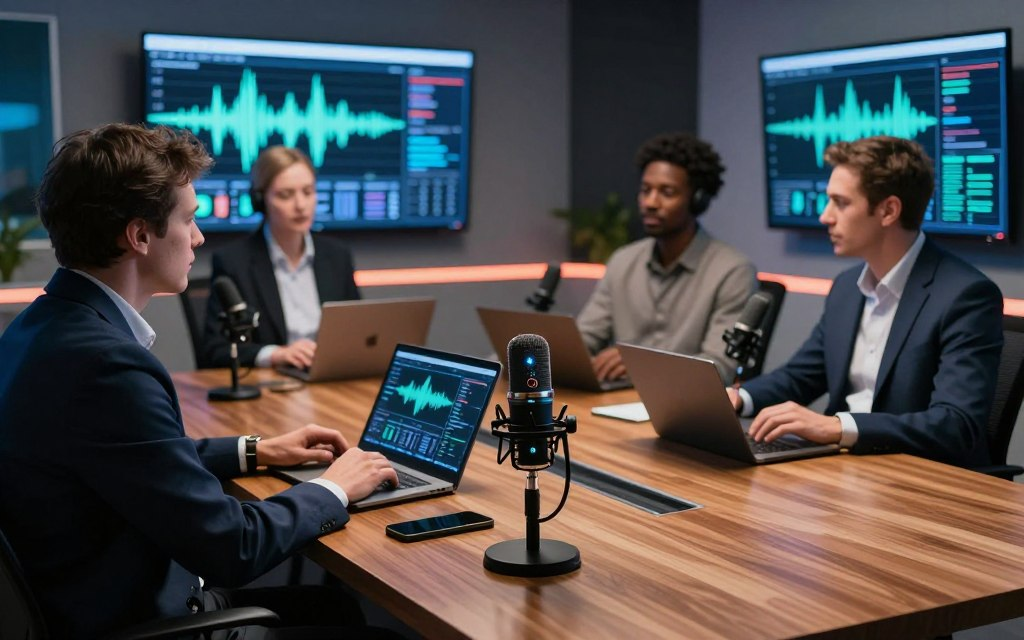
As I explore the future of podcasting, I see huge leaps in AI workflows. The State of A.I. 2025 podcast and the Communications Leadership Playbook (2025-2026) show a big change. They point to a move towards orchestrating all stages of production.
This change is more than just making things faster. It’s about making the whole podcast automation process smooth and still human. With these new tools, podcasters can make great content. Meanwhile, AI Orchestration takes care of the technical stuff.
Key Takeaways
- The future of podcast production lies in AI-driven workflows.
- Orchestrating research, scripting, and post-production is key to efficiency.
- Maintaining human quality control is crucial in automated environments.
- Advancements in AI are transforming the podcast industry.
- Podcast automation enables creators to focus on high-quality content.
The Evolution of Podcast Production
Podcast production has changed a lot, thanks to new tech and what listeners want. Since 2020, AI has really changed the game.
From Manual to Automated: A Brief History
The move from manual to automated podcasting has been big. Key advancements include better recording software, automated editing tools, and AI-driven content enhancement.
Key Technological Shifts Since 2020
Since 2020, podcast production has seen big tech changes. These include:
- Cloud-based recording platforms for remote work
- AI-powered editing software for easier editing
- Advanced analytics tools for understanding listeners
AI has changed podcasting a lot. AI tools help with script generation to content repurposing. This makes making podcasts more efficient and creative.
The 2026 Podcast Landscape
Looking at 2026, AI is key in podcasting. Market leaders use AI for better content orchestration. This boosts both quality and productivity.
Current Market Leaders and Technologies
Today’s top podcast producers use AI. Companies like Descript and Riverside lead the way with new tools for podcasters.
Listener Expectations in the AI Era
With AI, listeners want high-quality, personalized content. They want content that really speaks to them.
Why Traditional Productivity Tools No Longer Suffice
The Communications Leadership Playbook (2025-2026) says old tools aren’t enough for podcasting today. It shows we need AI-driven orchestration tools for today’s complex content creation.
Understanding AI Orchestration in Podcasting
In the fast-changing world of podcasting, AI orchestration is a big deal. As we look ahead to 2026, it’s key to see how AI orchestration will change podcasting.
Defining AI Orchestration
AI orchestration means using many AI tools together to make workflows easier. In podcasting, it helps make creating and sharing podcasts more efficient and creative.
The Difference Between Automation and Orchestration
Automation is about using tech for simple tasks. Orchestration is more advanced, combining many automated steps into one workflow. AI orchestration helps podcasters manage their work better, from making content to sharing it.
Core Components of an Orchestrated Workflow
An orchestrated workflow in podcasting includes:
- AI-powered content research and planning
- Automated guest outreach and scheduling
- Script generation and enhancement tools
- Real-time transcription and content tagging
How Orchestration Transforms Content Creation
By using many AI tools, podcasters can spend more time on creative work. AI orchestration makes creating content smoother, helping creators make better podcasts faster.
The Ecosystem of AI Tools in 2026
Looking to 2026, the AI tools for podcasting will grow a lot. There will be better ways to connect these tools, making it easier for podcasters to use AI in their work.
Integration Standards and Protocols
Creating standard ways to connect AI tools is key. This will let podcasters use different tools together, making their workflow more flexible and strong.
Setting Up Your AI Command Center
Starting my journey in AI-driven podcasting, I focus on setting up my AI command center. This is the base of my production workflow. I choose the right hardware and software for smooth AI tool integration.
Essential Hardware for Future-Proof Podcasting
I need hardware that supports AI processing to begin. This includes microphones and audio interfaces for AI-driven audio enhancements.
Microphones and Audio Interfaces with AI Processing
Getting a high-quality microphone with AI features is key. Microphones with noise reduction and audio enhancement can boost recording quality. Andrew Yang, a renowned AI expert, believes AI-driven solutions will change audio processing.
“AI-powered microphones will revolutionize the way we capture audio, making it possible to produce studio-quality recordings in any setting.”
Computing Requirements for Real-Time AI
I also need a strong computing system for real-time AI. This means a powerful CPU, enough RAM, and possibly a dedicated GPU for AI tasks.
Software Infrastructure for AI Integration
Next, I set up a solid software infrastructure. I choose an orchestration platform that works with various AI tools.
Selecting Your Orchestration Platform
Picking the right orchestration platform is key for my AI workflow. I look for a platform that integrates well with AI tools and services. This makes content creation smoother. As shown in 
Creating Your Digital Production Hub
With hardware and software ready, I set up my workspace for efficiency.
Workspace Configuration for Maximum Efficiency
To boost productivity, I configure my digital hub for less distraction. I set up an easy-to-use interface, organize files, and make sure tools are easy to access.
Pre-Production Orchestration Techniques
I’m excited to explore how podcast AI is changing content creation. AI tools are making pre-production faster and more efficient. This saves time and resources for podcasters.
AI-Driven Content Research and Planning
AI is changing how we research and plan podcasts. The Communications Leadership Playbook (2025-2026) says AI tools can find trending topics and suggest content.
Topic Discovery and Trend Analysis
Podcasters can find new topics and trends with AI tools. This helps them make content that their audience loves and keeps them competitive.
Competitive Content Mapping
AI helps podcasters see what their competitors are doing. It shows where they can create unique content that stands out.
Automated Guest Outreach and Scheduling
AI can find and book the right guests for podcasts. This saves time and makes sure guests fit the show’s topic.
AI-Powered Guest Matching Algorithms
These algorithms match guests with the podcast’s content. This leads to more engaging and informative episodes.
Script Generation and Enhancement Tools
AI tools can quickly create high-quality scripts. They also improve existing scripts for better engagement.
Creating Dynamic Conversation Frameworks
AI helps create conversation frameworks that flow naturally. This makes discussions more engaging and natural.
Emotional Resonance Optimization
AI tools analyze scripts to improve emotional impact. They suggest changes to connect with the audience on a deeper level.
Podcasters can make better content with these AI techniques. As AI grows, we’ll see even more ways to improve podcasting.
Recording Session Orchestration
The future of podcast recording is here, thanks to AI. Podcasting is changing fast, with AI making a big impact. The “The State of A.I. 2025” podcast shows how AI can improve recording sessions.
Real-Time Transcription and Content Tagging
Real-time transcription and content tagging are big steps forward. This tech lets you immediately transcribe what’s said. It makes editing easier later on.
Semantic Markup During Recording
Semantic markup adds depth to transcription. It tags topics, keywords, and sentiments as you record. This is super helpful for creators.
AI-Powered Interview Assistance
AI is changing interviews for the better. It helps with dynamic question generation and spotting conversational gaps. This makes interviews more engaging.
Dynamic Question Generation
AI can create relevant follow-up questions. It keeps the conversation flowing smoothly and interesting.
Conversational Gap Detection
Conversational gap detection keeps the flow going. It spots awkward silences or topic changes. This makes the conversation feel natural.
Multi-Location Recording Coordination
For podcasts with remote guests, multi-location recording is key. It synchronizes audio from different places. This gives listeners a seamless experience.
Latency Compensation and Audio Synchronization
Latency compensation and audio synchronization are vital. AI adjusts for latency issues. This ensures the audio is perfectly in sync.
By using AI, podcasters can improve their sessions a lot. The future of podcasting is all about using AI to create perfect content.
Post-Production AI Workflows
In the world of podcast post-production, AI is changing the game. It boosts productivity and quality. Let’s dive into how AI is changing editing, enhancing, and sharing podcast content.
Autonomous Editing and Enhancement
AI is making editing smarter and faster. It uses:
- Content Prioritization Algorithms: AI sorts content, focusing on the most important parts.
- Audio Quality Neural Processing: AI improves audio, removing noise for a better sound.
Content Repurposing Automation
AI makes it easy to share podcast content on different platforms.
- Multi-Format Transformation Techniques: AI turns one podcast into many formats, like blog posts and videos.
Quality Assurance Through AI
AI ensures podcast content is top-notch and consistent.
- Consistency Checking and Brand Alignment: AI checks if content fits the brand’s style, keeping it consistent.
Using AI in post-production can greatly improve podcast quality. The Communications Leadership Playbook (2025-2026) shows AI’s big role in podcasting’s future.
Distribution and Promotion Orchestration
Exploring podcasting in 2026, I see how vital distribution and promotion are. AI makes these tasks smoother and more effective.
Multi-Platform Publishing Automation
AI helps publish podcasts on many platforms automatically. This way, your show can reach more people.
Format-Specific Optimization
AI optimizes your podcast for each platform. It adjusts audio quality for places like Spotify or Apple Podcasts.
AI-Optimized Release Timing
Releasing your podcast at the best time is key. AI figures out when your audience is most likely to listen.
Audience Availability Prediction
AI looks at listener data to guess when they’re free to listen. This boosts engagement.
Personalized Audience Engagement Strategies
AI goes beyond just distribution. It helps tailor content to what your listeners like.
Dynamic Content Recommendations
AI suggests content based on what listeners have enjoyed before. This keeps them coming back.
Automated Listener Interaction
AI can even chat with listeners, like responding to comments. It makes new listeners feel welcome.
A study found AI can boost listener retention by up to 30%.
“The future of podcasting lies in its ability to adapt to listener preferences through AI-driven personalization.”
| Platform | Optimization Technique | AI Benefit |
|---|---|---|
| Spotify | Audio Quality Adjustment | Improved Listener Experience |
| Apple Podcasts | Metadata Optimization | Increased Discoverability |
| YouTube | Video Thumbnail Optimization | Higher Engagement Rates |
Using AI for distribution and promotion lets podcasters focus on making great content. The machines handle the rest.
Analytics and Continuous Improvement
Exploring AI-orchestrated podcasting, I see analytics’ key role in bettering content. It helps measure success, guess what listeners like, and tweak shows. This is changing podcasting.
Unified Performance Dashboards
A single dashboard is vital for seeing how a podcast does on different platforms. It combines cross-platform data integration for a clear view.
Cross-Platform Data Integration
Integrating data from various platforms gives podcasters a full picture of their audience. This helps in making smarter choices.
Actionable Insight Generation
Unified dashboards are powerful because they offer actionable insights. AI spots trends in data, guiding content and strategy.
Predictive Content Optimization
Predictive content optimization is a big leap in AI-orchestrated podcasting. AI uses past data and trends to forecast what listeners will like next.
Future Episode Planning Based on Analytics
With predictive analytics, podcasters can plan episodes that will likely hit the mark. This keeps the show fresh and interesting.
Audience Sentiment Analysis and Response
Knowing what listeners feel is key to making content they’ll enjoy. AI’s audience sentiment analysis helps tweak shows based on feedback.
Automated Content Adjustment Workflows
Automating tweaks based on sentiment analysis keeps content engaging. This AI-driven feedback loop ensures shows stay relevant and satisfying.
In summary, AI in podcasting analytics and improvement is a game-changer. It uses dashboards, predictive optimization, and sentiment analysis. This helps podcasters stay on top and deliver content that listeners love.
Conclusion: Your AI-Orchestrated Podcast Future
Looking ahead to 2026, AI workflows and content orchestration will be key in podcasting. By using AI at every production stage, podcasters can boost their content’s reach and quality. This makes their shows more engaging for listeners.
The State of A.I. 2025 report sheds light on AI’s role in podcasting. It shows trends that will shape the industry next year. By using AI, creators can make their workflow smoother, connect better with their audience, and keep up with media changes.
As AI gets better, so will content orchestration. Podcasters can then focus on making content that really speaks to their listeners. The future of podcasting is all about AI, and those who get on board will thrive.